Updated
The Four-Stage Decision Tree
The 6.7L Cummins variable-geometry turbo has four serviceable layers — vane-cleaning, actuator-only swap, cartridge CHRA replacement, and complete-turbo replacement — each replaceable independently, each with its own diagnostic gate. Replacing the wrong layer costs $400–$1,000 on top of the right replacement, and the gates between stages are the only protection against that mistake.
The architectural background on what variable-geometry means and why it matters for diagnostic isolation is documented at the Wikipedia variable-geometry turbocharger reference, with deeper engineering detail at Garrett Motion's variable-geometry turbo guide. The on-engine breakdown specific to the Holset HE351VE and HE300VG frames lives in the Turbocharger Types — Taxonomy and Comparison reference, which covers the four primary architecture families and the diagnostic implications of each.
Confirm Which Stage Applies
The diagnostic gates between stages are mechanical, not parts-counter. Each gate takes 30-60 minutes of inspection time and saves $400–$1,000 of wrong-stage replacement cost.
Gate from Stage 1 to Stage 2: visually inspect the vanes after carbon cleaning. If the vanes are physically intact and the actuator gearbox grinds when commanded by the scan tool, the cleaning is incomplete and the actuator is also worn. Move to Stage 2. If the cleaning restored normal vane movement and the actuator commands cleanly, stop at Stage 1.
Gate from Stage 2 to Stage 3: inspect the rotating assembly through the compressor inlet and turbine outlet. Spin the shaft by hand — any axial play above 0.005 inch or radial play above 0.003 inch indicates bearing wear, and Stage 3 cartridge replacement is the right answer. The professional rebuilder protocol for measuring shaft play is documented at Turbo University's diagnostic reference.
Gate from Stage 3 to Stage 4: inspect the housings before ordering the cartridge. Look at the wastegate-boss area for radial cracks, the V-band flange for warping, and the volute walls for burn-through. Use a flashlight at the turbine inlet — burned through volute walls show as discolored, thinned spots that whistle under boost. The rebuilder-tier inspection criteria are documented at Rotomaster's Understanding Turbochargers reference. If any of those housing defects show, skip Stage 3 and go to Stage 4 complete-turbo replacement.
The Actuator Path (Stage 2)
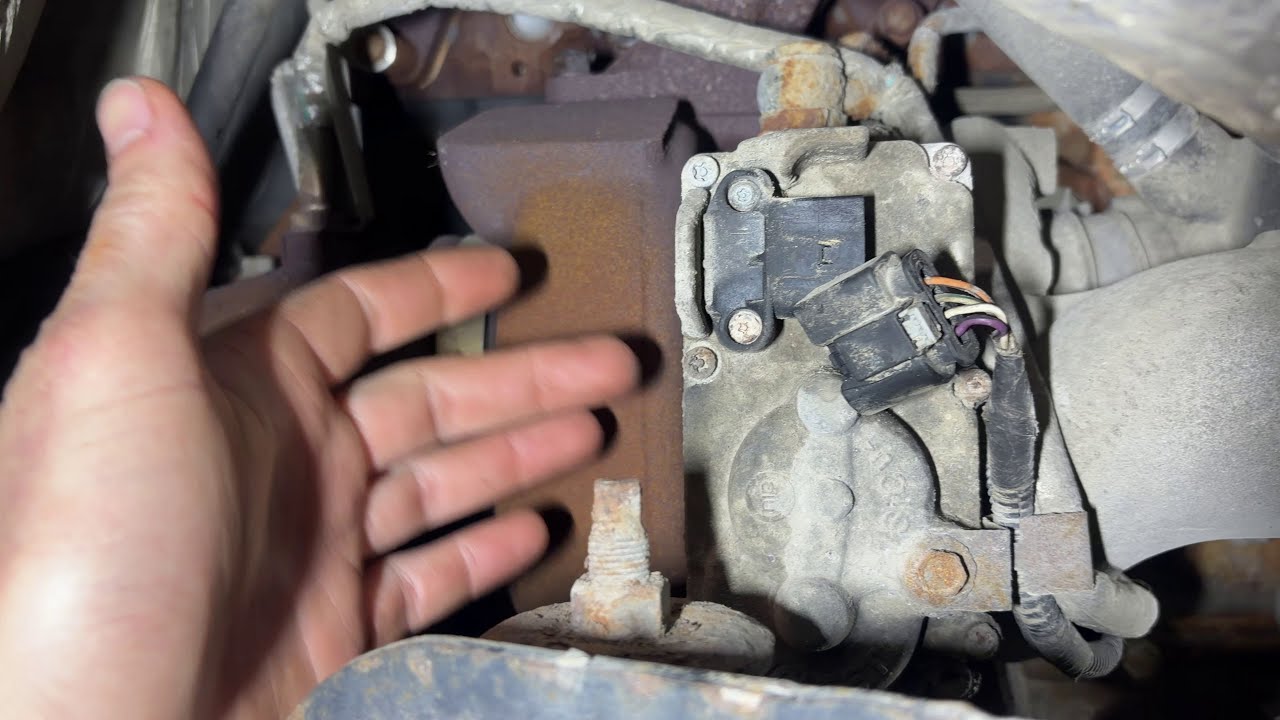
The actuator-only swap is the highest-value path on this diagnostic tree for trucks in the 100,000-200,000 mile band. Most P003A codes in that mileage band trace to gearbox wear or position-sensor drift, both of which the actuator swap fixes without disturbing the turbo body.
Three Amazon listings cover the actuator path. The WOLLAHS 5494878RX (B0C27ZBP2R) is the cross-shop on the original 2007.5-2012 Ram chassis years. The 5494878RX 2013-2018 cross-reference (B0D1QTMG76) is the same actuator with explicit chassis-year coverage for the HE300VG frame on the later Ram chassis. The upgrade-tier calibrated variant (B0C4TXBKLS) is the pre-calibrated path for owners without scan-tool access — slightly higher price, no calibration step required at install.
"VG Turbo actuator on a 17 Ram 3500 chassis cab — replaced just the actuator, calibrated with the AlfaOBD app, problem fixed. Saved $1,200 vs the dealer doing the complete turbo replacement they wanted to push me into." — r/Cummins synthesis on the Stage 2 vs Stage 4 cost split. The forum knowledge consistently lands on actuator-first; the dealer service writers consistently push complete-turbo. The diagnostic gate at the actuator-vs-rotating-assembly question is what splits the right answer from the wrong one.
Check Price on Amazon — WOLLAHS 5494878RX
The Cartridge Path (Stage 3)
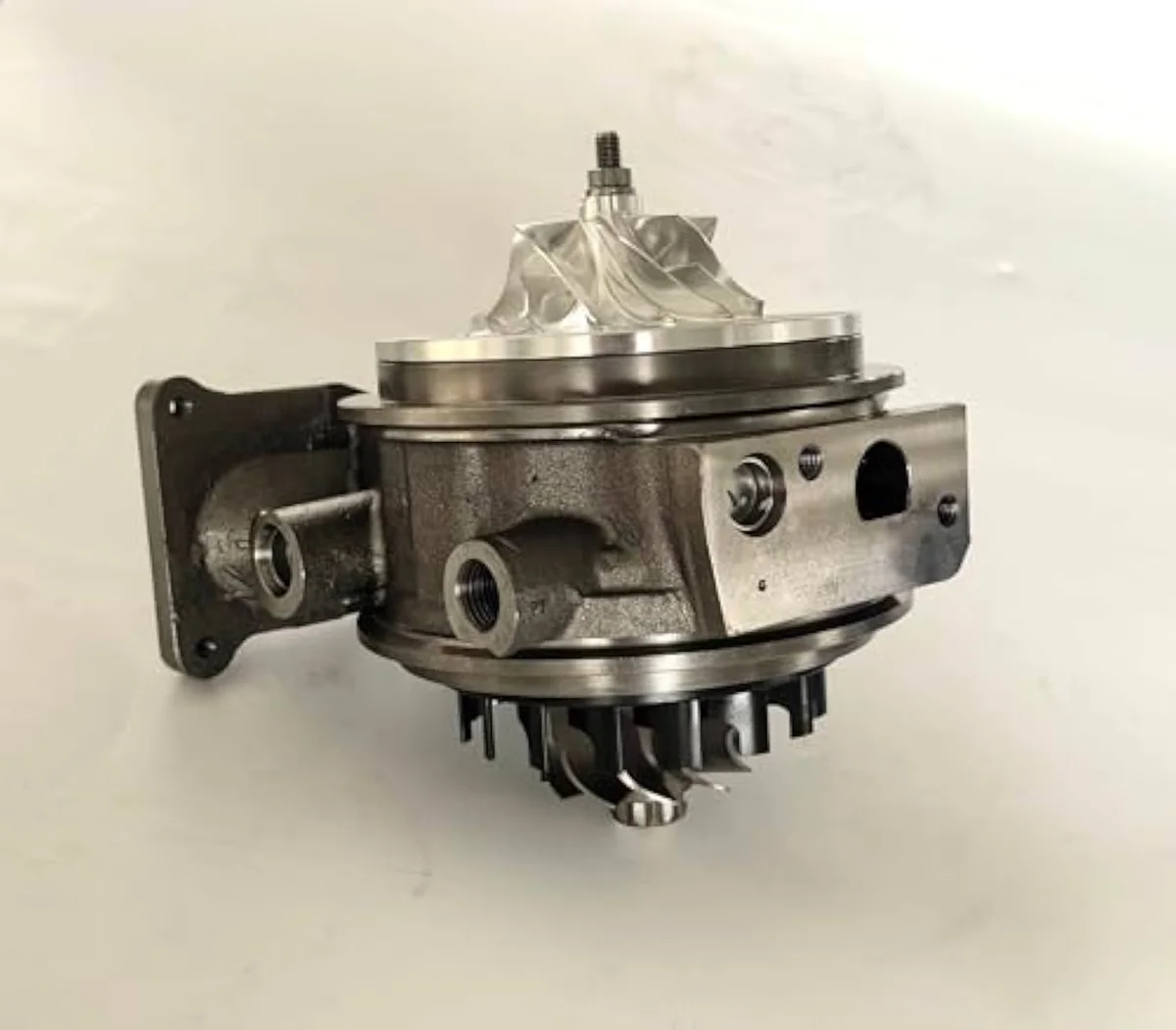
Cartridge replacement is the structurally-correct answer for trucks where the rotating assembly is worn but the housings are intact. The CHRA (center-housing rotating assembly) ships as a complete unit ready to drop into the existing exhaust and compressor housings — same OE numbers, same fitment, half the cost of complete-turbo replacement.
The Holset HE351VE cartridge CHRA covers the 2007.5-2012 ISB applications with OE numbers 5354495, 6411490, and the cross-reference family. For 2008-2010 trucks specifically, the ASDPI HE351VE / HE300VG variant covers the chassis-year transition between the early HE351VE frame and the later HE300VG frame. For the HE300VG complete frame on 2013-2018 Ram trucks, the Holset HE300VG (5604175 / 6411519RX / 5604180) is the OEM-tier replacement on the cartridge or complete path.
The Complete Path (Stage 4)
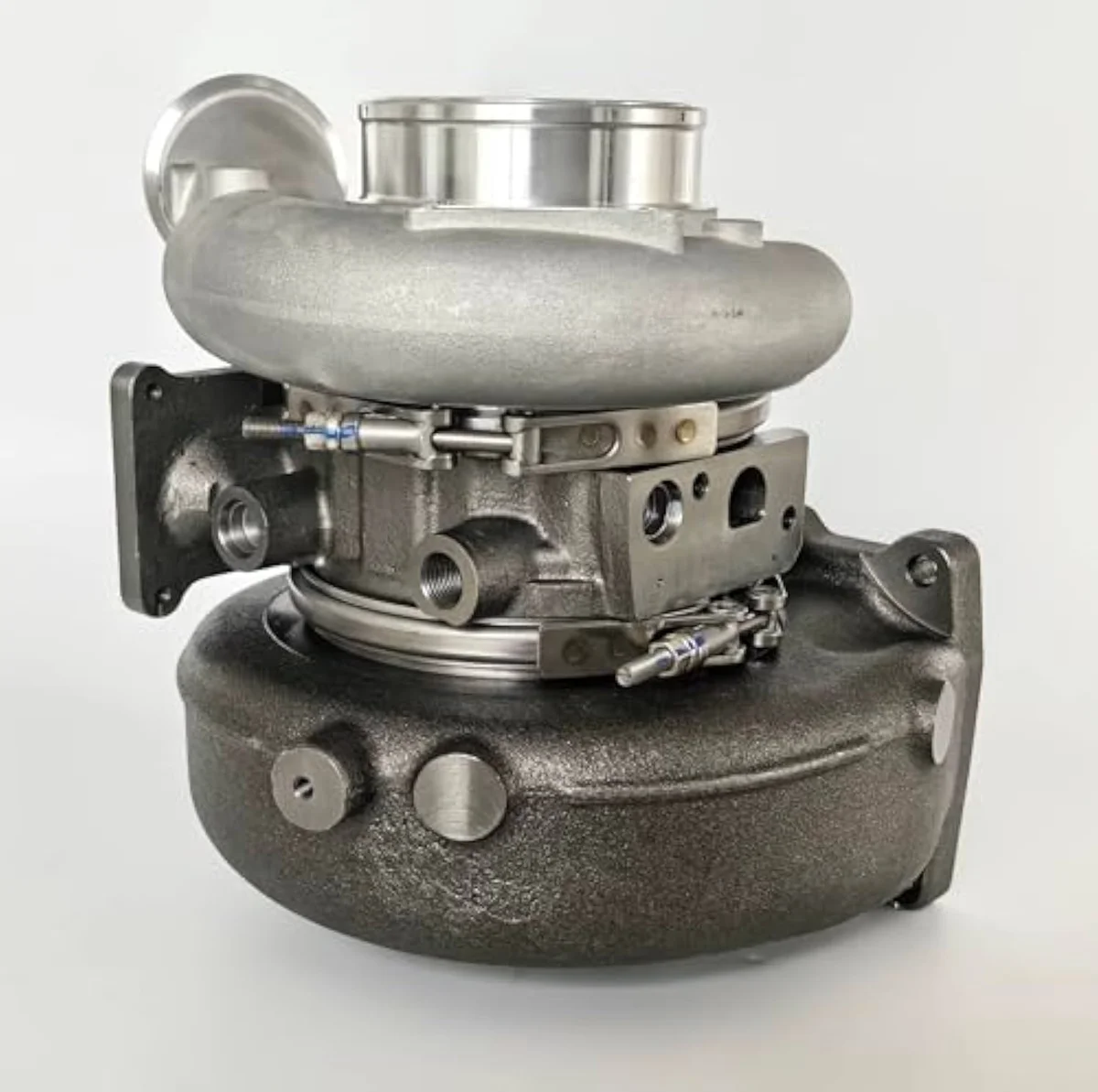
Complete-turbo replacement is the right answer when the housings are damaged. The cost is double the cartridge path because the cast-iron exhaust housing alone is a $400-$600 part and the V-band hardware adds $50-$100. Pay for the complete unit only when housing inspection confirms the existing housings cannot be reused.
Two situations make Stage 4 unavoidable. First: documented overspeed event — the turbo has already exceeded its rated RPM (typically 130,000-150,000 RPM on the HE351VE family). Overspeed warps the housings even if the rotating assembly looks intact. Second: progressive cracking at the wastegate-boss area — a small visible crack today is a complete burn-through in 6 months. Replacing only the cartridge in either situation means the new cartridge fails on the original housing's defect within months.
For Class-8 industrial applications running the Cummins X15 or the heavy-duty HE400VG / HE451VE chassis, the DOFOCH HE400VG / HE451VE (2005-2015) covers the broader fleet-tier replacement. For Cummins X15 specifically, the X15 Holset HE400VG cross-reference documents the fleet-tier OE chain. Both are Stage 4 complete-turbo replacements at the heavy-duty chassis tier.
Calibration Tooling Requirements
Every aftermarket actuator and every cartridge replacement that includes a new actuator requires ECM calibration after install. Drive without calibration and the truck throws codes within 50 miles. The OEM-tier programming protocol is documented at ADP Distributors' Cummins programming reference for shops doing the work professionally.
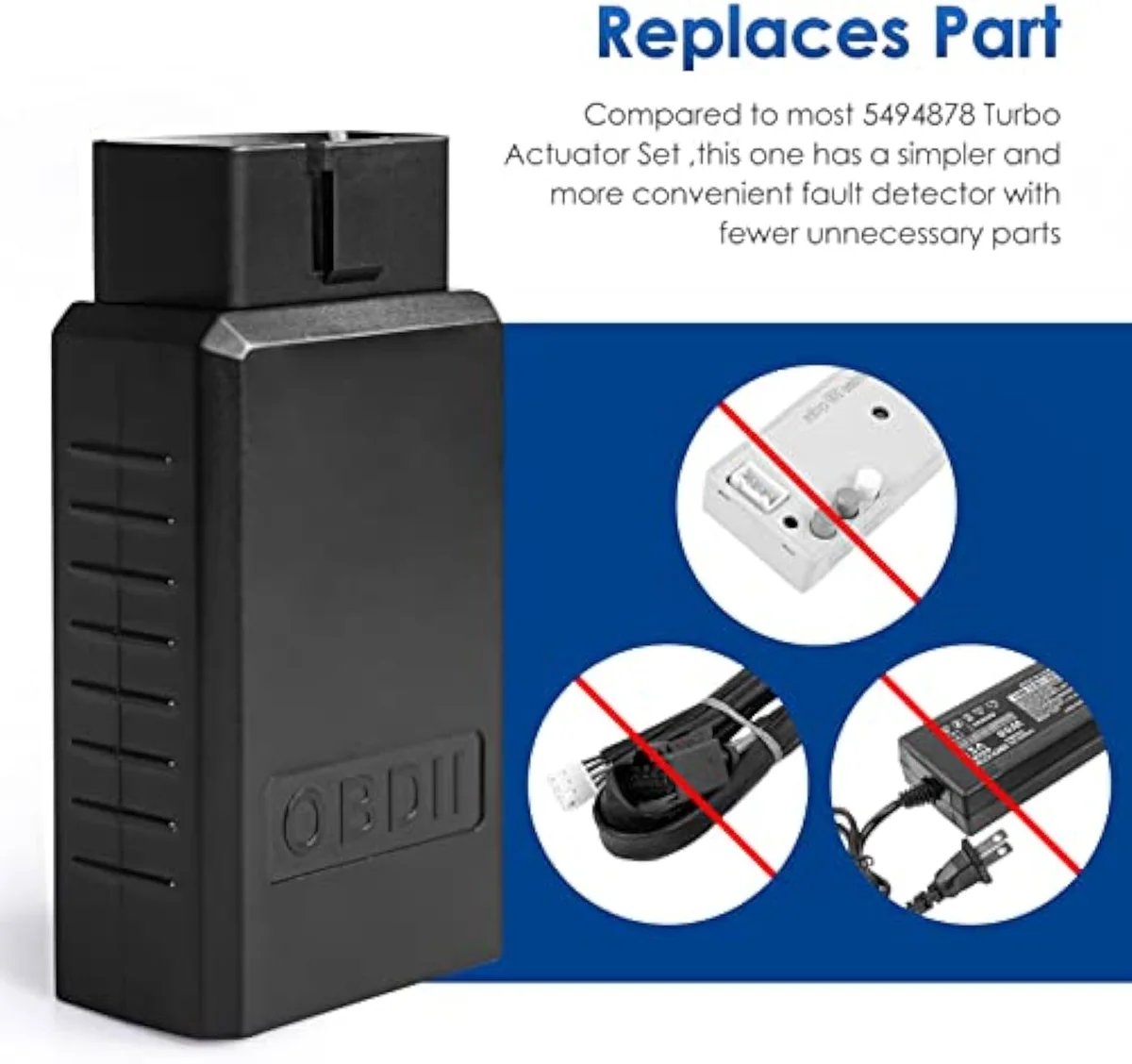
The four documented tools are tiered by cost. AlfaOBD is the lowest-cost path: $40 OBD-II Bluetooth dongle plus the AlfaOBD Android app at $50. Edge Insight CTS3 is the gauge-and-tuner that most Cummins owners already have for boost monitoring — calibration is built into the menu, no extra purchase. Bully Dog GTX is the shop alternative at the same capability tier as Edge. Cummins Insite is the dealer-professional tool at $5,000+ licensing — overkill for a single-truck owner, standard at independent diesel shops.
Cummins 6.7L Diagnosis Questions
- How much does it cost to replace a turbo actuator on a 6.7 Cummins?
- Aftermarket actuator-only replacements on Amazon run $200–$400 (WOLLAHS 5494878RX, upgrade-tier calibrated variants), with shop install labor adding $200–$400 if the truck is in the bay. Dealer pricing for the OEM Holset actuator runs $700–$1,200 plus 1.5–3 hours of labor at $150–$200 per hour, putting the dealer total at $1,000–$1,800. Calibration via Edge Insight CTS3, AlfaOBD, or Bully Dog is required after install — that adds $0 if the owner already has the tool, or $200–$400 at an independent shop.
- How can you tell if a turbo actuator is bad on a 6.7 Cummins?
- Three diagnostic signals point to actuator failure rather than turbo body failure. First: P003A code (turbocharger position sensor circuit) without a P0299 under-boost code — the actuator cannot move the vanes to commanded position, but the turbo itself still spins. Second: limp-mode behavior under acceleration with no exhaust whine or shrapnel sounds. Third: if the truck idles cleanly and pulls limp-mode only under load, the actuator is the most-likely failure point. P0299 + grinding noise + oil consumption point to the turbo body itself, not the actuator.
- Do turbo actuators on 6.7 Cummins need to be calibrated?
- Yes — every aftermarket actuator on the 6.7L Holset HE351VE / HE300VG requires ECM calibration via a scan tool that supports Cummins variable-geometry programming. Without calibration, the new actuator does not match the ECM commanded-position table and the truck throws fault codes within 50 miles of install. Tools that work: Edge Insight CTS3, Bully Dog GTX, AlfaOBD running on a Bluetooth dongle, and the Cummins Insite professional tool. Calibration takes 5-15 minutes once the tool is connected.
- What is the most common cause of VGT actuator failure on the 6.7 Cummins?
- Two failure modes account for the majority of cases. One: gear-train wear inside the actuator gearbox — the small plastic gears that translate the motor rotation into vane-arm movement strip teeth after 100,000-200,000 miles of cycling. Two: position-sensor drift — the magnetic-encoder sensor inside the actuator housing loses calibration as it ages, reporting a vane position that disagrees with the commanded position by enough margin to throw P003A. Both modes produce the same code; the actuator-only swap fixes both.
- Should the cartridge CHRA be replaced instead of the complete turbo?
- The cartridge CHRA path is structurally cheaper ($600–$900 part + $400–$600 install) and is the right answer when the turbine and compressor wheels are damaged but the cast-iron exhaust housing and aluminum compressor housing are still serviceable. Inspect the housings before committing: cracks at the wastegate boss, warping at the V-band flange, or burned-through volute walls force the complete-turbo path ($1,200–$1,800 part + $400–$600 install). The Holset HE351VE cartridge ships ready to swap into the existing housings — same physical fitment, same OE numbers, just the rotating assembly.
- Can the existing Cummins 6.7 turbo be cleaned instead of replaced?
- Vane-cleaning is a real option when the diagnostic shows sticky vanes from carbon buildup but no mechanical wear in the actuator or rotating assembly. The procedure: pull the turbo, soak the variable-geometry mechanism in penetrating solvent (Sea Foam, Berryman B-12), brush the carbon off the vanes, reassemble, and reinstall. Cost: $0 in parts, 4-6 hours of labor. The cleaning lasts 20,000-50,000 miles before the carbon comes back. Cleaning is the first step on the diagnostic decision tree, but most trucks past 150,000 miles need actuator or cartridge replacement, not cleaning.
- What scan tool can calibrate a turbo actuator on the 6.7 Cummins?
- Four tools are documented to calibrate the HE351VE / HE300VG actuator. The Edge Insight CTS3 is the gauge-and-tuner that most owners already have for boost monitoring; calibration is a built-in function. Bully Dog GTX is the truck-shop alternative with the same calibration capability. AlfaOBD running on a $40 Bluetooth OBD-II dongle paired with an Android phone is the lowest-cost path — full Cummins protocol support with calibration in the menu. Cummins Insite is the dealer professional tool; works perfectly but costs $5,000+ to license.
Get Product Updates
Updates only when something changes.
Only when something changes. Unsubscribe anytime.