Updated
Why the 2.0L EcoBoost Turbo Fails
The Ford EcoBoost 2.0L turbo failure pattern traces to a different root cause than the Chevy Cruze 1.4L — same end result (under-boost, fault code, dealer quote), but a different mechanism, and that distinction matters because the right fix depends on which failure mode the truck is actually experiencing.
The K03 BorgWarner turbo on the 2013-2018 EcoBoost 2.0L uses a vacuum-actuated wastegate to bypass exhaust flow around the turbine wheel at high RPM. The wastegate flapper sits in the turbine housing, immersed in exhaust gas, hinged on a small pin. Direct-injection engines run cooler exhaust temperatures than port-injected engines, and the cooler exhaust precipitates carbon onto the flapper hinge over the first 80,000-120,000 miles. The carbon binds the hinge, the actuator pushes harder against the stuck flapper, and eventually one of three things fails — the actuator gives up, the flapper breaks, or the hinge pin shears.
The architectural background on direct-injection carbon buildup specifically is documented at the SAE EcoBoost turbo engineering reference and the OE-supplier mitigation strategy is covered at the BorgWarner EcoBoost K-series turbo reference. The full mechanical breakdown of how the wastegate fits the overall turbo architecture lives at the Wikipedia turbo replacement reference and our Turbocharger Types — Taxonomy and Comparison breakdown covering the wastegate / variable-geometry / twin-scroll family split.
Confirm the Failure Mode
Driving for two weeks with a P0299 or P0234 code costs the cat ($800-$1,200 to replace), so the diagnostic window is short, but the wrong fix costs another $400-$1,000 in unnecessary parts. Confirm the failure mode before ordering.
The first test: actuator movement check. With the engine off and the vacuum line disconnected from the actuator, push the actuator rod by hand. It should move 8-12mm before springing back. No movement at all = stuck actuator, hardware-failed solenoid, or seized hinge. Free movement = actuator hardware is fine; the problem is downstream. This single 5-minute test eliminates 30-40% of misdiagnoses.
The second test: smoke at the turbine outlet. Pull the downpipe Y-section if accessible, or run the truck briefly with the cat removed (offline only — not road-legal). Smoke or excessive heat at the wastegate area indicates flapper stuck closed (mode 3). Cold spots upstream of the turbine indicate flapper stuck open (mode 2). Both confirm a turbo-side issue beyond the actuator alone.
The third test: boost-gauge logging. Connect an Edge Insight CTS3, OBDLink MX+, or any Cummins-protocol scan tool, log boost vs commanded boost for a 10-minute drive cycle, and compare. Boost ≥ commanded by 2-3 psi consistently = stuck closed (mode 3). Boost < commanded by 5+ psi consistently = stuck open or full-failure (mode 2). The boost-gauge log is the strongest single diagnostic because it isolates the exact failure mode from a normal drive cycle without disassembly.
Dealer vs Aftermarket Math
Ford dealer quotes for the 2.0L EcoBoost turbo replacement run consistently at $2,800-$3,300 across the Edge, Explorer, Focus, Fusion, MKC, MKT, and MKZ chassis. The labor band is 5-7 billable hours at $150-$200 per hour, plus the OEM part at $1,000-$1,400 wholesale plus markup.
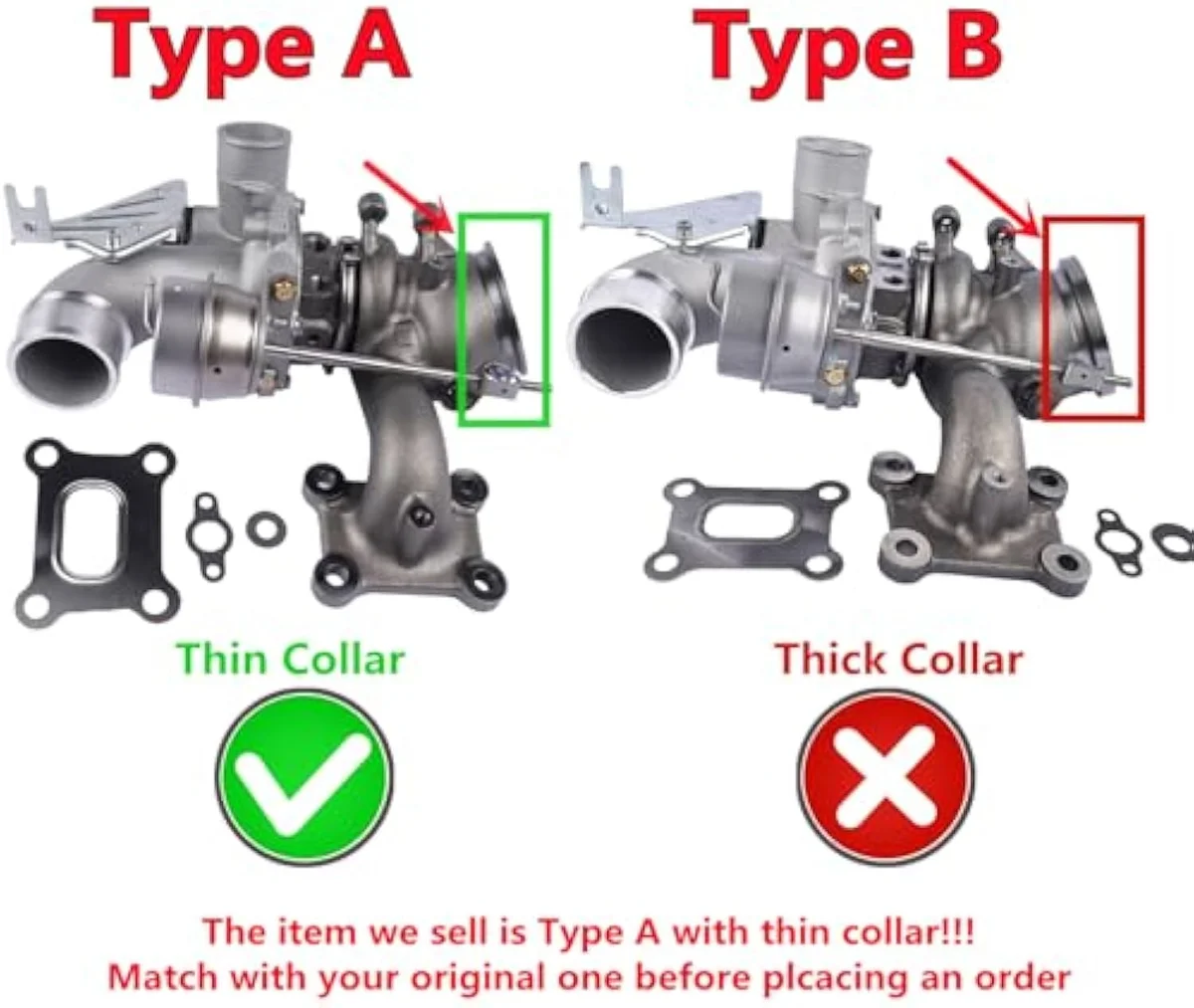
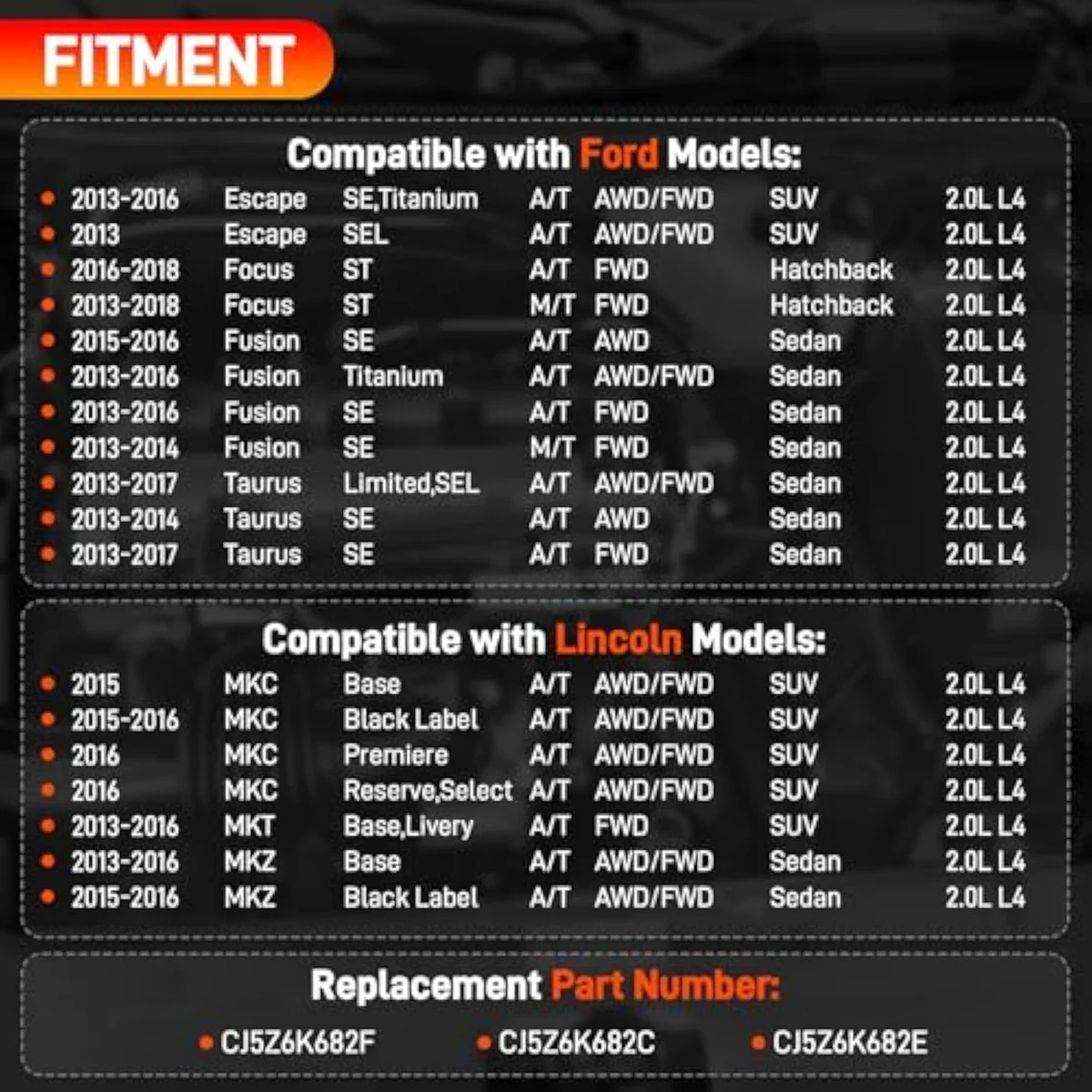
Aftermarket complete-turbo cross-references on Amazon cover the same OE chain (Ford CJ5Z6K682-X / 282312B760 / 53039880271 series) at $300-$700. The multi-chassis listing at the top of the cross-reference family is the turbo-turbocharger-replacement-for-ford-edge-explorer-focus (B0BB75LGKD) — covers the broadest envelope of Edge / Explorer / Focus / Fusion / Escape / Taurus + Lincoln MKC / MKT / MKZ chassis years. The entry-tier cross-shop is the GDUKOP CJ5Z6K682C (B0FTX432FN) at the $300-$500 lower end of the price band. The QBSELECAR 282312B760 (B0DRYHMSX5) ships with a repair-kit format if the install plan involves reusing some hardware.
Check Price on Amazon — Edge / Explorer / Focus EcoBoost 2.0L
"Just got quoted $3300 to replace turbo for sticking wastegate. Looking for guidance." — r/FocusST thread synthesis on the EcoBoost 2.0L sticker-shock pattern. The thread runs 42 comments deep, and the consensus answer is: confirm the wastegate-only failure mode first, then order the $150 actuator from the aftermarket. A complete-turbo replacement on a stuck-wastegate failure is paying double for a problem the actuator alone solves.
Carbon Mitigation
The single most impactful maintenance intervention on the EcoBoost 2.0L is intake-valve walnut-shell blasting at 80,000-100,000 miles. Direct-injection engines never wash the back of the intake valves with fuel (the injector sprays downstream of the valve), so carbon accumulates on the valve face over time. The buildup degrades airflow, runs the engine richer at part-throttle to compensate, produces more exhaust carbon, and accelerates the wastegate-flapper sticking pattern.
Walnut-shell blasting at 80,000 miles costs $400-$600 at a Ford specialist, takes 3-4 hours, and resets the carbon-buildup clock. The maintenance interval is documented at the Turbo University EcoBoost maintenance guide and the OE-supplier guidance lives at the Rotomaster turbo replacement maintenance guide. The Ford-specific service intervals and the post-2018 mitigation revisions are covered at the ADP Distributors EcoBoost turbo service guide. For the broader four-stage repair decision tree that walnut-blasting fits into, see our turbocharger repair decision guide.
The carbon-mitigation discipline matters financially because skipping it cuts turbo life by 30-40%. A truck on 5,000-mile synthetic oil intervals plus 80,000-mile walnut-blast service typically reaches 150,000+ miles on the original turbo. A truck on extended 10,000-mile intervals without walnut-blasting often loses the turbo at 90,000-110,000 miles. The $400-$600 maintenance investment buys $1,500-$2,000 in turbo-replacement deferral, plus reduces the failure-mode bias toward complete-turbo replacement (carbon-heavy engines kill compressor wheels more aggressively than well-maintained ones).
Our Conversion Pick
For 70% of EcoBoost 2.0L readers with a confirmed full-failure diagnosis (P0299, oil consumption, compressor-wheel damage on visual inspection), the structural answer is the Edge / Explorer / Focus EcoBoost 2.0L cross-reference (B0BB75LGKD) as the conversion target — broadest chassis coverage, deepest install-kit, the multi-chassis bench's safest pick. Total project cost: $500-$800 in parts (turbo + gaskets + new wastegate hardware), $400-$600 in independent-shop labor. Against the $2,800-$3,300 dealer estimate, the savings is $1,500-$2,000.
For 30% of readers landing here with a confirmed stuck-wastegate-only diagnosis (P0234 or P0299 with free actuator movement and no rotating-assembly symptoms), the right answer is an actuator-only replacement plus the walnut-shell intake clean — $250-$500 total. The complete-turbo path on a stuck-wastegate failure is the most common $1,000 mistake on this platform. Confirm before ordering. Our paired knowledge primer on how a turbocharger works covers the wastegate architecture context if you want the engineering picture before committing. For the smaller-displacement EcoBoost 1.6L sister-engine on Escape / Fusion / Fiesta applications, the related decision framework lives in our EcoBoost 1.6L Replacement Guide (different KP39 platform, recall window for some 2013-2014 VINs).
EcoBoost 2.0L Replacement Questions
- What is the life expectancy of the 2.0 EcoBoost turbo?
- The factory K03 / GTB1446V turbo on the Ford 2.0L EcoBoost typically lasts 100,000–150,000 miles when oil-change discipline is maintained at 5,000-mile intervals on full synthetic. Stretched maintenance intervals at the OEM 10,000-mile recommendation cut life by 30–40%. The dominant failure mode is wastegate actuator sticking — coking on the wastegate-flapper hinge from carbon buildup at the exhaust outlet. The mechanical turbo itself often outlasts the actuator by 50,000 miles, which makes the diagnostic distinction important before paying for a complete-turbo replacement.
- How much does it cost to replace a turbo on a Ford EcoBoost 2.0L?
- Dealer quotes for the EcoBoost 2.0L turbo replacement run $2,800–$3,300 (parts plus labor) on Edge, Explorer, Focus, Fusion, MKC, MKT, and MKZ chassis. The aftermarket complete-turbo path on Amazon runs $300–$700 (turbo-turbocharger-replacement-for-ford-edge-explorer-focus, GDUKOP CJ5Z6K682C, QBSELECAR 282312B760 cross-references). Independent-shop labor adds $400–$600. Total aftermarket-path cost: $700–$1,300, putting the savings vs dealer at $1,500–$2,000. The wastegate-only path on a stuck-actuator failure costs $150–$300 in parts and $200–$300 in labor.
- Did Ford fix the 2.0 EcoBoost turbo problems?
- Ford issued multiple TSBs targeting the EcoBoost 2.0L turbo failure pattern — TSB 14-0090 (intake-manifold reflash for carbon mitigation), TSB 17-2253 (wastegate-actuator replacement procedure), and TSB 19-2298 (turbo replacement guidelines). None of those TSBs extended turbo warranty coverage. The 2018 model-year refresh introduced revised piston-ring tension and a modified PCV system that reduced oil-vapor ingestion into the intake stream, extending typical turbo life on 2018+ chassis by 30,000–50,000 miles compared to 2013-2017 builds. Owners of pre-2018 vehicles are still exposed to the original failure pattern.
- How much does it cost to replace a turbo on a 2016 Ford Escape?
- The 2016 Escape with the 2.0L EcoBoost shares the same K03 turbo platform as the Edge / Focus / Fusion / MKC. Dealer pricing runs $2,500–$3,000 for the 2016 model year. Aftermarket cross-reference parts (CJ5Z6K682C, 282312B760) sit at $300–$700 on Amazon. The 2.0L Escape has a slightly tighter engine bay than the Edge and Explorer applications, adding 1-2 hours of shop labor for the turbo swap, putting independent-shop total at $800–$1,400. For the 1.6L EcoBoost on the 2013-2019 Escape, the cost band is similar but the parts and procedure are different — see the dedicated 1.6L replacement decision framework.
- How can a stuck wastegate be distinguished from full turbo failure?
- Three diagnostic signals separate stuck-wastegate from full failure on the 2.0L EcoBoost. One: P0234 over-boost code (wastegate stuck closed, boost climbs past commanded) vs P0299 under-boost code (turbo cannot reach commanded boost — points to wastegate stuck open or rotating-assembly damage). Two: boost-gauge behavior under acceleration. Pulses to higher-than-commanded boost = stuck closed; pulses to lower-than-commanded boost with no other turbo symptoms = stuck open. Three: actuator rod movement. With the engine off and vacuum disconnected, the wastegate rod should spring back freely. Stuck rod confirms actuator-only repair.
- Is the Ford 2.0 EcoBoost a twin-turbo design?
- No — the 2.0L EcoBoost is a single-turbo design across all Ford applications (Edge, Explorer, Focus, Fusion, Escape, Lincoln MKC, MKT, MKZ). The K03 BorgWarner family covers the 2013-2018 applications; the 2019+ refresh moved to the K04 frame on some Edge ST and Explorer ST trims. The 2.7L EcoBoost V6 on the F-150 and Edge ST is a twin-turbo design (one turbo per cylinder bank). The 3.5L EcoBoost V6 on the F-150 and Expedition is also twin-turbo. Confusion between 2.0L single-turbo and 2.7L / 3.5L twin-turbo platforms is common at parts counters.
- How much does it cost to replace a turbo on a Ford Edge or Explorer?
- Both Edge and Explorer 2.0L EcoBoost applications use the same K03 turbo platform with shared OE part numbers (CJ5Z6K682C, 282312B760). Dealer pricing runs $3,000–$3,300 on either chassis. Aftermarket cross-reference parts run $300–$700 on Amazon. Independent-shop labor: $400–$600 on the Edge (slightly more accessible engine bay), $500–$700 on the Explorer (tighter packaging). Total aftermarket-path: $700–$1,400 on both. The Ford Focus ST 2.3L EcoBoost uses a different turbo platform (K04) and is not cross-shop with the 2.0L family.

Get Product Updates
Updates only when something changes.
Only when something changes. Unsubscribe anytime.