Updated
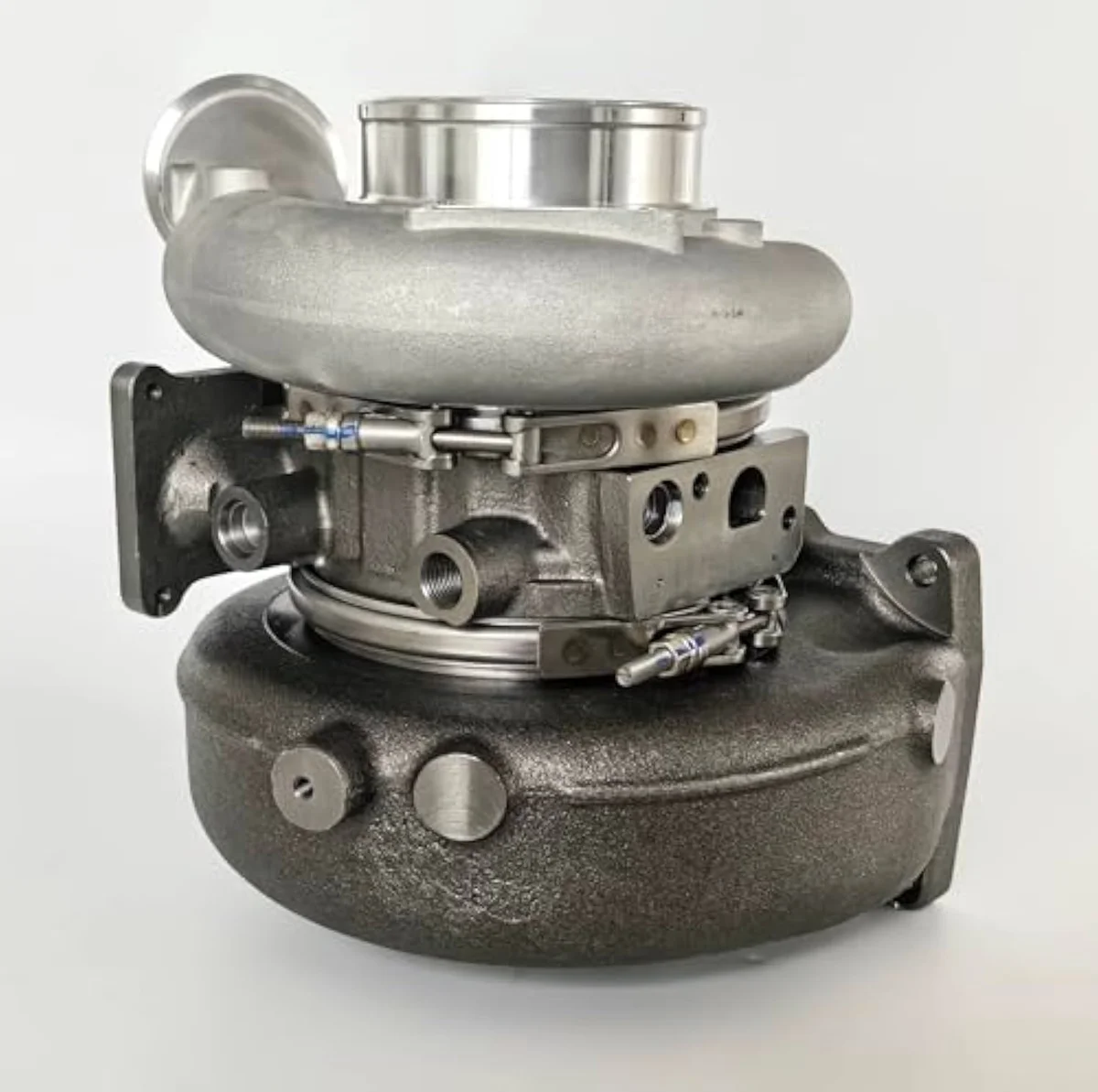
For the VGT architecture that dominates modern diesel turbocharger applications, see the Read the VGT architecture explainer — covers the moveable-vane mechanism on Cummins 6.7L, Ford 6.7L Power Stroke, and European diesel applications.
Why Diesel Engines Use Turbochargers Universally
Diesel engines compress intake air to 16:1 to 22:1 compression ratios versus 9:1 to 12:1 typical of gasoline. The higher compression produces more potential energy per cycle and higher exhaust temperatures. Turbocharging captures the available exhaust energy efficiently, making the architecture structurally suited to diesel applications even before fuel-economy rules forced adoption.
The thermodynamic match: diesel exhaust at 1,300-1,500°F sustained drives turbine wheels effectively at the airflow rates diesel engines produce; gasoline exhaust at 1,650-1,800°F drives smaller turbine wheels at proportionally higher rotational speeds. The diesel side gets more torque-per-RPM from its turbo because the larger turbine wheel and slower RPM operate inside the turbine\'s efficiency envelope more consistently. This is why diesel turbos run lower peak RPM (60,000-120,000 RPM) than gasoline turbos (80,000-180,000 RPM) at equivalent boost targets.
The structural fit explains why every modern diesel pickup, every Class-8 commercial truck, and every stationary diesel generator ships factory turbocharged. The naturally-aspirated diesel pickup market disappeared in the early 2000s; the architecture is no longer a buying decision for new diesel applications. Aftermarket replacement work focuses exclusively on the turbocharged fleet, which means every Cummins / Power Stroke / Duramax owner eventually faces the same diagnostic decision tree at some mileage threshold.
"Cummins 6.7L Ram owners with over 100,000 miles see one near-universal symptom: P003A code, intermittent boost performance, occasional limp mode. Diagnostic checks the actuator first because that is where 80% of the failures concentrate. Once the actuator is replaced ($200-$700 plus 1-2 hours labor), the turbo runs another 100,000+ miles before hitting the next failure threshold." — r/Cummins / r/cumminsforum synthesis on the variable-geometry actuator failure pattern across the 6.7L Ram install base.
The Three Major US Diesel Turbo OEM Platforms
Three OEM diesel platforms anchor the US aftermarket replacement market: Cummins 6.7L (Ram heavy-duty pickup, highest volume), Ford 6.7L Power Stroke (Super Duty, second-highest), and GM Duramax 6.6L (Silverado / Sierra HD, third-highest). Each platform uses a different OEM supplier with different cross-reference patterns.
Cummins 6.7L Ram (2007.5-2025). Holset HE351VE on 2007.5-2012 generation (OE 5354495 / 6411490); Holset HE300VG on 2013-2025 generation (OE 5604175 / 5604180 / 6411519RX). Aftermarket replacement: budget Chinese ($700-$1,200), specialty-tier rebuilder (Fleece, BD Diesel, Industrial Injection, HPT, Bullseye — $2,000-$5,500), OEM-rebuilt Holset ($1,800-$2,500). The actuator-only repair path is the highest-impact diagnostic move on this platform.
Ford 6.7L Power Stroke (2011-2025 Super Duty). Garrett GT3782VAS on 2011-2014 generation; Garrett GT3788LVA on 2015-2025 generation. Aftermarket replacement: budget Chinese ($700-$1,800), specialty-tier rebuilder (KC Turbos, GO Diesel, HPT — $2,500-$5,500), OEM-rebuilt Garrett ($2,000-$2,800). GM Duramax 6.6L (2001-2025 Silverado / Sierra HD). LB7 first-generation BorgWarner K27; LLY / LBZ / LMM / LML middle generations Garrett VGT; L5P current generation BorgWarner / Garrett split. Aftermarket spans similar tiers across BD Diesel, HPT, and OEM Garrett-rebuilt sources.
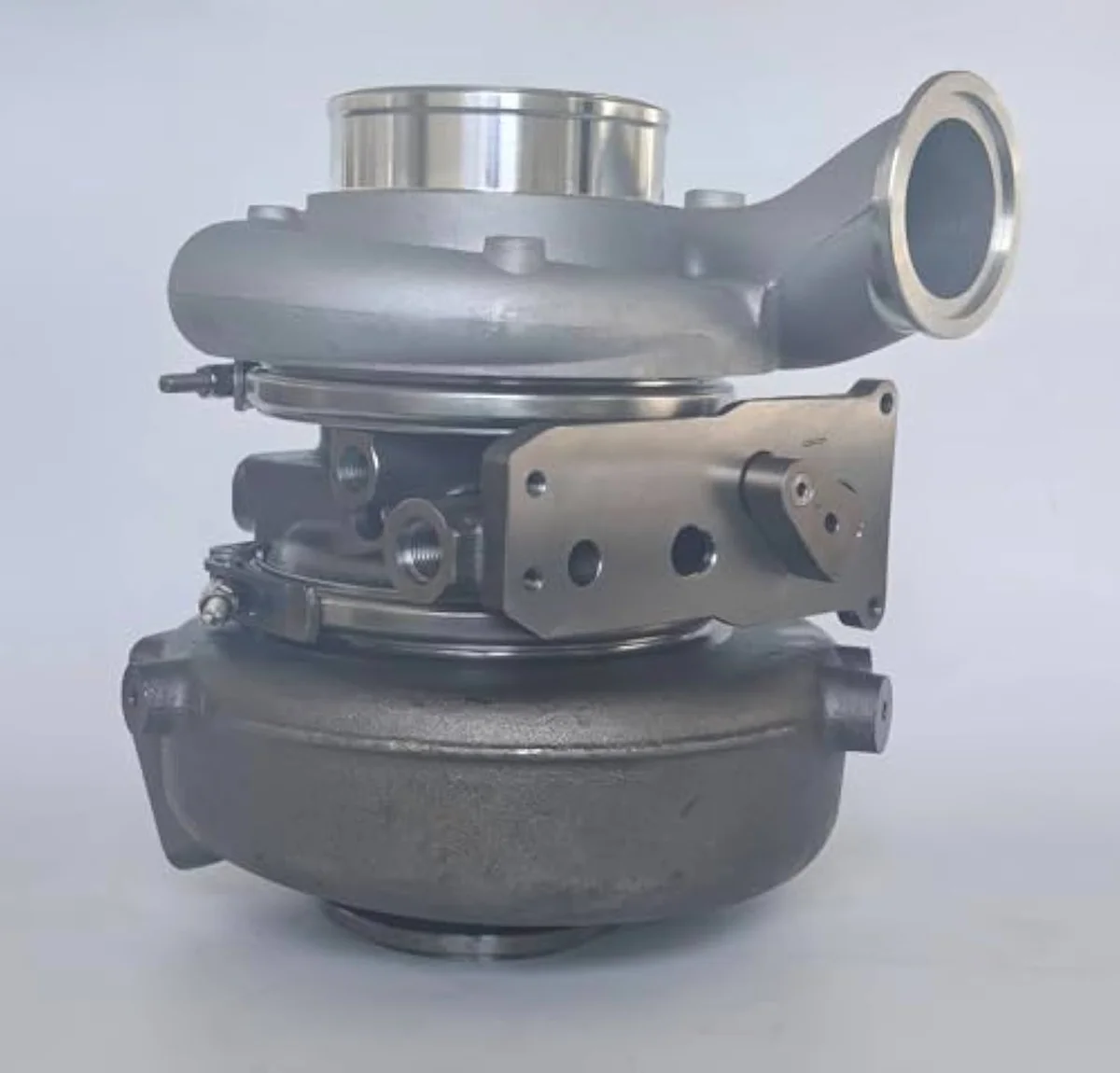
The HE300VG above represents the modern 2013-2025 variable-geometry chapter of the Cummins 6.7L story; the prior 5.9L industrial 6BT chapter ran a fundamentally different Holset family. Cummins 6BT 5.9L (1994-2002 12-valve, 2003-2007 24-valve common-rail) is the highest-volume industrial / agricultural / generator-set turbocharged diesel platform in the US aftermarket. The Holset HX35 fixed-geometry frame on the 5.9L 6BT install base spawned the entire $150-$350 budget-tier replacement segment indexed below.
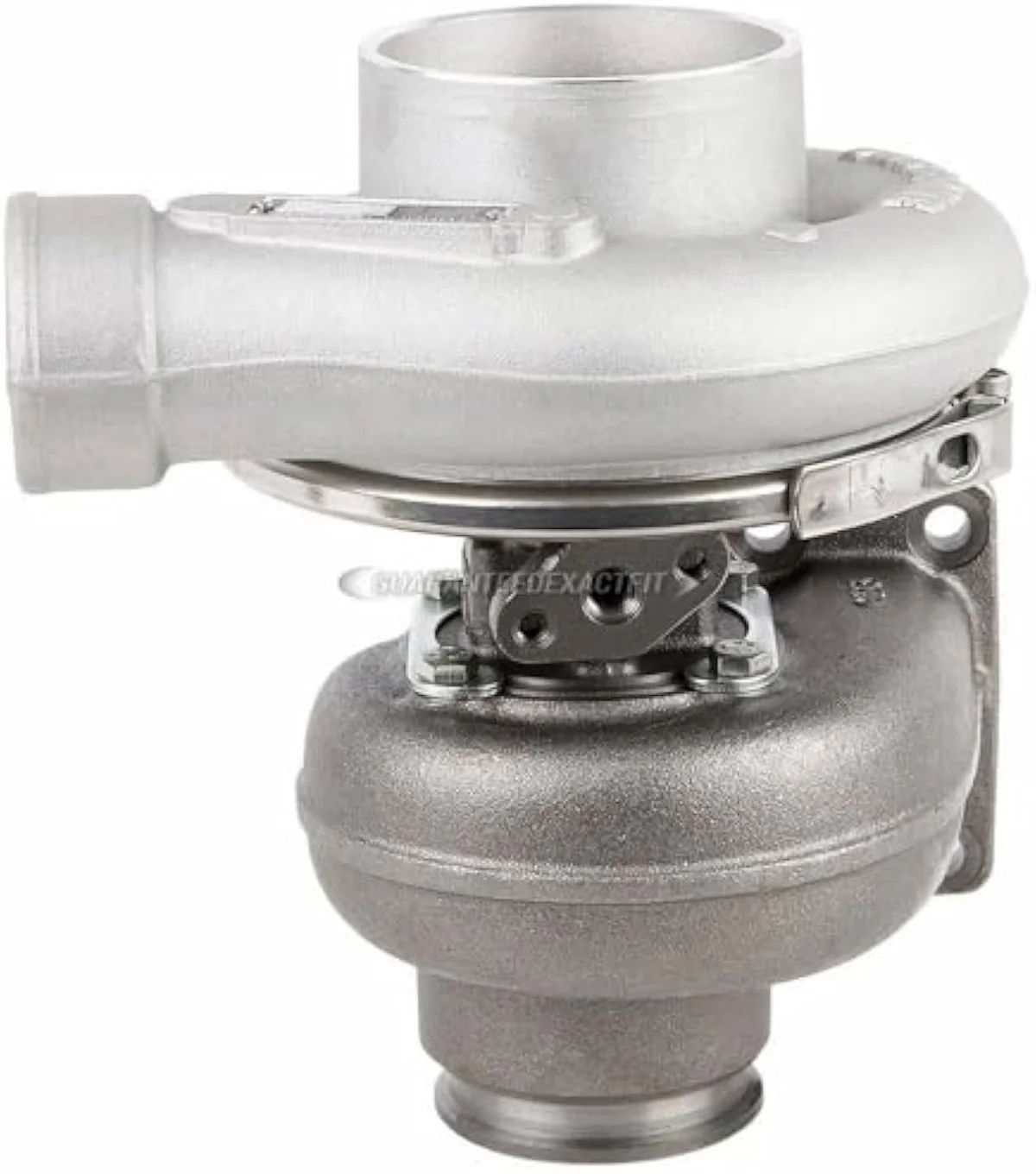
VGT Dominance in Diesel Turbo Architecture
Variable-geometry turbocharger architecture is the standard inlet design on modern diesel passenger and heavy-duty applications. The moveable vanes inside the turbine housing change effective cross-section on demand — closed at low RPM for fast spool, open at high RPM for peak flow.
Cummins 6.7L HE351VE / HE300VG, Ford 6.7L Power Stroke GT3782VAS / GT3788LVA, GM Duramax LBZ-onwards Garrett VGT, BMW B47 / B57 diesel Garrett GT2056V, Mercedes OM651 IHI or Garrett VGT — all use the same fundamental variable-geometry architecture with brand-specific implementation details. The architecture eliminates the spool-vs-peak compromise that fixed-geometry single turbos force, allowing one frame to cover the full diesel torque curve from 1,800 RPM idle through 3,500 RPM redline cleanly.
Diesel Aftermarket Brand Tiers
The diesel aftermarket cross-shop splits across four documented tiers. OEM-rebuilt direct (Holset for Cummins, Garrett for Ford / GM): highest price, best warranty depth, OEM-spec performance and service life. Specialty-tier rebuilders (Fleece Performance, BD Diesel, Industrial Injection, HPT, Bullseye Power, KC Turbos): mid-to-high price, documented dyno-proven Stage upgrades, distributed through specialty diesel shops. Budget aftermarket Chinese (ASDPI, Dofoch, generic cross-references): lowest price, shortest service life, distributed through Amazon and eBay.
The right tier depends on chassis and use case. Daily-driver Cummins 6.7L Ram pickup → OEM Holset rebuilt or specialty-tier Stage 1 (HPT, Fleece, BD Diesel) for documented warranty depth. Performance Cummins 5.9L compound build → specialty-tier Stage 3-4 (Bullseye, Industrial Injection) for race-tier dyno-proven kits. Stock-replacement budget-constrained → budget Chinese cross-reference (ASDPI on Cummins 6.7L, generic GT3782 on Power Stroke). Fleet commercial replacement → OEM-rebuilt for documented warranty terms across the fleet.
For the broader diagnostic and repair decision context, the Read the four-stage repair decision guide covers Clean / Actuator / Cartridge / Complete cost bands per diesel chassis. For the VGT architecture deep-dive, the Read the VGT architecture explainer covers the vane mechanism. For the specialty-tier rebuilder brands, the Read the HPT brand-tier guide covers HPT plus Fleece, BD Diesel, Industrial Injection, KC Turbos. For Bullseye Power compound twin specialty, the Read the Bullseye Power brand-tier guide covers the Cummins compound race-tier lane. For the OEM-spec replacement product review on the highest-volume diesel turbo install base, the Read the Holset HE351VE review covers the 2007.5-2012 Ram 2500/3500 install base directly. For the broader cross-engine roundup, the Read the cross-engine roundup covers documented OE-replacement picks.
For deeper engineering background, the Turbocharger reference covers compressor-and-turbine fundamentals. The Diesel engine reference covers heavy-duty diesel architecture. The Turbo University reference publishes industrial-tier balance-and-test discipline applicable to diesel cores. The Turbocharger Rebuilding Distribution catalog publishes OE manifest cross-references for the Cummins, Power Stroke, and Duramax platforms.
Diesel Turbo Decision Questions
- Why do diesel engines use turbochargers?
- Diesel engines compress air to higher pressures than gas engines (compression ratios 16:1 to 22:1 vs 9:1 to 12:1 for gas), making turbocharging structurally efficient for diesel even before fuel-economy regulations. The higher cylinder pressure means more potential energy per combustion cycle, and the higher exhaust gas temperatures drive larger turbine wheels effectively. Every modern OEM diesel application from 2007 onward is turbocharged; the architecture has been universal in heavy-duty pickup applications since the 1990s.
- How long do diesel turbochargers last?
- OEM diesel turbochargers from Cummins 6.7L Holset HE351VE / HE300VG, Ford 6.7L Power Stroke Garrett GT3782VAS / GT3788LVA, and GM Duramax Garrett VGT routinely reach 200,000-300,000 miles on proper maintenance. Heavy-truck Class-8 diesel turbos from BorgWarner S400-series reach 500,000-1,000,000 miles between rebuilds with proper service. The mechanical side of diesel turbos consistently outlasts the variable-geometry actuator, which typically fails first at 100,000-180,000 miles on Cummins 6.7L applications.
- What is the most common diesel turbocharger problem?
- Variable-geometry actuator failure on the Cummins 6.7L is the single most common diesel turbocharger problem in the US aftermarket. The Holset HE351VE and HE300VG actuators fail at 100,000-180,000 miles, triggering a P003A diagnostic code. The mechanical side of the turbo stays intact; only the electronic actuator needs replacement. Stage 2 actuator-only repair at $200-$700 versus Stage 4 complete-turbo replacement at $1,500-$2,500 saves $1,000-$1,800 on this single failure mode.
- Can you delete a diesel turbocharger?
- Removing the turbocharger from a modern OEM diesel application is functionally impossible — the engine's peak power band, emissions calibration, and exhaust gas recirculation system all depend on the turbo's pressurization. Without the turbo, the engine produces roughly 50-60% of rated horsepower, fails emissions inspection, and triggers a cascade of OBD-II diagnostic codes. The right move when a turbo fails is replacement, not deletion. "Diesel delete" kits target other emissions components (DPF, EGR, SCR) but rarely target the turbocharger itself.
- How much does a diesel turbocharger cost?
- Cummins 6.7L Ram Pickup OEM-rebuilt: $1,800-$2,500. Cummins 6.7L Ram budget aftermarket: $700-$1,500. Ford 6.7L Power Stroke OEM-rebuilt: $1,800-$2,800. Power Stroke budget aftermarket: $700-$1,800. GM Duramax LBZ/LMM OEM-rebuilt: $1,500-$2,500. Heavy-truck S400-series industrial: $1,200-$3,500. Specialty-tier diesel rebuilder (Fleece, BD Diesel, Industrial Injection, HPT, Bullseye): $2,000-$5,500 for Stage 1-3, $6,000-$14,000 for compound twin kits.
- What is the best aftermarket diesel turbocharger?
- For Cummins 6.7L stock-replacement work, the cross-shop runs between OEM-rebuilt Holset (best warranty, highest price), specialty-tier rebuilder (Fleece, BD Diesel, Industrial Injection, HPT — closer per-build documentation), and budget Chinese cross-references (ASDPI, Dofoch, generic — lowest price, shorter service life). For Cummins 5.9L performance builds, the Fleece Cheetah HX35 covers the documented 1994-2002 single-turbo upgrade lane. For compound twin builds, Bullseye Power and Industrial Injection lead the Cummins community.
- Do all diesel pickups have turbochargers?
- Yes — every modern diesel pickup truck (Ram Cummins, Ford Super Duty Power Stroke, GM Silverado/Sierra HD Duramax) sold since the 1990s ships factory turbocharged. The non-turbocharged diesel pickup market disappeared in the early 2000s. Modern OEM diesel pickups use variable-geometry single turbos (Cummins HE351VE/HE300VG, Power Stroke GT3782VAS/GT3788LVA) or twin-sequential configurations (Ford 6.4L Power Stroke 2008-2010) depending on generation. Heavy-duty diesel without turbocharging is no longer a market category.
Get Product Updates
Updates only when something changes.
Only when something changes. Unsubscribe anytime.