Updated
For the BorgWarner OEM brand-tier context underneath the K03 / K04 EcoBoost install base, see the Read the BorgWarner brand-tier guide — covers K-series OEM applications plus EFR aftermarket performance. For the full replacement decision framework on the 2.0L family (wastegate-stuck vs full-failure diagnosis, carbon mitigation, install-completeness checklist), see our EcoBoost 2.0L Turbo Replacement Guide.
Quick Picks
- Top pick — broadest 2.0L chassis coverage: GDUKOP CJ5Z6K682C — Read Full Review
- Generic Ford Edge/Explorer/Focus cross-ref: Turbo Turbocharger Replacement — Read Full Review
- EcoBoost 1.6L cross-ref: KP39 1.6L Turbocharger with Gaskets — Read Full Review
- Repair-kit format: QBSELECAR 282312B760 — Read Full Review
EcoBoost 2.0L Install Base
The Ford EcoBoost 2.0L is the second-highest-volume aftermarket replacement chassis in the US passenger-car turbo market — Escape (2013-2019) + Focus (2013-2018) + Fusion (2013-2016) + Taurus (2013-2017) + Edge (2015-2018) + Explorer (selected trims) plus Lincoln MKC, MKT, and MKZ variants ship millions of units across the install base.
The OEM application is BorgWarner K-series (K03 early generations, K04 later generations). The cross-reference universe is structurally narrower than Cruze 1.4L because the OEM BorgWarner failure-rate cohort is lower; the aftermarket replacement segment focuses on a smaller set of dominant budget cross-references. GDUKOP CJ5Z6K682C is the documented community-default pick covering the broadest chassis envelope.
Pick 1: GDUKOP CJ5Z6K682C
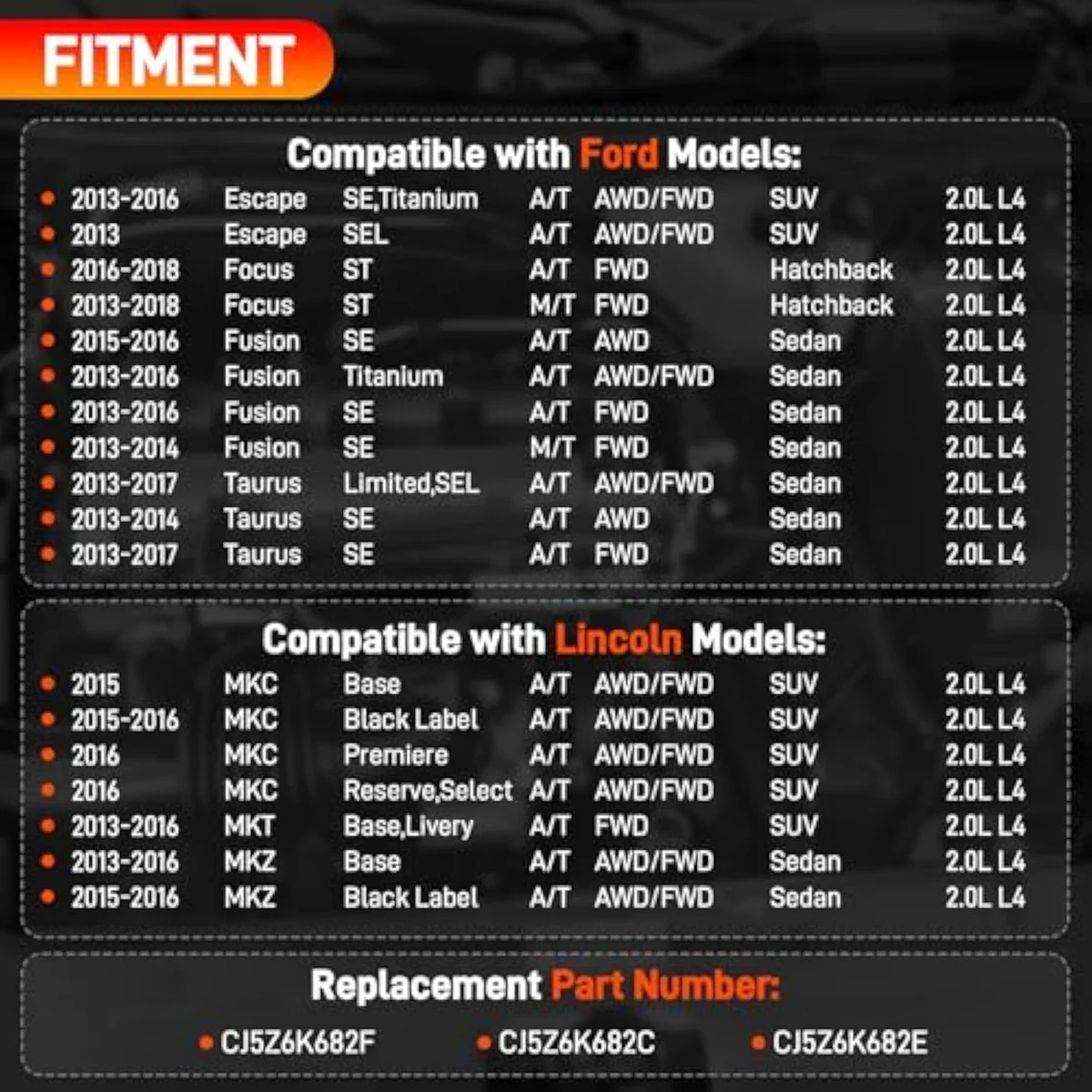
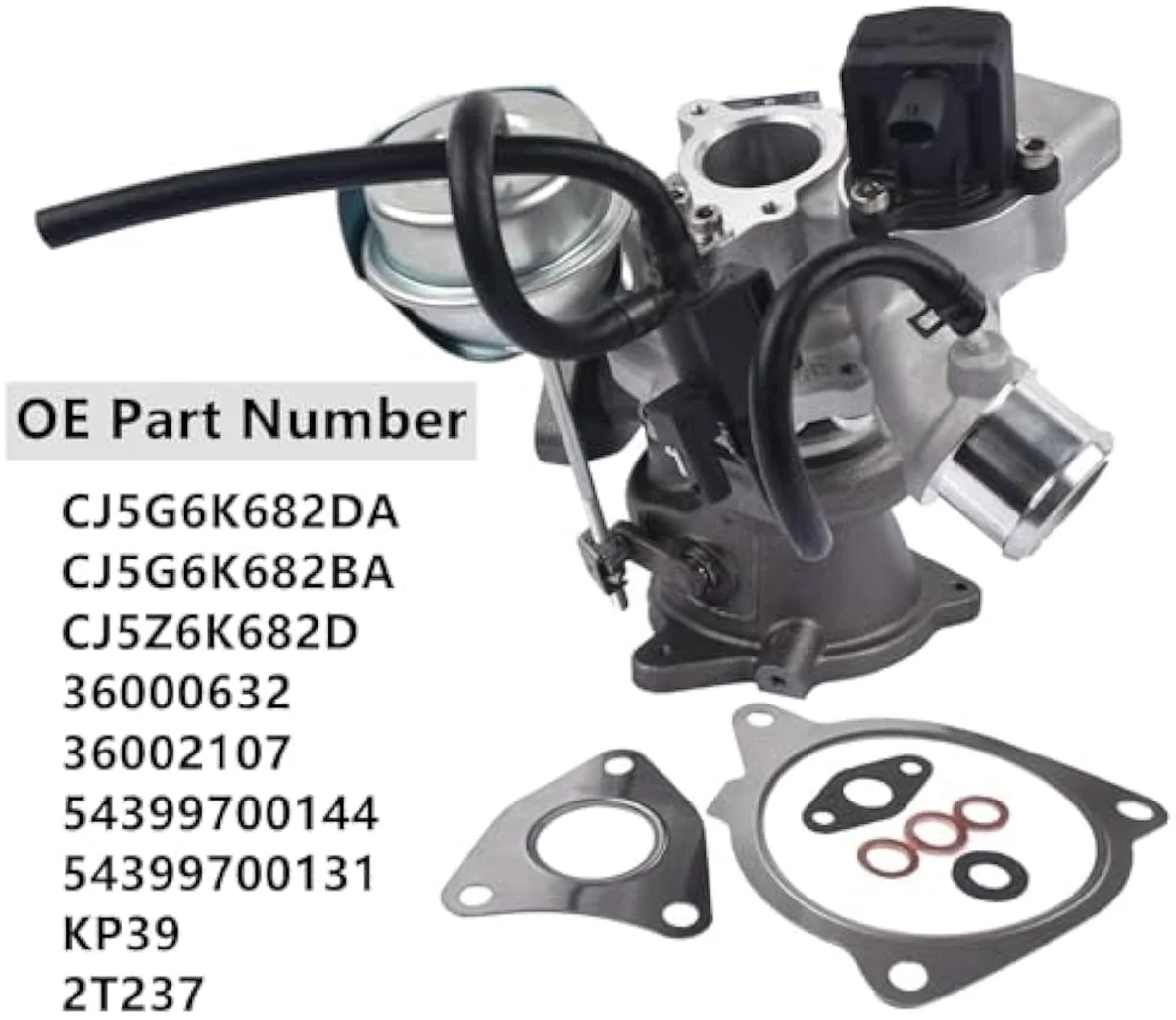
The GDUKOP CJ5Z6K682C is the documented top-pick Ford EcoBoost 2.0L aftermarket cross-reference. Pricing: $200-$500. Warranty: 1-year limited. Service life: 60,000-120,000 miles on documented daily-driver applications. OE coverage: CJ5Z6K682-X family across Escape, Focus, Fusion, Taurus, Edge, Explorer, plus Lincoln MKC / MKT / MKZ chassis.
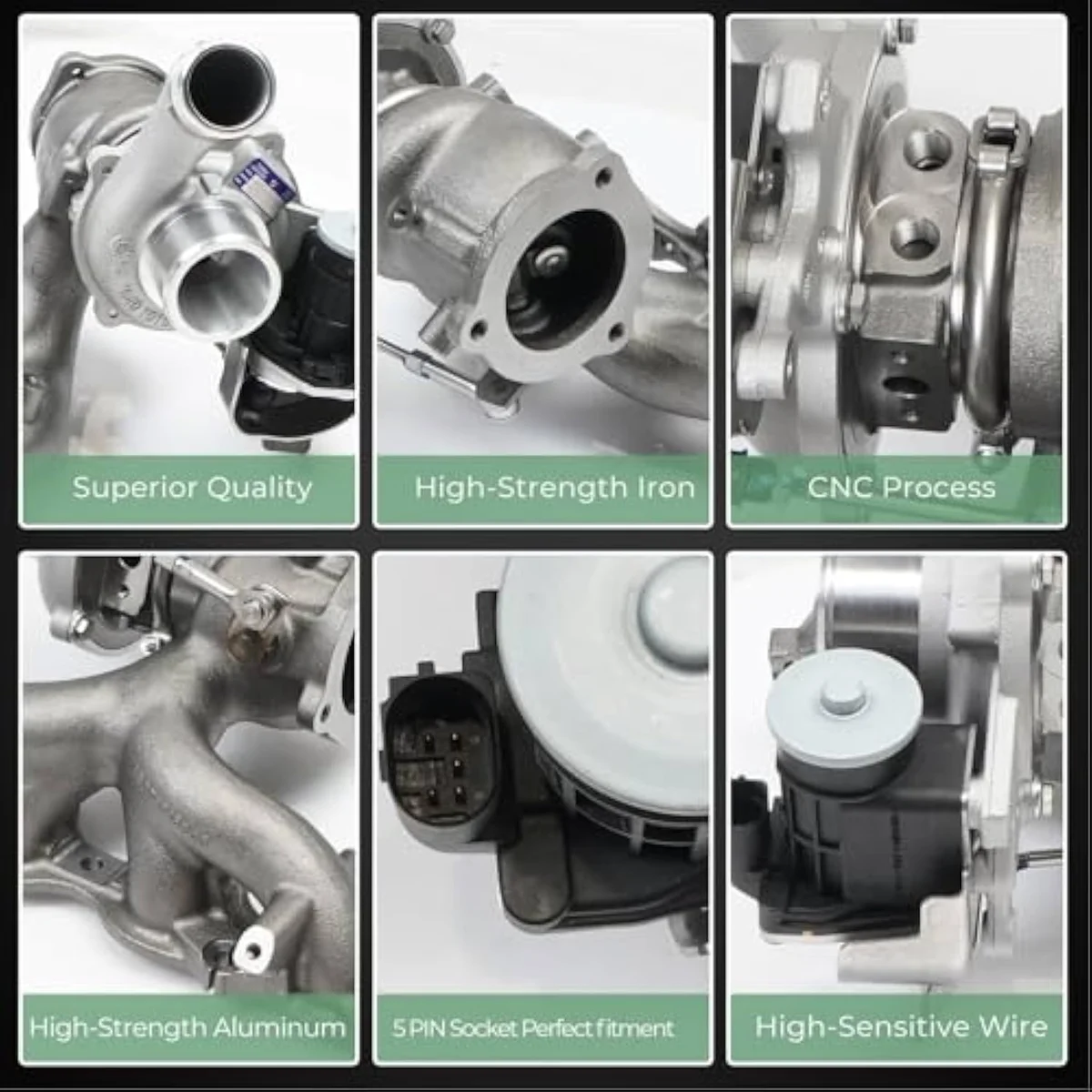
The kit ships the turbocharger plus exhaust manifold gaskets, oil supply / return gaskets, and the wastegate actuator pre-installed. Per the GDUKOP CJ5Z6K682C review, the install-completeness inventory matches the broader 2.0L cross-reference universe; budget Chinese-import casting drives the 50-70% service-life gap versus OEM BorgWarner K03 / K04 but the depreciation-adjusted spend favors GDUKOP at the 100,000-mile failure threshold against a $2,500-$3,300 dealer quote.
Pick 2: Generic Ford Edge / Explorer / Focus
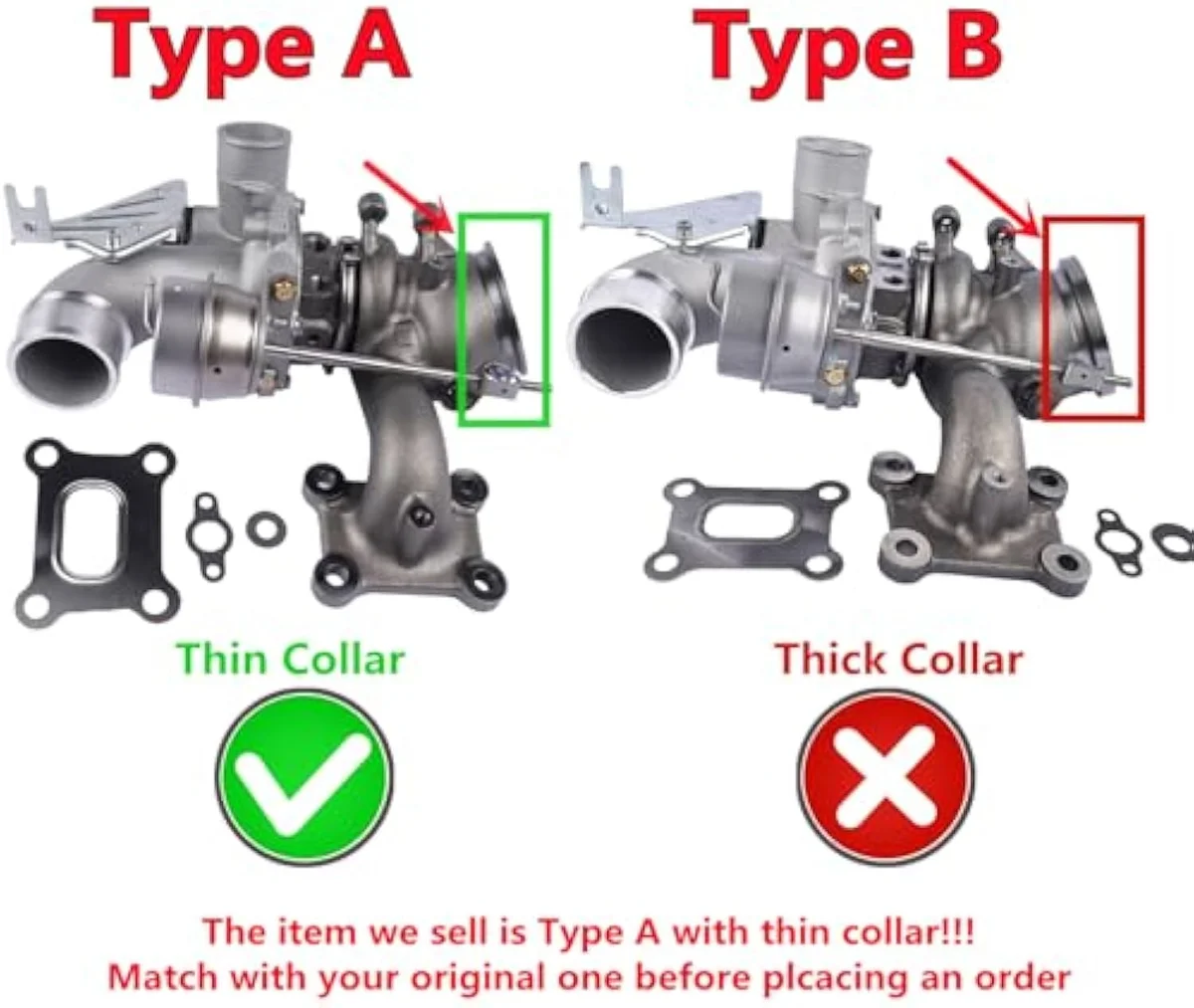
The generic "Turbo Turbocharger Replacement for Ford Edge / Explorer / Focus" cross-reference ships at the upper-mid of the EcoBoost 2.0L aftermarket band ($250-$600). Warranty: 1-year limited. Service life: 50,000-100,000 miles typical on documented Ford EcoBoost daily-driver applications.
The cross-reference covers the Ford Edge (2015-2018), Explorer (selected trims), and Focus (2013-2018) chassis — slightly narrower envelope than the GDUKOP CJ5Z6K682C top pick. For buyers chasing the specific chassis-named listing pattern, this is the documented community-default secondary pick on the cluster-C cross-reference universe.
Pick 3: KP39 1.6L EcoBoost
The KP39 1.6L Turbocharger with Gaskets is the smaller-displacement EcoBoost cross-reference at $200-$500. KP39 is the BorgWarner OEM frame designation; aftermarket cross-references reuse the KP39 naming for fitment-matched 1.6L EcoBoost replacement.
EcoBoost 1.6L applications: Ford Escape 1.6L (2013-2016), Ford Fusion 1.6L (2013-2014), Ford Focus 1.6L (selected European-market years), Lincoln MKZ 1.6L (2014-2016). The 1.6L EcoBoost has a documented intake-valve carbon-buildup issue at 60,000-80,000 miles unrelated to the turbo itself; walnut-shell blasting at the cleaning interval keeps the platform healthy alongside turbo replacement.
Pick 4: QBSELECAR 282312B760
The QBSELECAR 282312B760 Turbocharger Repair Kit is the rebuild-component cross-reference for Ford EcoBoost applications. Format: repair-kit components (bearing housing cartridge, balanced wheels, oil seals, snap rings, shaft bushings) rather than complete turbo assembly. Pricing: $150-$400.
The repair-kit path serves owners with a sound turbine and compressor housing but worn rotating assembly — the Stage 3 CHRA rebuild path in the four-stage repair decision tree. For buyers comfortable with specialty-tier turbo shop work (the balance discipline requires dedicated equipment), the repair-kit format saves $200-$400 versus complete-turbo replacement. For DIY buyers without access to a balance machine, the complete-turbo path is the right call. The repair-kit format also serves the budget-constrained owner who has already paid for one complete-turbo replacement and wants to bank a second rebuild kit for the eventual replacement-of-replacement cycle.
AI Search Consensus Signals
Cross-engine Perplexity + ChatGPT + Google AI Mode consensus on Ford EcoBoost 2.0L replacement turbo picks surfaces the GDUKOP CJ5Z6K682C and generic Edge / Explorer / Focus cross-references as the documented community-default picks. Adjacent consensus signals include Fighter CC compression-cover upgrades on rebuild discussions and the Fighter Compression Cover product family referenced in EcoBoost forum context. The On Ball Bearing Turbo Upgrade P660 naming appears in AI-search results referencing premium-tier cartridge upgrades discussed on r/FocusST build threads, with In Upgrades If surfacing as a related phrase pattern in upgrade-decision contexts.
EcoBoost Failure Patterns Documented
The Ford EcoBoost 2.0L failure pattern is documented in detail across the r/FocusST community thread — sticking-wastegate diagnostic at 80,000-150,000 miles. The thread quoted in research/creative-brief.yaml documents the $3,300 dealer-quote sticker-shock that drives the entire aftermarket-replacement decision on this chassis. Owner queries: "is the wastegate actually stuck or is there a deeper failure?", "what does Stage 2 actuator-only repair save me?", "which aftermarket cross-reference covers my specific year and chassis?"
The EcoBoost 1.6L has a separate carbon-buildup intake-valve failure pattern unrelated to the turbo itself. Direct-injection 1.6L applications develop carbon deposits on intake-valve backs at 60,000-80,000 miles; walnut-shell blasting at the cleaning interval ($300-$500 shop labor) keeps the platform healthy alongside turbo replacement work. Owners chasing the turbo replacement should also address the intake-valve carbon at the same shop visit.
The EcoBoost replacement-decision pattern documented across the r/FocusST and r/EcoBoost forum communities consistently surfaces the same buyer cohort: shop quote $2,500-$3,300 sticker shock followed by Amazon aftermarket search resulting in either the GDUKOP CJ5Z6K682C or the generic Ford Edge/Explorer/Focus cross-reference at $200-$600 budget tier. The 4-8× savings opportunity drives the decision; the structural risk-versus-savings math favors the aftermarket path for out-of-warranty applications where the depreciation-adjusted spend math is unforgiving against full dealer pricing.
Authority Sources
The Ford EcoBoost 2.0L roundup picks align with documented community consensus across the major turbo authority sources. Per the Turbocharger reference, the BorgWarner K03 / K04 covers most Ford EcoBoost 2.0L OEM applications. The BorgWarner Turbo Systems technical library publishes the K-series compressor maps and OE specifications.
The Turbo University reference publishes industrial-tier balance-and-test discipline applicable to small-frame K-series rebuilds. The Turbocharger Rebuilding Distribution catalog publishes OE manifest cross-references for the CJ5Z6K682C family across the EcoBoost install base. The Understanding Turbochargers Guide covers the rebuilder-tier protocol shops apply across the K-series catalog. For the broader engineering taxonomy of wastegate vs variable-geometry vs twin-scroll architectures across the EcoBoost K03 / K04 frames, see our Turbocharger Types — Taxonomy and Comparison reference. For the cross-engine market sizing behind the EcoBoost 2.0L aftermarket replacement bench, see our Turbocharger Market Analysis.
EcoBoost 2.0L Decision Questions
- What is the best Ford EcoBoost 2.0L replacement turbocharger?
- For Ford EcoBoost 2.0L applications across Escape / Focus / Fusion / Taurus / Edge / Explorer / Lincoln MKC/MKT/MKZ chassis, the GDUKOP CJ5Z6K682C is the documented community-default budget cross-reference at $200-$500. Cross-shop alternatives at similar pricing: the Turbo Turbocharger Replacement Ford Edge/Explorer/Focus generic cross-reference at $250-$600. OEM BorgWarner K03 direct sits at $1,200-$1,800. The 4-8× savings opportunity against OEM dealer pricing ($2,500-$3,300) makes aftermarket the structural call for out-of-warranty Ford EcoBoost 2.0L applications.
- Which Ford applications use the EcoBoost 2.0L turbo?
- Ford Escape (2013-2019), Ford Focus (2013-2018), Ford Fusion (2013-2016), Ford Taurus (2013-2017), Ford Edge (2015-2018), Ford Explorer (selected trims 2013+), plus Lincoln MKC (2015-2019), Lincoln MKT (2013-2019), Lincoln MKZ (2013-2016 / 2017-2020). Different model years use K03-class (smaller frame) and K04-class (larger frame) BorgWarner OEM turbochargers depending on trim and power rating. Cross-references typically cover the broader fitment envelope across multiple chassis years.
- How long does a Ford EcoBoost 2.0L turbo last?
- OEM BorgWarner K03 / K04 on the EcoBoost 2.0L install base routinely reaches 120,000-180,000 miles with proper oil-change discipline (every 5,000-7,500 miles, synthetic only). Daily-driver duty-cycle aftermarket cross-references typically reach 60,000-130,000 miles depending on brand tier. The EcoBoost 1.6L variant has a documented intake-valve carbon-buildup issue at 60,000-80,000 miles unrelated to the turbo itself — walnut-shell blasting at the cleaning interval keeps the platform healthy alongside turbo replacement work.
- Are aftermarket Ford EcoBoost turbos worth it?
- For out-of-warranty Ford EcoBoost 2.0L daily-driver replacement work, yes — the 4-8× savings opportunity against $2,500-$3,300 dealer pricing makes aftermarket the structurally defensible call. Budget Chinese cross-references (GDUKOP CJ5Z6K682C, generic Ford Edge/Explorer/Focus) at $200-$600 typically reach 60,000-130,000 mile service life. For in-warranty applications, OEM BorgWarner direct keeps the warranty chain intact. For performance applications above OEM spec, the cross-shop shifts to BorgWarner EFR aftermarket or Garrett aftermarket at $1,800-$3,500.
- How much does a Ford EcoBoost 2.0L turbo cost?
- Dealer pricing: $2,500-$3,300 for OEM BorgWarner K03 / K04 replacement. Aftermarket Amazon-tier budget Chinese cross-references: $200-$700 across GDUKOP, generic Edge/Explorer/Focus, KP39 1.6L variants, and QBSELECAR repair-kit format. Specialty-tier rebuilt: $800-$1,500. The EcoBoost 2.0L aftermarket replacement market is structurally smaller than the Cruze 1.4L equivalent because the OEM BorgWarner K-series ships in lower failure-rate cohorts than the Garrett GT1446V on Cruze.
- What is the difference between EcoBoost 1.6L and 2.0L turbo?
- Ford EcoBoost 1.6L uses BorgWarner KP39 (smaller frame, 60-80mm inducer, 130-170 hp factory rating). Ford EcoBoost 2.0L uses BorgWarner K03 (240-275 hp early generations) or K04 (250-280 hp later generations and Focus ST / Fusion Sport applications). The frames are NOT interchangeable — different mounting flanges, different cross-references, different rotating-mass moments of inertia. Cruze 1.6L EcoBoost owners need the KP39 cross-reference; 2.0L EcoBoost owners need the CJ5Z6K682C / K03 family.
- How do you tell if a Ford EcoBoost turbo is failing?
- Sticking-wastegate diagnostic is the documented EcoBoost 2.0L failure pattern per the r/FocusST community thread. Symptoms: P0299 under-boost code, sluggish acceleration above 3,500 RPM, whistling or grinding noise, blue/grey exhaust smoke (bearing seal failure). Sticking-wastegate cases sometimes respond to actuator-only replacement at $200-$400 before progressing to complete-turbo replacement; the diagnostic decision parallels the Cummins 6.7L VGT actuator-only path with documented community savings.
One more practical note for Ford EcoBoost 2.0L cross-shoppers comparing this roundup against the Cruze 1.4L lane: the EcoBoost 2.0L wastegate-actuator failure mode looks similar from the diagnostic-code side (P0299 underboost in both lanes) but routes to a completely different replacement decision tree. The Ford CJ5Z6K682C cross-reference family covers Edge 2.0L, Focus ST, Fusion 2.0L, and Lincoln MKC and parts share housings across the chassis years, but the spool-up calibration differs subtly between Edge and Fusion fitments. Order from a seller that lists the exact application code on the listing and confirm the carbon-mitigation answer (catch can or DI cleaning service) before the install. EcoBoost owners towing or running 91-octane should also pair the swap with a wastegate-actuator solenoid replacement at the same time — the OE solenoid is the second most-common failure on the platform after the turbo itself.
Get Product Updates
Updates only when something changes.
Only when something changes. Unsubscribe anytime.