Updated
A bad 6.7L Cummins turbo actuator presents as P003A, P004A, P132B, or P00AF diagnostic trouble codes plus loss of boost above 1,800 RPM, sluggish throttle response under load, audible motor stalling near the actuator housing, and visible carbon buildup on the variable-geometry vane mechanism when the turbo is removed for inspection.
For the broader four-stage repair decision context, see the Read the four-stage repair decision guide — covers Clean / Actuator / Cartridge / Complete repair paths plus diagnostic gates between each stage.
How to tell if a turbo actuator is faulty?
A faulty turbo actuator presents as P003A or P004A diagnostic codes, intermittent boost levels that vary on identical throttle inputs, audible electric-motor whining or grinding at the actuator gear train, and visible reluctance to track commanded vane position when monitored through a documented OBD-II live-data stream during a road test under load.
How to tell if a VGT actuator is bad?
VGT actuator failure modes: stuck-vane positions causing low-end boost loss or surge above 2,500 RPM, electronic position-sensor drift triggering P132B / P00AF codes, gear-train wear producing audible motor stalling, and carbon buildup binding the mechanical linkage between the actuator output shaft and the variable-geometry vane carrier inside the exhaust housing.
What is a common cause of VGT actuator motor failure?
VGT actuator motor failure traces to four common causes: carbon buildup binding the variable-geometry vane mechanism (the dominant root cause), water intrusion through a degraded actuator seal on rural-route trucks, electrical-connector corrosion at the actuator harness pigtail, and gear-train wear from sustained motor stalls trying to drive a mechanically stuck vane carrier.
Do turbo actuators need to be calibrated?
Yes — Cummins 6.7L variable-geometry actuators must be calibrated to the specific engine ECM after install. The calibration sequence aligns the actuator output-shaft position sensor against the commanded vane carrier position so the ECM reads accurate position feedback during boost control loops. Without calibration, the new actuator throws a P004B mismatch code immediately at first start.
Does a turbo actuator need to be programmed?
Yes for 2018-and-later Cummins 6.7L Ram chassis — the OE actuator carries security-bypass programming requirements that need a separate OBD2 cable plus the documented factory programming sequence. For 2007.5-2017 Ram chassis the calibration step is the only post-install requirement; programming runs from the factory ECM without a security-bypass cable.
Diagnostic Workflow Across the Symptom Stages
The Cummins 6.7L actuator diagnostic workflow runs in four documented stages: confirm the trouble code (P003A / P004A / P132B / P00AF), verify the live boost reading deviates from commanded boost under load, inspect the actuator-housing harness for corrosion, then bench-test the actuator motor with the unit removed to isolate mechanical-binding from electrical failure modes.
Stage 1 is the OBD-II read with a documented Cummins 6.7L diagnostic tool — Edge Insight CTS3, Bully Dog GT, HP Tuners VCM Suite, or Innova 5610 with Cummins module. Stage 2 is the live-data road test reading commanded vs actual vane position at 1,500 / 2,000 / 2,500 / 3,000 RPM. Stage 3 is the harness inspection at the actuator pigtail looking for corrosion, broken pins, or insulation degradation. Stage 4 is the bench test with a 12V supply and a documented actuator-spec voltage curve.

Scan Tool Recommendations for Cummins 6.7L Diagnostic
Cummins 6.7L diagnostic requires an OBD-II scanner with manufacturer-specific code coverage beyond the generic P003A read. Documented options: Edge Insight CTS3 ($380-$450), Bully Dog GT ($380-$420), Innova 5610 with Cummins module ($300-$380), HP Tuners VCM Suite ($550-$700 software + interface), and Snap-On Solus Edge for shop-tier diagnostic ($1,800-$2,400 used).
For DIY owner-operators, the Edge Insight CTS3 is the documented community-default pick because it reads commanded vs actual vane position in live-data streams at 100ms refresh — fast enough to catch transient stuck-vane events that slower scanners miss. For independent shops running 5-15 Ram pickups per month, the HP Tuners VCM Suite plus the security-bypass OBD2 cable add up to roughly $900 in one-time tooling cost that pays back inside the first 8-10 actuator jobs.
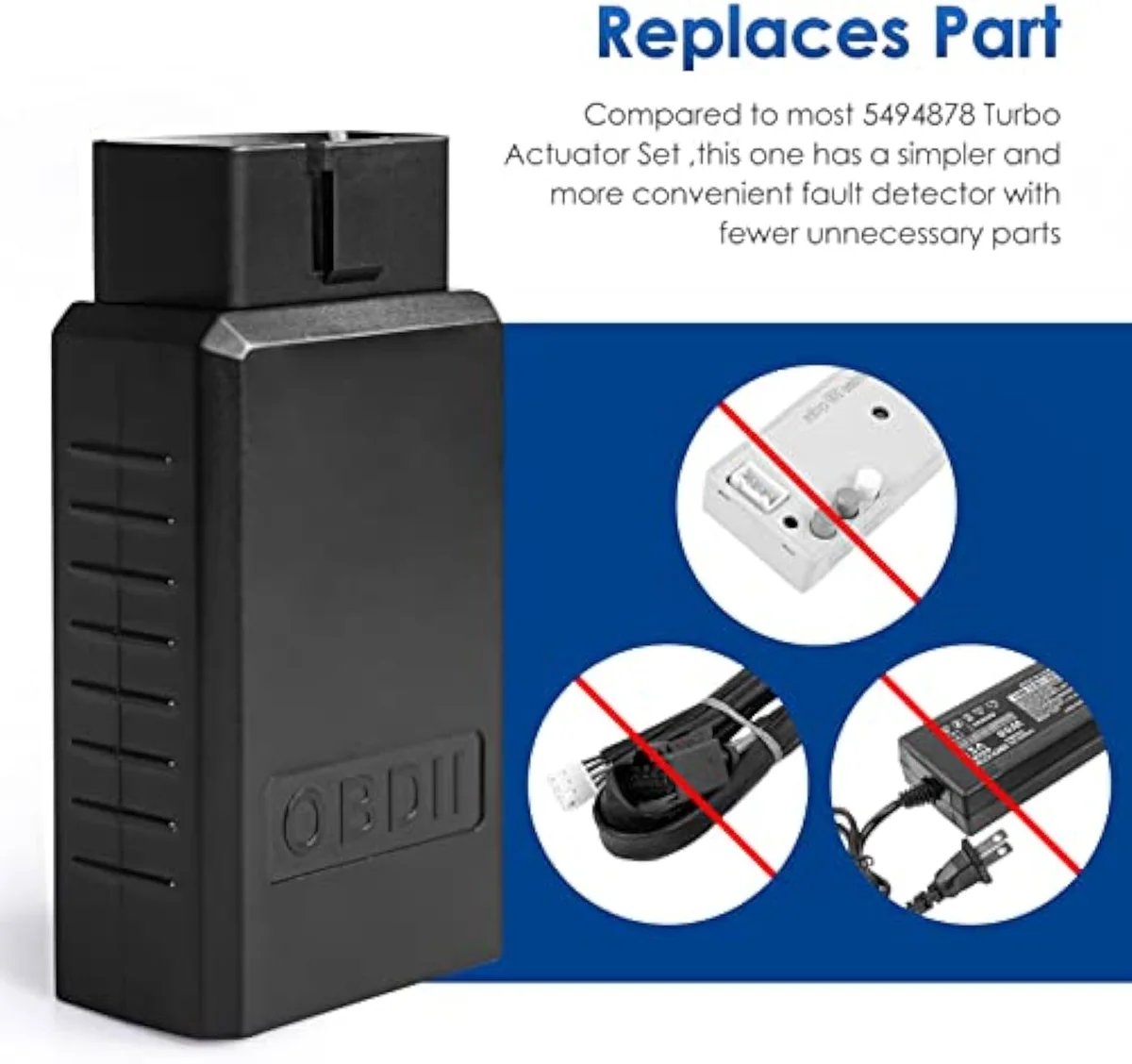
For the 2018-and-later security-bypass programming requirement, the dedicated bypass cable runs $200-$400 separate from the scan tool. Without the bypass cable, the post-2018 install sequence stalls between the calibration step and the programming step — leaving the truck with a P004B mismatch code that won't clear without the dedicated cable. Per the WOLLAHS pre-calibrated upgrade actuator review, the pre-calibrated path skips the bypass-cable step entirely on 2018+ chassis.
Repair Cost Bands by Failure Mode
Cummins 6.7L actuator-related repair cost bands by failure mode: chemical cleaning at $30-$80 for the cleaner plus 30 minutes labor (carbon-buildup root cause), actuator-only swap at $200-$700 plus 1-2 hours labor (motor failure), full cartridge-CHRA rebuild at $400-$900 plus install (bearing-side failure), and complete-turbo replacement at $1,500-$2,500 plus 4-8 hours labor (housing damage).
The diagnostic discipline of running symptom isolation BEFORE ordering parts is the single highest-savings decision on the Cummins 6.7L install base. A buyer who orders a complete-turbo replacement on a P003A code without running symptom isolation pays $1,500-$2,500 for a fix that costs $200-$700 when the actuator is the actual failure point. Per the WOLLAHS 5494878RX actuator review, the entry-tier $200-$300 actuator handles the 2007.5-2018 Ram chassis install base on documented community-tested data.
Pre-Calibrated Upgrade Path on 2018+ Chassis
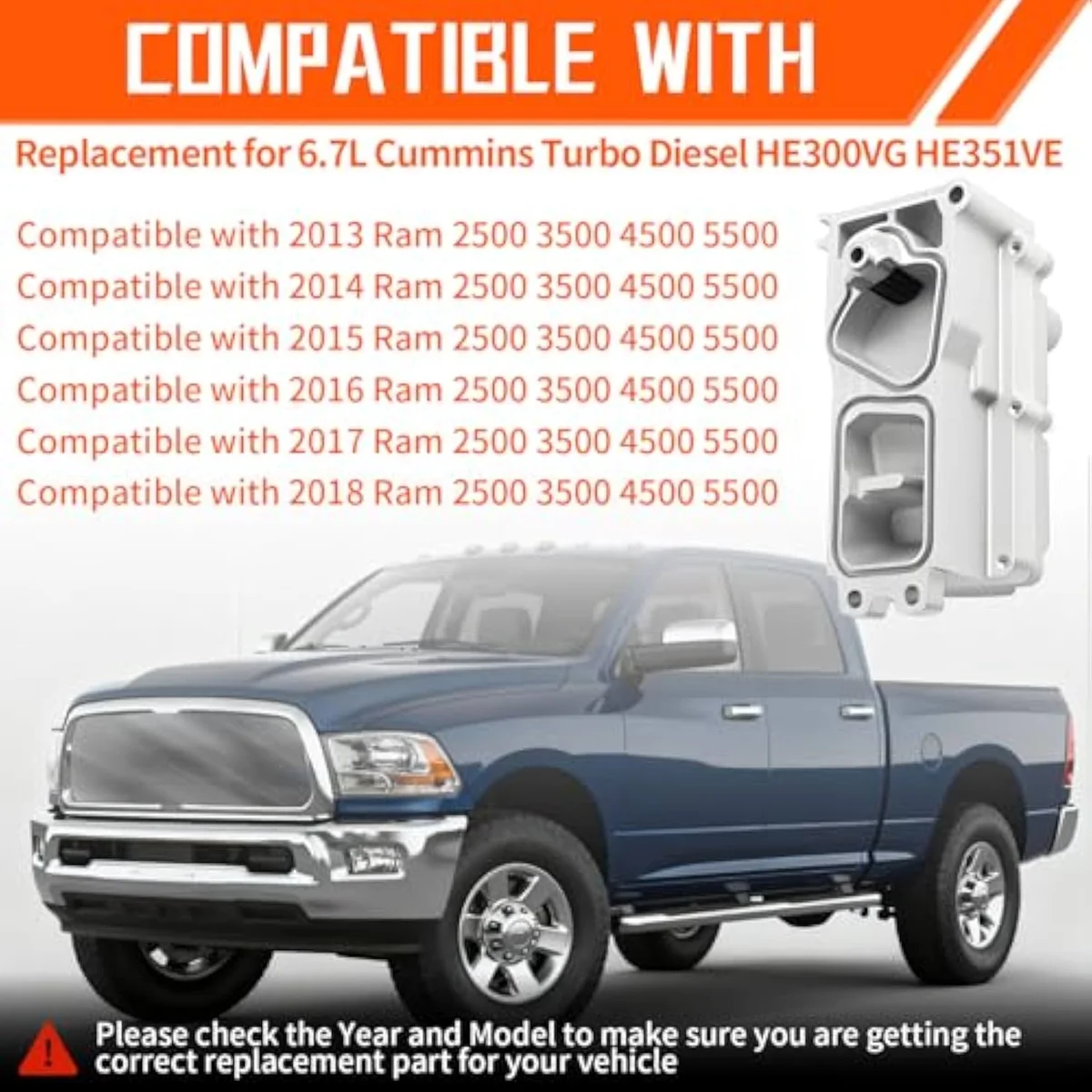
The pre-calibrated upgrade actuator path matters most on 2018-and-later Cummins 6.7L Ram chassis because the OE actuator install requires a $200-$400 security-bypass OBD2 cable plus the documented factory programming sequence. Pre-calibrated upgrade units ship with the calibration baked into the firmware, removing the bypass-cable step and dropping the install workflow back to the pre-2018 plug-and-play pattern.
For owner-operators on a single 2018+ Ram pickup who don't already own the security-bypass cable, the pre-calibrated upgrade actuator at $300-$450 is structurally cheaper than the entry-tier actuator at $200-$300 plus the $200-$400 bypass cable. For independent shops running multiple Ram pickups per month, the bypass cable amortizes across multiple jobs and the entry-tier actuator wins on per-job spend.
For the broader heavy-duty diesel cross-engine repair-decision context, the cross-engine roundup covers Cummins 6BT industrial, Volvo D12, Cummins 6.7L Ram pickup, and Cummins X15 heavy-truck applications under one supplier-audit framework. For the engineering background on the variable-geometry mechanism that the actuator drives, the Wikipedia variable-geometry turbocharger reference covers the actuator-to-vane mechanical linkage that the diagnostic codes report on.
The Turbo University variable-geometry rebuild reference publishes industrial-tier balance-and-test discipline applicable to Cummins HE351VE / HE300VG actuator and cartridge rebuilds. The Turbocharger Rebuilding Distribution Cummins HE-series catalog publishes the OE manifest cross-references between the HE351VE actuator and the HE300VG actuator across the 2007.5-2025 Ram pickup install base.
For owner-operators reading this PAA cluster after a P003A code, the structural action is to run Stage 1 chemical cleaning first, then move to Stage 2 actuator-only replacement if the cleaning fails to clear the code on the second drive cycle. Skipping Stage 1 routinely costs $200-$700 on Stage 2 parts when a $30-$80 cleaner would have addressed the underlying carbon-buildup root cause. Skipping Stage 2 in favor of a complete-turbo replacement adds another $1,000-$1,800 to the repair bill on roughly 80% of P003A presentations.
Get Product Updates
Updates only when something changes.
Only when something changes. Unsubscribe anytime.