Updated
Why the 1.6L EcoBoost Turbo Fails
The Ford EcoBoost 1.6L is the smallest-displacement engine in the EcoBoost family, and that displacement constraint forces the turbocharger to work harder per cylinder than the 2.0L sister-engine. Higher relative boost ratios mean shorter expected turbo life — 80,000-120,000 miles vs the 2.0L's 100,000-150,000 mile band.
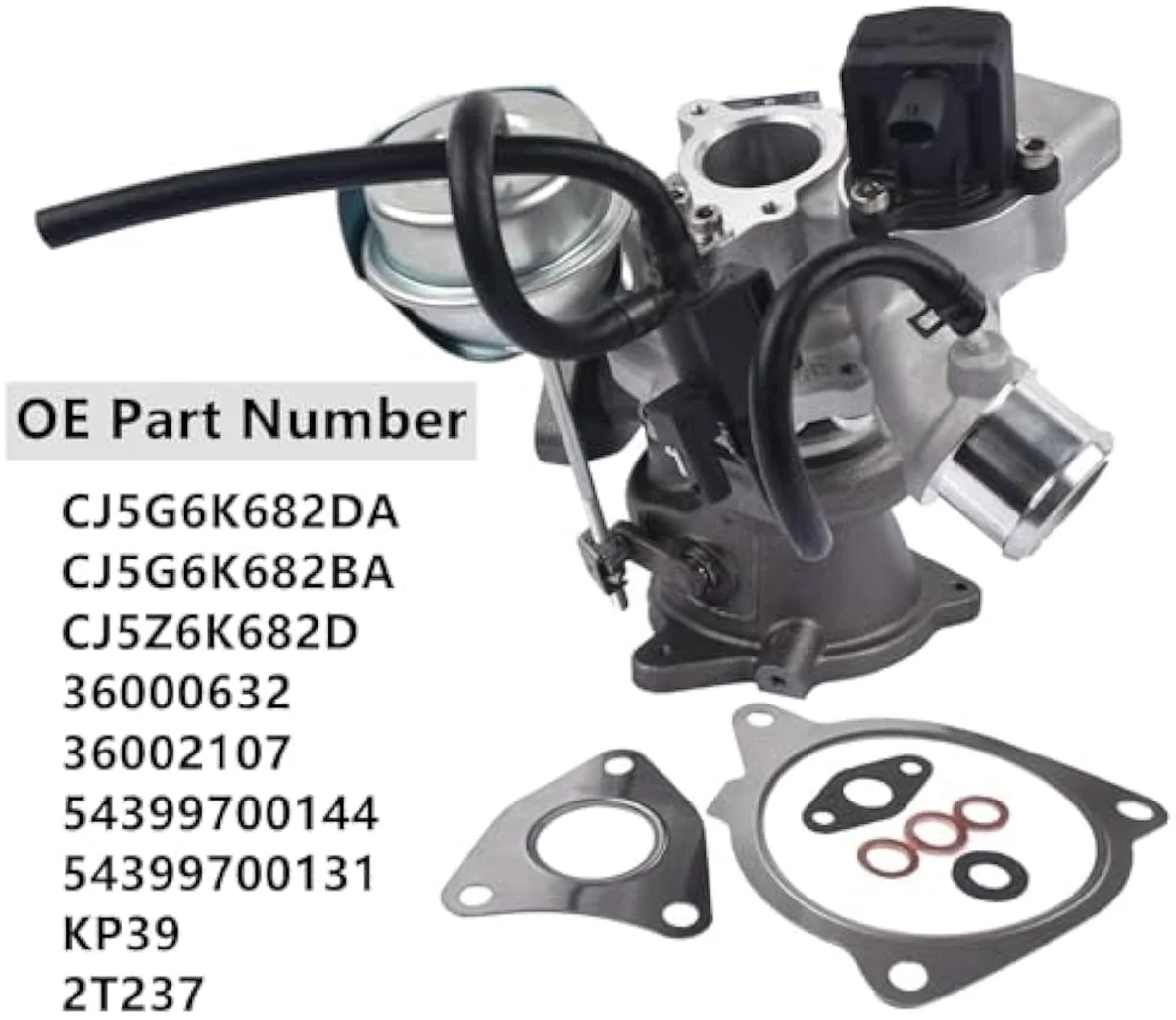
The KP39 turbo on the 2013-2019 Escape, Fusion, and Fiesta runs higher relative boost ratios to produce competitive horsepower (178 hp peak from 1,498cc) than the 2.0L EcoBoost (240 hp from 1,999cc) at equivalent throttle position. Higher relative boost means higher exhaust gas temperatures at the turbine inlet, higher compressor wheel tip speeds, and tighter thermal margins on the bearing system.
The architectural background on small-displacement turbo design constraints is documented at the SAE EcoBoost turbo engineering reference and the supplier-tier breakdown lives at the BorgWarner EcoBoost K-series turbo reference. The cumulative thermal-margin effect on the small-frame turbo bearing system is also addressed in the Wikipedia turbo replacement reference covering the supplier and material-science context.
Confirm the Failure Mode
The diagnostic protocol on the 1.6L EcoBoost mirrors the 2.0L sister-engine but with one important addition: rule out the head-casting recall before assuming the turbo is the root cause. A failed head gasket or cracked casting can masquerade as a turbo failure (P0299 from boost loss into the cooling system), and replacing the turbo on a coolant-intrusion case wastes $500-$1,000.
Check the recall status first. Run the VIN through Ford's official Ford EcoBoost recall lookup before ordering any replacement parts. Recall 15S43 specifically covered 2013-2014 Escape models with the 1.6L EcoBoost. If the VIN falls in the recall range and the work has not been completed, the dealer will handle the head replacement at no charge. The architecture context on why direct-injection small-displacement engines crack heads is documented in the Wikipedia turbo replacement reference and our Turbocharger Types — Taxonomy and Comparison breakdown.
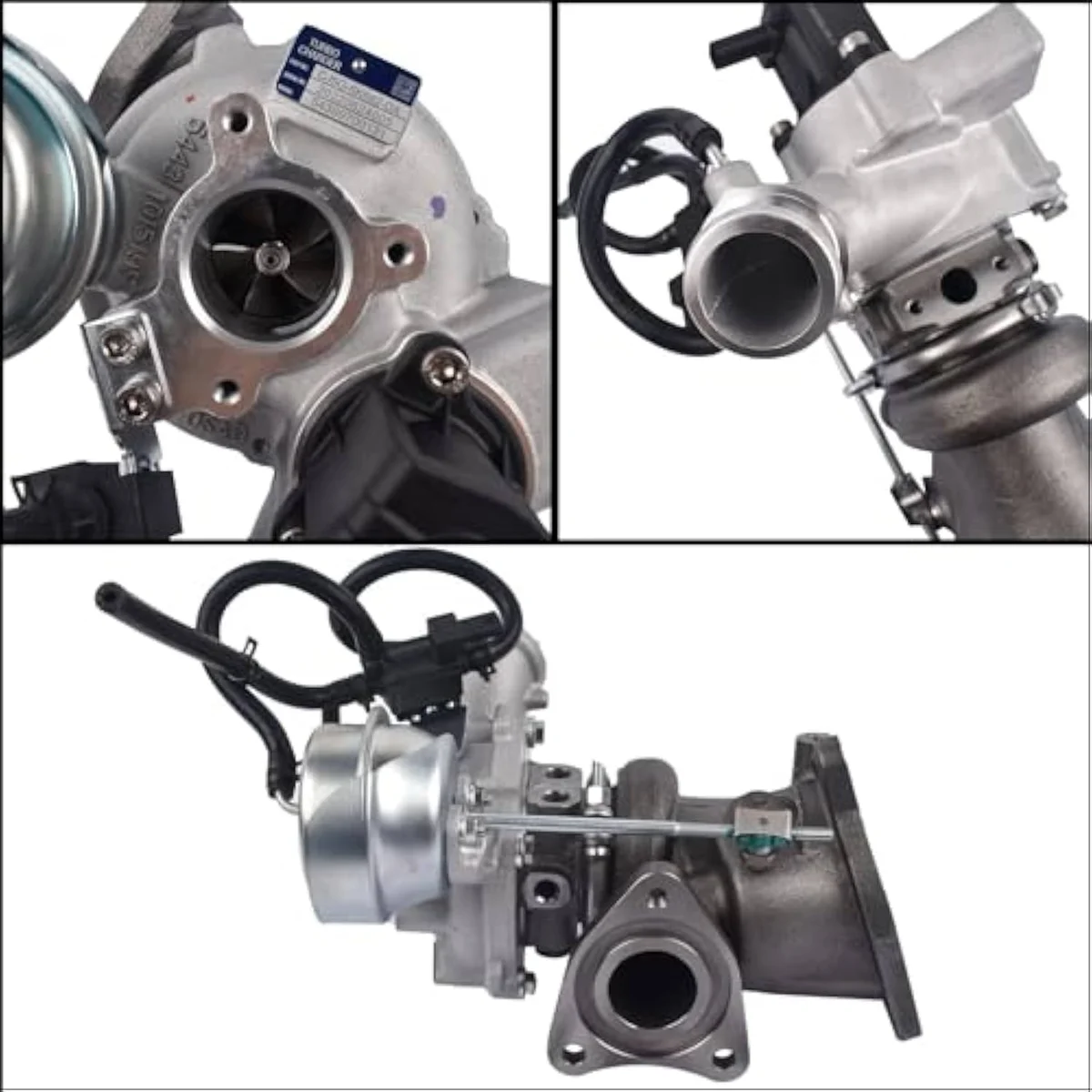
Once the recall is cleared, the diagnostic gates between failure modes are: pressure-test the coolant system (rules out cracked-head intrusion), monitor oil temperature on a normal drive cycle (rules out oil-overheating), and check actuator rod movement by hand with vacuum disconnected (isolates wastegate-only vs full turbo failure). Each gate takes 30-60 minutes and saves $400-$1,000 of wrong-stage replacement. The professional rebuilder protocol is documented at the Turbo University EcoBoost maintenance guide and the Rotomaster turbo replacement maintenance guide.
Dealer vs Aftermarket Math
Ford dealer quotes for the 1.6L EcoBoost turbo replacement run $2,400-$2,900. The labor band is 4-6 billable hours, plus the OEM part at $800-$1,100 wholesale.
The 1.6L Escape engine bay is tighter than the 2.0L applications, which adds 1-2 hours of shop time on the swap and bumps the dealer total above what an Edge or Explorer 2.0L turbo would cost. Independent diesel and Ford specialists in metro markets typically come in at 70-80% of the dealer-quoted price for the same work — $1,800-$2,300 — but the OEM part markup still drives most of the spend.
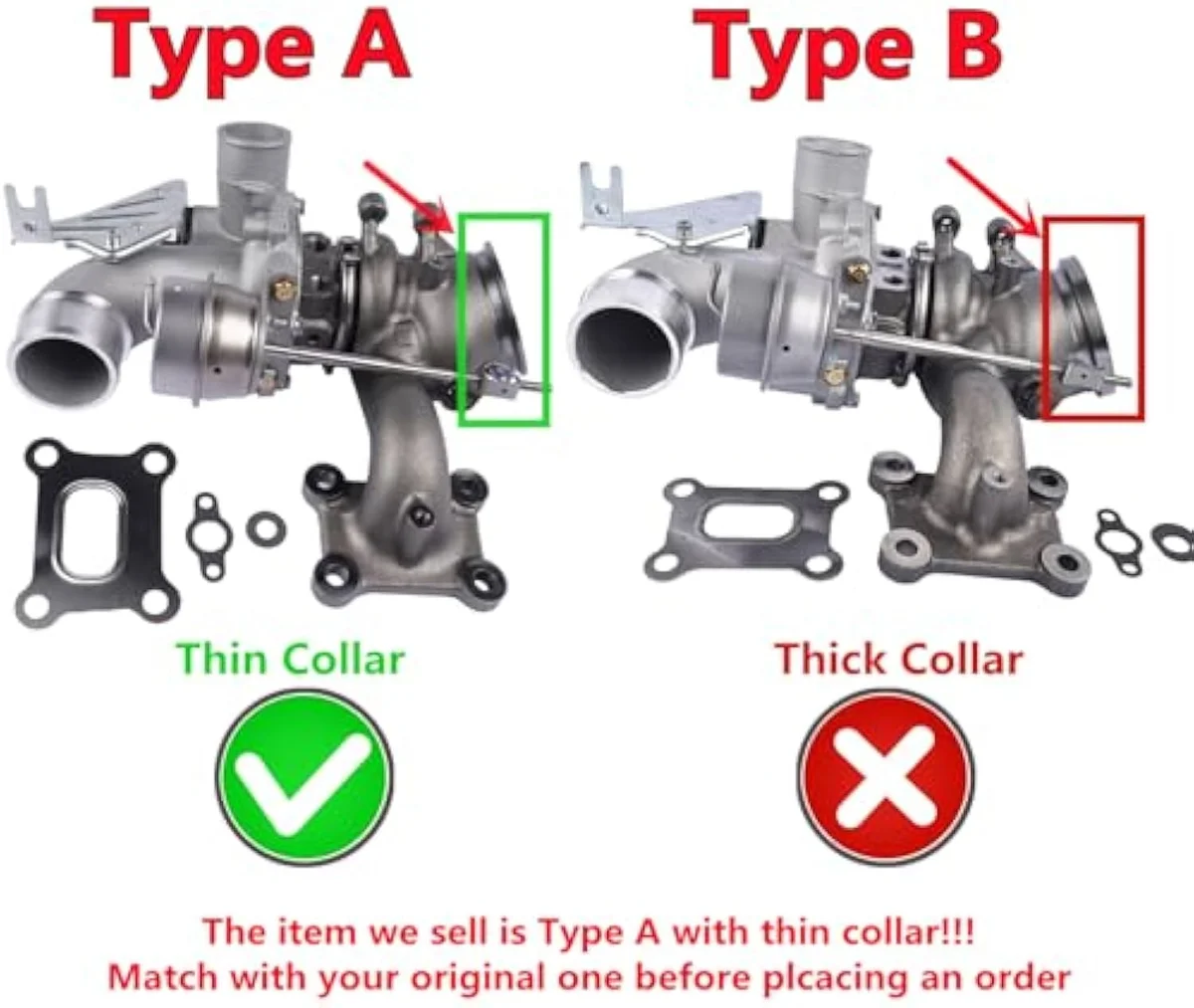
Aftermarket KP39 cross-references on Amazon cover the Ford OE chain at $200-$500. The KP39 1.6L (B0B7729BRF) cross-reference covers the 2013-2019 Escape, Fusion, and Fiesta applications with a gasket-kit bundled into the listing. Independent-shop labor: $300-$500 on the Escape, similar on Fusion and Fiesta. Total aftermarket-path: $500-$1,000, putting the savings vs dealer at $1,500-$2,000.
The savings calculation assumes the recall has been completed or doesn't apply. If the recall covers the VIN and the work hasn't been done, ALL replacement work happens at Ford's expense — the aftermarket path is the wrong answer in that case. Owners whose VIN is outside the recall range and who have confirmed the turbo as the failure point are the right audience for the aftermarket path. The recall-eligibility check is the first step in the decision process, before any parts ordering.
Our Conversion Pick
For confirmed-turbo-failure cases with a recall-cleared VIN, the answer is the KP39 1.6L cross-reference (B0B7729BRF) as the conversion target — broadest envelope across Escape, Fusion, and Fiesta with gasket kit included.
Total project cost: $300-$600 in parts, $300-$500 in independent-shop labor. Against the $2,400-$2,900 dealer estimate, the savings is $1,500-$2,000. For owners doing the install themselves, the parts-only cost runs $300-$600 with the install consuming a Saturday and Sunday on the typical Escape engine bay.
For owners whose VIN is inside the recall window, the right answer is taking the car to Ford for the recall work first — the head-casting replacement covers the upstream root cause that the turbo replacement alone does not fix. The recall work resets the turbo-life clock indirectly by eliminating coolant-intrusion as a failure mechanism. The maintenance protocol from ADP Distributors EcoBoost turbo service guide covers the post-recall service intervals that extend the new turbo's expected life on these chassis years. Pair the recall work with synthetic oil at 5,000-mile intervals and the post-recall turbo can match or exceed the 2.0L EcoBoost's expected service life across the same chassis envelope.
Install Completeness Checklist
The KP39 cross-reference ships with a turbo, exhaust-manifold gasket, oil-feed and oil-drain gaskets, and a coolant-line gasket. Confirm what's in the box before clicking buy.
What you need: the turbo itself, exhaust-manifold-to-turbo gasket, oil-feed crush washers, oil-drain gasket, two coolant-line crush washers, and the wastegate actuator (pre-installed on the KP39 listing). The Escape 1.6L install on a 2013-2015 model also wants a fresh coolant flush — the OE coolant runs the lifetime of the engine and tends to be carbon-fouled at the 80,000-120,000 mile turbo-replacement interval. Add a $20 gallon of Motorcraft Orange to the parts list. The exhaust-manifold studs on the 1.6L survive the heat-cycling better than the Cruze 1.4L equivalents, but a stud extractor kit ($30-$60) on hand is the right insurance against a snapped stud taking 2 hours of unplanned drilling. The full step-by-step install sequence and the timing-cover access path that the 1.6L bay forces is documented in our paired turbocharger repair decision guide, which covers the four-stage decision tree and the install-completeness checklist applied across the broader EcoBoost replacement ecosystem.
Check Price on Amazon — KP39 1.6L EcoBoost Cross-Reference
EcoBoost 1.6L Replacement Questions
- How much does it cost to replace a turbo on a 2013 Ford Escape?
- Dealer quotes for the 2013 Escape 1.6L EcoBoost turbo replacement run $2,400–$2,900 (parts plus labor). The aftermarket KP39 cross-reference path on Amazon runs $200–$500, plus $300–$500 in independent-shop labor. Total aftermarket-path cost: $500–$1,000. The savings against dealer is $1,500–$2,000 for full-failure cases. The 1.6L Escape engine bay is tighter than the 2.0L applications, which adds 1-2 hours of shop time on the swap.
- What is the most common problem with the 2013 Ford Escape 1.6L EcoBoost?
- Three failure modes dominate the 2013-2015 Escape 1.6L EcoBoost service history. One: coolant intrusion into the cylinder head from a cracked head casting — Ford issued a recall (15S43) covering specific VIN ranges. Two: oil overheating leading to turbo bearing failure — the small 1.6L block runs hot under sustained load and the OEM oil-cooler routing is marginal. Three: wastegate actuator sticking from carbon buildup — same root cause as the 2.0L EcoBoost but more concentrated due to the smaller exhaust volume.
- How much is a turbocharger for a Ford Escape 1.6L?
- Aftermarket KP39 cross-reference parts on Amazon (B0B7729BRF and similar) sit at $200–$500 depending on warranty depth and install-kit completeness. OEM Ford parts list at $900–$1,200 wholesale. Independent-shop turbo specialists charge $400–$600 for the labor portion. Total project cost from independent shop: $700–$1,300. Total project cost from Ford dealer: $2,400–$2,900. The 4-6× savings is structural across the Escape 1.6L install base.
- Where is the turbo boost sensor located on a 2013 Ford Escape?
- The MAP (manifold absolute pressure) sensor that reports boost on the 1.6L Escape is mounted on the intake manifold near the throttle body — driver-side of the engine, accessible without removing other components. The MAF (mass airflow) sensor sits between the air filter housing and the turbo inlet. Both feed the boost-vs-commanded calculation that triggers P0299 under-boost or P0234 over-boost codes. The MAP sensor itself fails on the 2013-2014 Escape — replacement is a $40 part and 10-minute install before assuming the turbo is the problem.
- What year Ford Escape should be avoided?
- The 2013 Escape 1.6L is the highest-issue model year due to the head-casting coolant-intrusion recall and the turbo / oil-cooler failure pattern. The 2014 model year carried similar issues with partial mitigation. The 2015 model year saw improvements to the oil-cooler routing. The 2017+ refresh moved to the 2.0L EcoBoost engine on most trims, dropping the 1.6L issues but inheriting the 2.0L wastegate-sticking pattern. Used-market pricing on 2013-2014 Escapes reflects the elevated repair risk — a $5,000 2014 Escape needing a turbo replacement is structurally upside-down.
- Is the 1.6 or 2.0 EcoBoost better?
- The 2.0L EcoBoost has the broader install base, longer life expectancy (100,000–150,000 mile turbo vs 80,000–120,000 mile turbo on the 1.6L), and easier-to-source aftermarket cross-references. The 1.6L EcoBoost has better fuel economy (28–30 mpg combined vs 24–26 mpg on the 2.0L), lower upfront cost, and lighter overall vehicle weight. For replacement-cost economics specifically, the 2.0L is the more forgiving platform. For fuel-economy daily commuting at lower power demands, the 1.6L is the structural fit.
- How long does a Ford Escape 1.6L EcoBoost turbo last?
- The factory KP39 turbo on the 2013-2019 Escape 1.6L typically fails between 80,000 and 120,000 miles — earlier than the 2.0L EcoBoost (100,000–150,000 miles) and earlier than the Cruze 1.4L (80,000–130,000). The shorter life expectancy traces to the higher per-cylinder boost demand (1,498cc displacement, 178 hp peak vs 2.0L making 240 hp from 1,999cc — the 1.6L runs at higher relative boost ratios). Oil-change discipline at 5,000-mile synthetic intervals adds 20,000–30,000 miles on the high end of the expected life.

Get Product Updates
Updates only when something changes.
Only when something changes. Unsubscribe anytime.