Updated
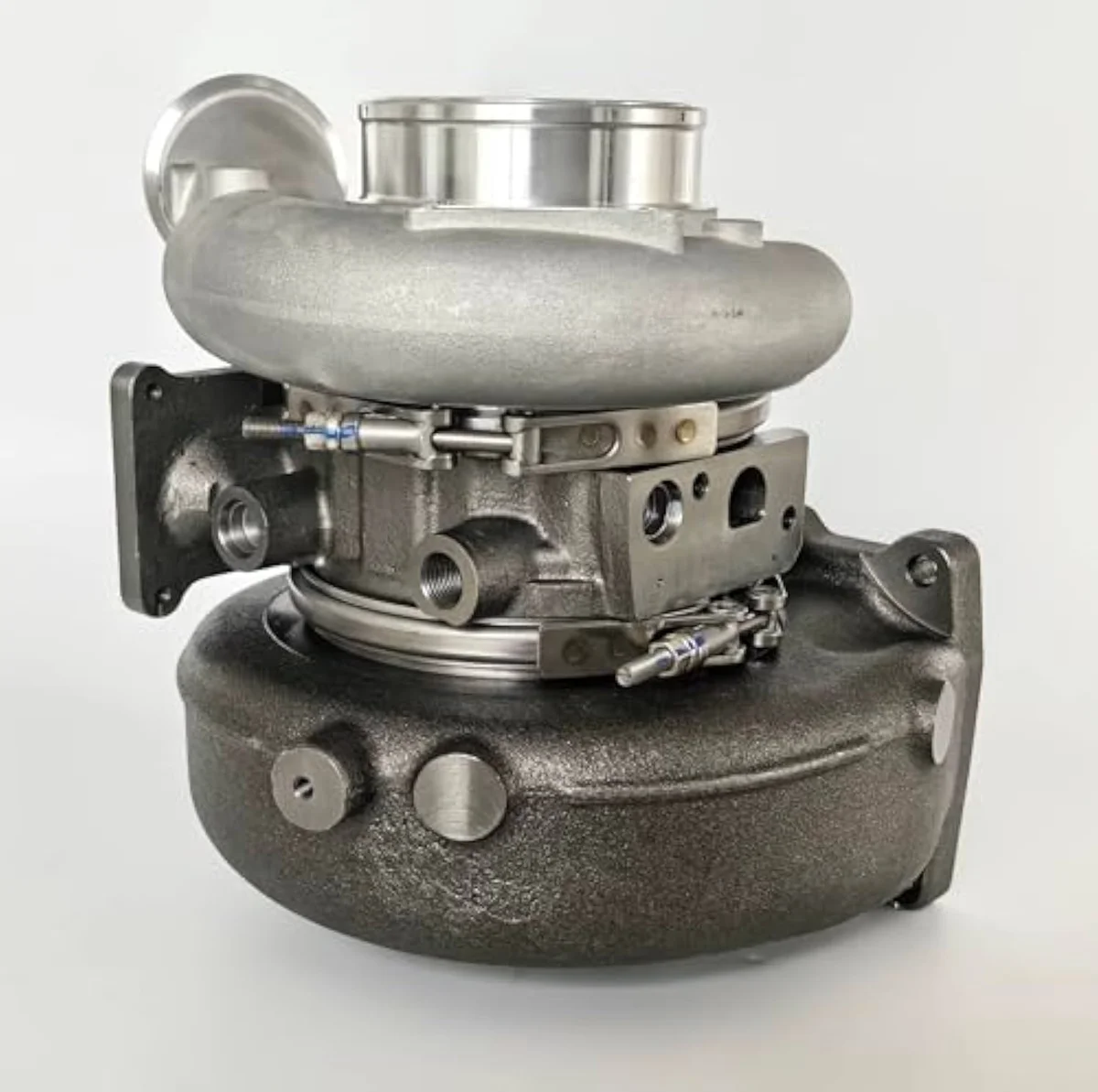
For the broader repair decision context on the most-common VGT failure mode, see the Read the four-stage repair decision guide — VGT actuator failure is the Stage 2 repair path that saves $1,000-$2,000 versus full complete-turbo replacement.
What VGT Architecture Actually Is
VGT (Variable Geometry Turbocharger) uses moveable vanes inside the turbine housing to change the effective turbine cross-section on demand. The vanes pivot through 60-90 degrees of angular range depending on the frame, controlled by a unison ring that rotates with electronic-actuator input from the engine ECM.
The structural problem VGT solves: a conventional fixed-geometry turbocharger trades spool against peak. A small turbine housing spools fast at low RPM but chokes at high RPM. A large turbine housing handles peak flow but takes longer to spool. The fixed-geometry compromise forces the designer to pick one corner of the trade. VGT eliminates the trade-off — the same physical housing acts small at low RPM (closed vanes) and large at high RPM (open vanes), getting both fast spool AND high peak flow from one frame.
"The Cummins 6.7L Ram has the highest VGT install base in the US fleet by a wide margin. Every Ram 2500/3500 owner with over 100,000 miles eventually deals with a P003A code, and the right diagnostic move is actuator-only first before reaching for the complete-turbo wallet. The cleaner path before that catches another 30% of cases." — r/Cummins synthesis on the VGT diagnostic-tree pattern across the 6.7L install base.
OEM VGT Applications — Where the Install Base Lives
VGT architecture is standard on modern diesel passenger and heavy-duty applications. Three major install bases anchor the US aftermarket repair work.
Cummins 6.7L (2007.5-2025 Ram 2500/3500/4500/5500). Holset HE351VE on the 2007.5-2012 generation; Holset HE300VG on the 2013-2025 generation. The two highest-volume single VGT models in the US diesel pickup fleet. OE part numbers: HE351VE = 5354495 / 6411490; HE300VG = 5604175 / 5604180 / 6411519RX. Aftermarket replacement options span budget (ASDPI, Dofoch, generic Chinese cross-references at $700-$1,200) through rebuilder-tier (BD Diesel, Industrial Injection, Fleece at $1,500-$2,500) through OEM-rebuilt Holset ($1,800-$2,500).
Ford 6.7L Power Stroke (2011-2025 F-250/F-350/F-450/F-550 Super Duty). Garrett GT3782VAS (2011-2014 generation), GT3788LVA (2015-2025 generation). Lower install base than Cummins 6.7L on the pickup side but very high on the chassis-cab and commercial-medium-duty side. Aftermarket replacement spans similar tiers — budget Chinese, rebuilder-tier specialty (KC Turbos, GO Diesel), and OEM-rebuilt Garrett.
European diesel passenger applications. Garrett GT2056V on BMW N47 (2.0L 4-cylinder, 2007-2018) and Mercedes-Benz OM651 (2.2L 4-cylinder, 2009-2019). Less common in the US than in Europe due to limited US diesel passenger sales. Honeywell-developed gasoline VGT applications: Porsche 911 Turbo (since 2006), selected modern Mercedes-AMG (since 2017).
The Actuator Failure Mode That Dominates Repair Work
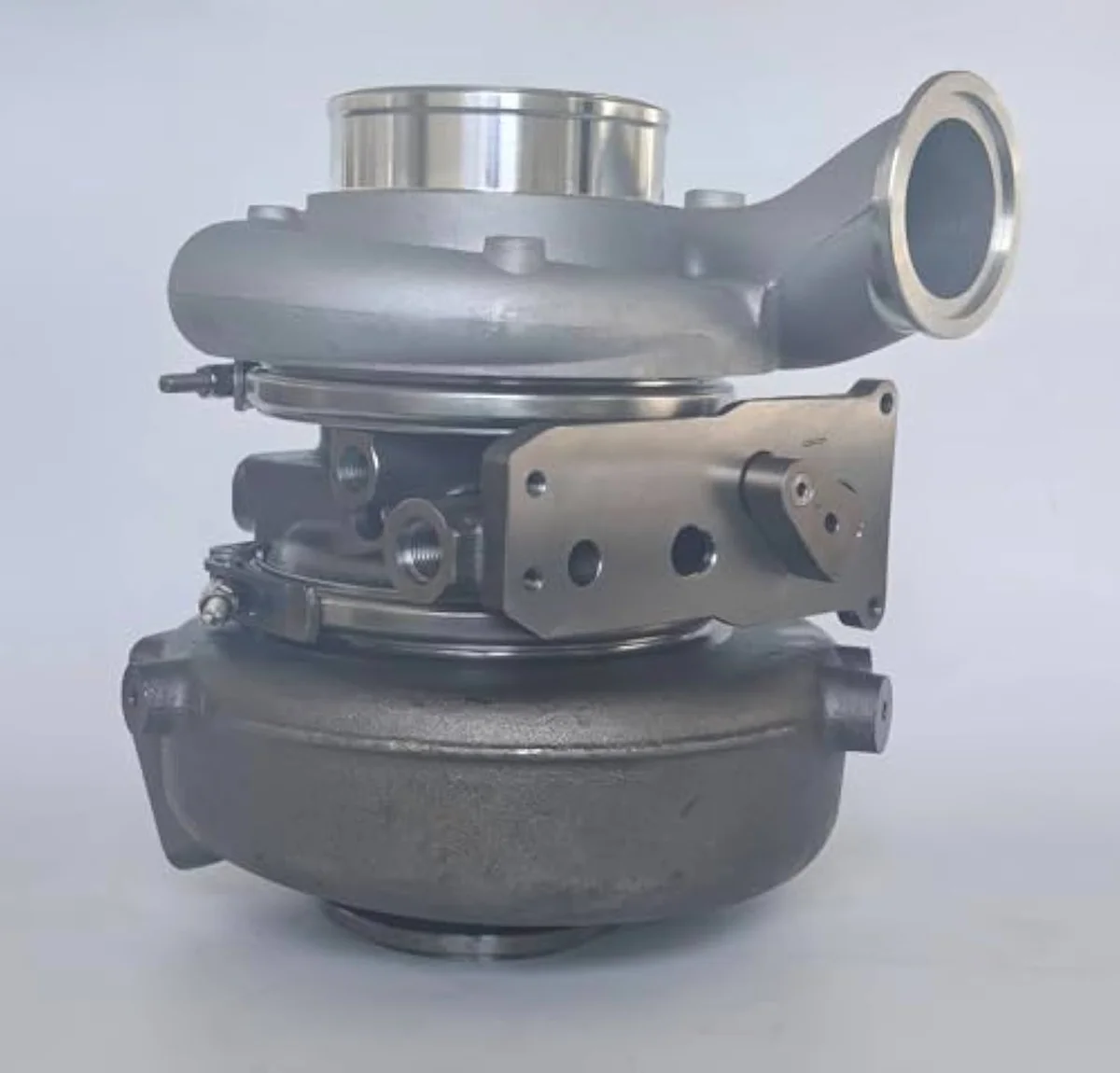
The single most common VGT problem in the US aftermarket is electronic actuator failure on the Cummins 6.7L. The position sensor or the actuator motor itself fails, triggering a P003A diagnostic code (turbocharger boost control position sensor circuit). The mechanical side of the turbo stays intact — unison ring still moves, vanes still pivot, bearings still function. Only the electronic actuator needs replacement.
Why the actuator fails before the mechanical side: the actuator sits on top of the turbocharger housing where exhaust heat soak (1,400-1,600°F sustained on the diesel side) attacks the electronics from below, while engine bay heat attacks them from above. EGR system soot accumulates around the actuator linkage over 100,000+ miles of duty cycling. The combination of thermal stress, EGR contamination, and vibration eventually wears out the position sensor or the small DC motor that drives the unison ring. The mechanical housings (turbine wheel, compressor wheel, bearing cartridge) survive much longer because they sit lower in the heat profile and don\'t have moving electronic components.
Stage 2 actuator-only repair path: $200-$700 for the actuator unit plus 1-2 hours of install time. The repair restores 100% of factory VGT function. Stage 4 complete-turbo replacement: $1,500-$2,500 plus 4-8 hours of install time. Cross-referencing the two options structurally: if the mechanical side is documented intact (no excessive shaft play, no oil contamination, no exhaust-side bearing wear), Stage 2 wins by $1,000-$1,800 with the same long-term outcome.
The Stage 1 Cleaning Path — When VGT Vanes Stick
Before the actuator fails outright, many VGT applications develop intermittent symptoms from carbon buildup on the variable-geometry vanes. The vanes don\'t fully close (carbon prevents full motion), so the turbo can\'t spool to programmed low-RPM boost; the actuator over-drives trying to reach the commanded position and eventually throws a P003A or P0299 (turbo under-boost) code.
The Stage 1 cleaning path catches this failure mode early. MAF cleaner, brake-cleaner, or dedicated VGT cleaner spray applied through the exhaust manifold while the engine runs at idle dissolves carbon deposits on the vanes. After 15-30 minutes of cleaning followed by a 15-mile road test under varying loads, the vanes move freely again and the under-boost codes typically clear. The procedure costs $30-$80 for cleaner and supplies; success rate is roughly 30-40% on mild cases before they progress to actuator failure. The cleaning path is documented in the OEM Cummins 6.7L service manual and is the recommended first response to P003A or P0299 codes on the Cummins 6.7L.
For the broader four-stage repair decision tree across VGT and fixed-geometry applications, the Read the four-stage repair decision guide covers Clean / Actuator / Cartridge / Complete with cost bands per chassis lane. For the foundational mechanism background underneath VGT and fixed-geometry alike, the Read the mechanism explainer covers the thermodynamic loop and six structural components. For the actuator-replacement product on the highest-volume VGT chassis, the Read the WOLLAHS 5494878RX review covers the Stage 2 actuator-only repair path on 2013-2018 Ram 2500/3500/4500/5500 ISB 6.7L applications. For cross-engine roundup picks across the broader install base, the Read the cross-engine roundup covers documented OE-replacement and rebuilder-tier picks.
For the engineering background, the Variable-geometry turbocharger reference covers the vane mechanism and the gas-flow physics. The Turbocharger reference covers compressor-and-turbine fundamentals. The Turbo University reference publishes industrial-tier balance-and-test discipline applicable to VGT cores. The Turbocharger Rebuilding Distribution catalog publishes OE manifest cross-references for Cummins, Ford, and European diesel VGT applications.
VGT Decision Questions
- What does VGT stand for in turbochargers?
- VGT stands for Variable Geometry Turbocharger. The architecture uses moveable vanes inside the turbine housing to change the effective turbine cross-section on demand. At low engine RPM, the vanes close down to accelerate exhaust gas through a smaller cross-section (faster spool, lower lag). At high engine RPM, the vanes open up to allow full exhaust flow (peak power, no choke). VGT is standard on most modern diesel applications (Cummins 6.7L HE351VE / HE300VG, Ford 6.7L Power Stroke GT3782VAS / GT3788LVA, BMW N47, Mercedes OM651).
- How does a VGT turbocharger work?
- An electronically controlled actuator drives a unison ring inside the turbine housing. The unison ring rotates moveable vanes (typically 9-12 vanes per ring on automotive applications) to change the angle of attack the exhaust gas takes against the turbine wheel. Vane angle is computed by the engine ECM based on RPM, throttle position, manifold pressure target, and EGT condition. The actuator position is reported back to the ECM through a position sensor; deviation from the commanded position triggers diagnostic codes (P003A on Cummins 6.7L, P003C on Ford 6.7L Power Stroke).
- What is the most common VGT problem?
- Actuator failure on the Cummins 6.7L HE351VE and HE300VG is the single most common VGT problem in the US aftermarket. The actuator position sensor or the actuator motor itself fails, triggering a P003A code. The mechanical side of the turbo stays intact — the unison ring still moves, the vanes still pivot, the bearings still function. Only the electronic actuator needs replacement. The actuator-only repair path runs $200-$700 versus $1,500-$2,500 for a complete VGT turbo replacement, making it the highest-savings diagnostic decision on the Cummins 6.7L fleet.
- How long do VGT turbochargers last?
- On the Cummins 6.7L HE351VE (2007.5-2012 Ram 2500/3500) and HE300VG (2013-2025 Ram 2500/3500), the complete turbo routinely reaches 200,000-300,000 miles when oil-change discipline holds. The variable-geometry actuator typically fails earlier — average 100,000-180,000 miles, with the failure mode dominated by carbon buildup on the vanes from EGR system soot. Ford 6.7L Power Stroke applications follow a similar pattern. Diagnostic decision: actuator failure first (Stage 2 repair, $200-$700), then mechanical wear or cartridge failure later (Stage 3 or Stage 4 repair).
- Can a VGT turbocharger be cleaned?
- Yes — for early-stage carbon buildup on the variable-geometry vanes that has not yet damaged the actuator. The Stage 1 cleaning path uses MAF cleaner, brake-cleaner, or dedicated VGT-cleaner spray applied through the exhaust manifold while the engine runs at idle, allowing the cleaner to dissolve carbon deposits on the vanes. The procedure restores vane mobility and reduces actuator load. The cleaning path is the lowest-cost repair option ($30-$80 for cleaner and supplies); it works on roughly 30-40% of mild VGT complaints before they progress to actuator failure.
- Are VGT turbos used on gasoline engines?
- Yes, increasingly — but adoption is much narrower than on diesel. Honeywell-developed gasoline-rated VGT designs (AVNT, Variable Nozzle Turbine) ship on Porsche 911 Turbo (since 2006), several modern Mercedes-AMG applications, and selected European luxury gasoline platforms. The gasoline VGT challenge is heat: gasoline exhaust runs 1,650-1,800°F sustained versus 1,300-1,500°F on diesel applications. The vane materials and bearing components must survive materially higher thermal loads, which limited gasoline VGT adoption until metallurgy advances in the 2010s.
- What is the difference between VGT and VNT turbochargers?
- VGT (Variable Geometry Turbocharger) and VNT (Variable Nozzle Turbine) are essentially the same architecture with different naming conventions. Honeywell branded its variable-geometry design as VNT historically; Cummins / Holset branded its equivalent as VGT. The mechanical implementation differs slightly between the two — Honeywell VNT typically uses vanes on a single unison ring; Cummins VGT can use single or compound vane stacks depending on the specific frame. For practical buying purposes, the terms are interchangeable in most consumer-facing contexts.
Get Product Updates
Updates only when something changes.
Only when something changes. Unsubscribe anytime.