Updated
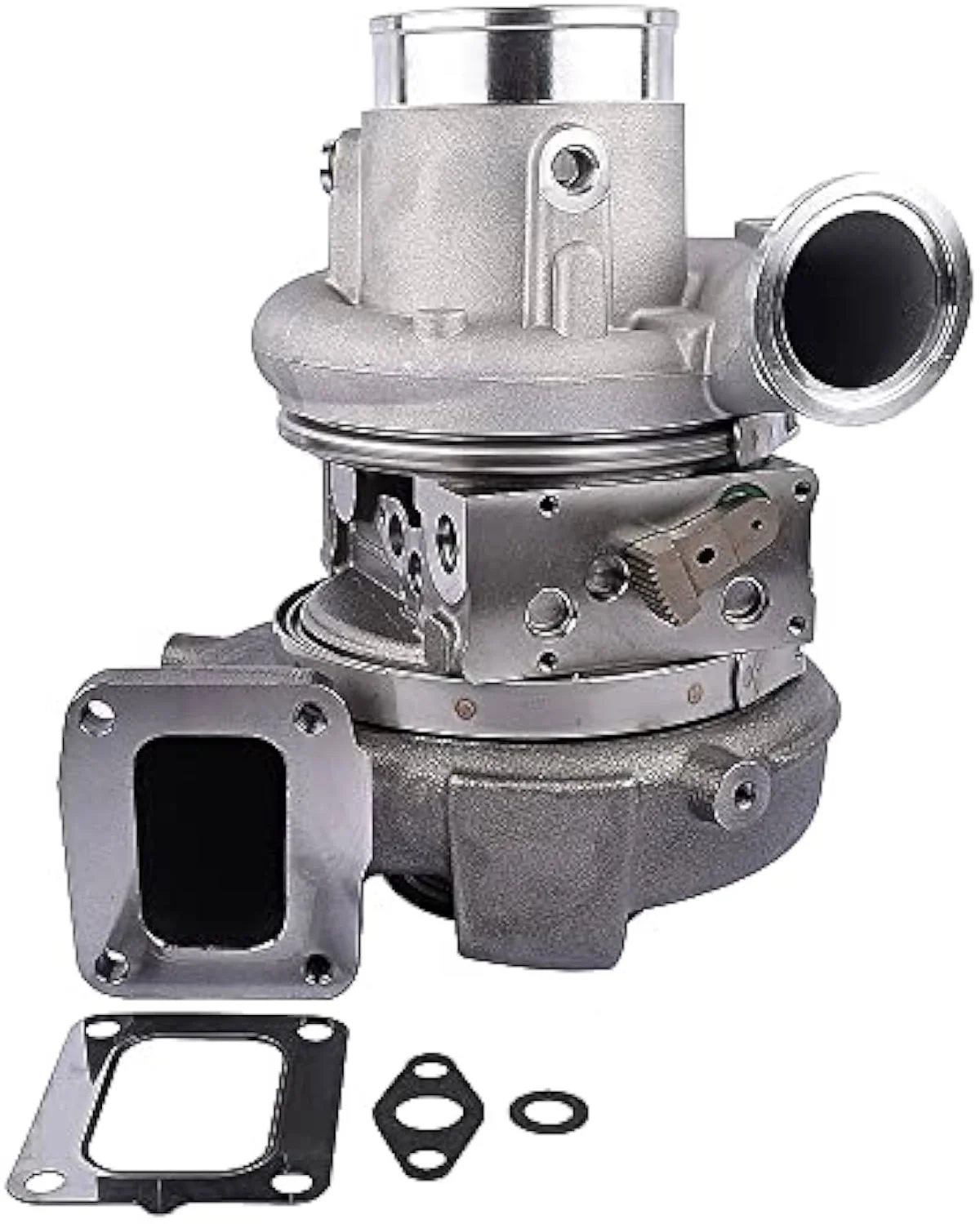
For the single-turbo alternative to compound builds at similar horsepower targets, see the Read the big turbochargers guide — covers Garrett GTX4202R / G45-1500, BorgWarner S488, and the single-turbo lag-pocket tradeoff.
What Compound Turbocharger Architecture Actually Is
A compound turbocharger system uses two turbochargers in series, with the small primary turbo always feeding compressed intake air into the larger secondary turbo. Both turbos engage simultaneously across the entire RPM range — the configuration is "compound" rather than "sequential" because both turbos always operate, even at low RPM where the secondary contributes less to total airflow.
The architectural elegance is that each turbo operates inside its own efficiency envelope. The small primary (typically a Holset HE351-class or HX35-class with 4.5-5.5 inch turbine wheel) never sees the choke line because its job ends when the secondary takes over above 3,500 RPM. The large secondary (typically a BorgWarner S400-class with 7.5-9 inch turbine wheel) never sees the surge line because its job begins after the primary has already built intake pressure. Compared to a single large turbo trying to cover the same power band — which would either lag sharply at low RPM or choke at high RPM depending on frame size selection — the compound architecture eliminates the spool-versus-peak compromise that single-turbo builds force on the designer.
"Compound twin-turbo Cummins is the structurally correct answer for any daily-driver Cummins build targeting 1,000+ horsepower. Single big turbo lags badly until 3,500 RPM where boost arrives suddenly. Compound twin pulls cleanly from 1,800 RPM through redline. The daily-driver feel difference is night and day; pick compound twin if budget allows." — r/Cummins / r/cumminsforum synthesis on the compound-vs-single architecture decision for daily-driver Cummins applications.
OEM Compound Turbocharger Applications
Production OEM compound turbocharger applications are rare but documented. The Ford 6.4L Power Stroke (2008-2010 F-250/F-350) used a compound twin-turbo configuration with a smaller primary feeding a larger secondary. The system delivered 350 hp / 650 lb-ft from a 6.4L engine — competitive with the contemporary 6.6L Duramax and 6.7L Cummins of the same generation.
Other production compound applications. Volvo XC90 T8 Polestar uses an electrically-driven supercharger plus exhaust-driven turbocharger configuration that approximates the compound architecture electrically. Cummins ISX heavy-truck applications run compound twin-turbo configurations on the highest-power-rated variants. Mack MP8 and MP10 heavy-truck applications run compound configurations on some variants. Production passenger-car compound applications stayed rare because the mechanical complexity and packaging requirements were difficult to fit under modern passenger-car hoods; aftermarket compound builds dominate the architecture market.
Aftermarket Compound Builds — The Cummins Community
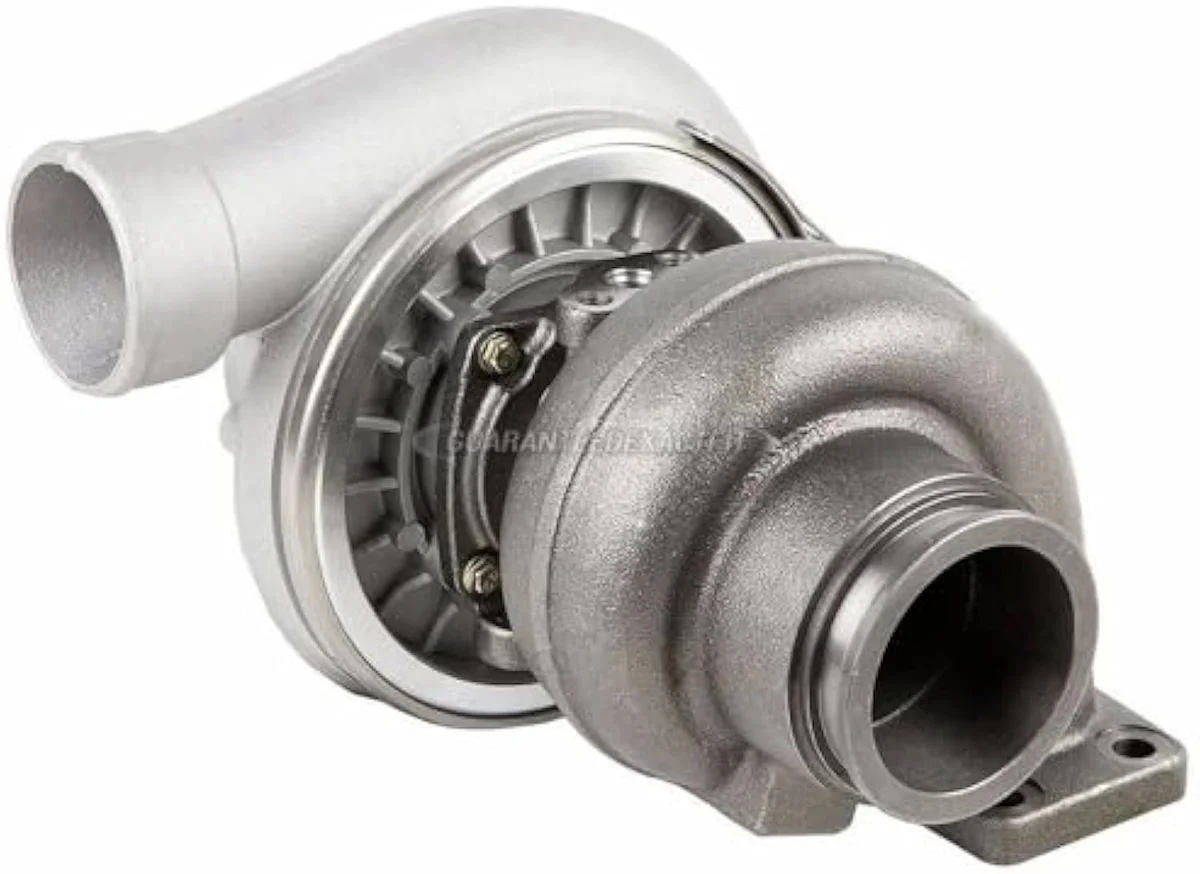
The aftermarket compound twin-turbo market is dominated by the Cummins 5.9L 12-valve and 24-valve community. Holset HX35 or Holset HE351-class primary feeding a BorgWarner S400-class secondary covers the 1,200-1,800 horsepower band on daily-driver-plus-weekend-track Cummins builds.
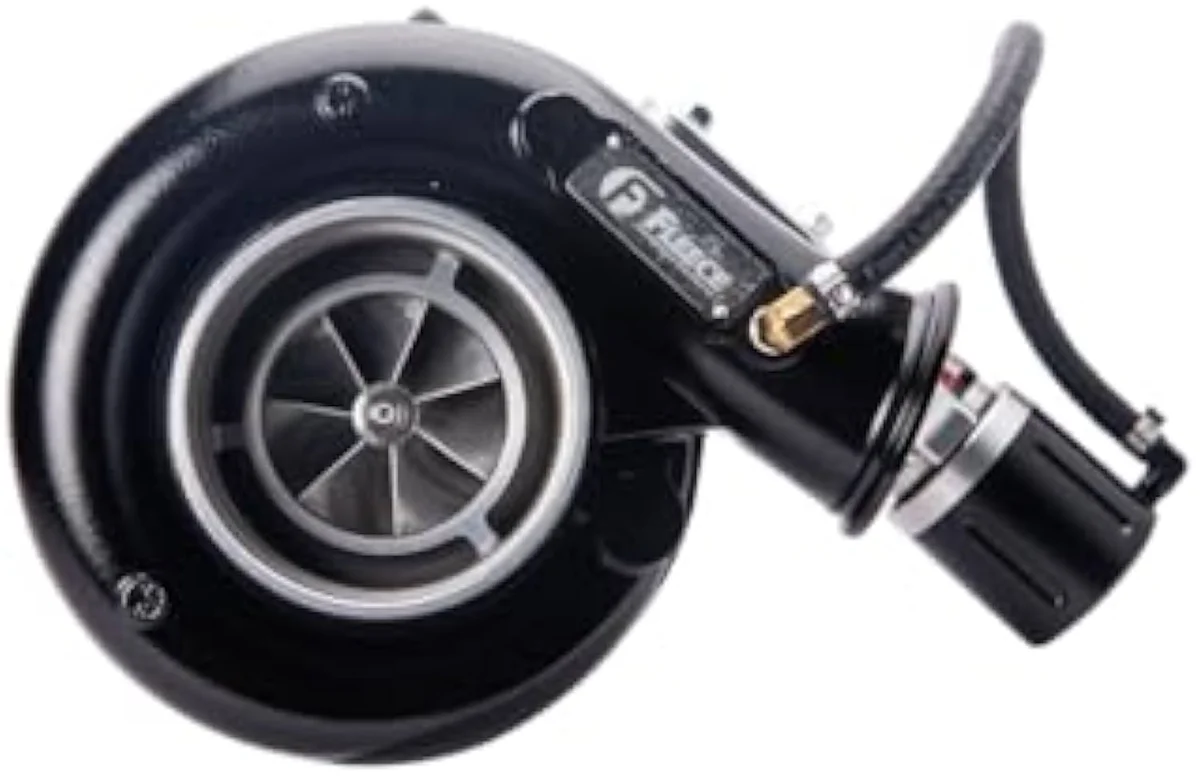
The four documented specialty-tier kit suppliers all ship complete compound kits for the Cummins platform. Bullseye Power (Indianapolis, Indiana) at $6,000-$14,000 per kit. Industrial Injection (Salt Lake City, Utah) at similar pricing with broader Stage range. Fleece Performance (Brownsburg, Indiana) covers Cummins-specific compound builds. BD Diesel (Cloverdale, BC) covers broader heavy-duty diesel compound configurations including Power Stroke applications. The cross-shop is genuinely close on engineering criteria; distributor presence and shop-trust relationships often determine the buyer\'s pick.
V8 compound builds exist but are much rarer — Ford 5.0L Coyote, GM LS, and Hemi 5.7L/6.4L applications with compound twin-turbo are typically custom-fabricated rather than kit-sourced. Custom V8 compound builds run $8,000-$20,000+ depending on fabrication standard. The V8 compound market never reached the kit-supplier density that Cummins compound builds have because the V8 platform allows simpler twin-turbo configurations (one turbo per cylinder bank) that perform similarly with less complexity.
Supporting Modifications for Compound Builds
Compound twin-turbo builds require substantial supporting modifications to reach rated horsepower without engine damage. Fuel system upgrade is non-negotiable: stock Cummins CP3 injection pumps cannot supply enough diesel fuel for compound power targets. The upgrade path is either a CP3 calibration upgrade or twin CP3 setup; cost runs $1,500-$4,000.
Transmission build. Stock 47RE / 48RE / 68RFE / Aisin transmissions cannot handle 1,000+ horsepower from a compound build. Built transmissions with upgraded clutch packs, billet input shafts, and beefier valve bodies run $4,000-$8,000 depending on the chassis. Engine internals. Stock Cummins / Powerstroke engine internals can handle 800-1,000 hp briefly but fail under sustained-load compound operation; built engines with billet rods, ARP head studs, and fire-ringed heads run $3,000-$8,000 depending on platform. Intercooler upgrade. Stock intercoolers cannot dissipate the heat load from compound boost; aftermarket air-to-water or larger air-to-air intercoolers run $1,000-$3,000.
Standalone engine management. Stock ECMs lack the calibration headroom for compound builds; standalone management (FASS-tuner, EFI-Live, Hydra) plus dyno tuning runs $1,500-$5,000. Total supporting-mod cost typically lands $10,000-$25,000 on top of the $6,000-$14,000 compound kit pricing. Bolting a compound kit onto a stock-fuel-system, stock-transmission Cummins delivers 60% of rated power and accelerates engine and transmission failure inside 20,000 miles. The supporting-mod budget determines whether the compound build delivers rated horsepower or destroys itself reaching it.
For the big-single-turbo alternative architecture, the Read the big turbochargers guide covers Garrett GTX4202R, BorgWarner S488, and the single-turbo cross-shop. For the specialty-tier rebuilder brands that ship compound kits, the Read the Bullseye Power brand-tier guide covers Bullseye plus the four other Cummins-specialty rebuilders. For the foundational mechanism background, the Read the mechanism explainer covers the thermodynamic loop that compound builds run through twice. For the broader cross-engine context, the Read the cross-engine roundup covers documented OE-replacement and performance picks. For the primary-tier single-turbo product on a 12-valve Cummins compound build, the Read the Fleece Cheetah HX35 review covers the documented Cheetah build at the primary turbo position.
For deeper engineering background, the Turbocharger reference covers compressor-and-turbine fundamentals. The Twincharger reference covers the related architecture (supercharger plus turbocharger) used on Volkswagen 1.4 TSI Twincharger applications. The Turbo University reference publishes industrial-tier balance-and-test discipline applicable to compound primary and secondary turbo balance. The Turbocharger Rebuilding Distribution catalog publishes OE manifest cross-references for the Cummins, Powerstroke, and heavy-truck diesel platforms compound builds target.
Compound Turbo Decision Questions
- What is a compound turbocharger system?
- A compound turbocharger system uses two turbochargers in series — a small primary that spools fast at low RPM, feeding compressed intake air into a larger secondary that handles peak airflow at high RPM. The two turbos cover complementary RPM ranges, eliminating the spool-versus-peak tradeoff that a single turbocharger forces on the designer. Production applications include the Ford 6.4L Power Stroke (2008-2010), Volvo XC90 T8 Polestar, and selected diesel heavy-truck applications.
- How does a compound twin-turbo work?
- Exhaust gas flows from the engine through the small primary turbine first, then through the larger secondary turbine, then exits. Intake air flows through the larger secondary compressor inlet, gets pre-compressed there, then enters the smaller primary compressor for the final stage of compression. The primary spools quickly at 1,500-2,200 RPM because its small turbine wheel has low mass moment of inertia; the secondary takes over at 3,500-4,500 RPM where the smaller primary would otherwise choke at peak airflow.
- Are compound turbochargers better than single turbos?
- For applications where both low-RPM spool and high-RPM peak power matter, yes — compound twin-turbo configurations eliminate the spool-versus-peak compromise that single-turbo builds force on the designer. For dedicated race-only applications where the build never sees low RPM, single turbos are simpler and cheaper. For daily-driver-plus-track applications targeting 1,000+ horsepower on diesel V8 or compound-tier diesel pickups, compound twin is the documented community default.
- What is the difference between compound and sequential turbos?
- Compound turbos run both turbos simultaneously — the small primary always feeds the large secondary, regardless of RPM. Sequential turbos run the small primary alone at low RPM (with the secondary bypassed), then activate the secondary at high RPM via an electronic bypass valve. Most modern factory twin-turbo applications (BMW N54, Toyota 2JZ-GTE, Mazda 13B-RE-W) are technically sequential rather than truly compound. Aftermarket Cummins / Powerstroke compound builds are true compound (both turbos always engaged).
- How much does a compound turbo build cost?
- Compound twin-turbo kits for Cummins 5.9L / 6.7L applications run $6,000-$14,000 for complete systems from Bullseye Power, Industrial Injection, BD Diesel, or comparable specialty rebuilders. Custom V8 compound builds (Coyote 5.0L, LS, Hemi) range $8,000-$20,000+ depending on fabrication standard and component selection. Supporting modifications (fuel system, transmission, engine internals, intercooler, tuning) add another $5,000-$15,000 to reach the rated horsepower target.
- What is the highest horsepower compound turbo build?
- Dedicated drag-race compound Cummins 5.9L 12-valve builds running twin Bullseye Power S488 or BorgWarner S488 / S491 secondary turbos with Holset HX35-class primaries have reached 2,200-2,500 horsepower at the wheels on documented dyno runs. Pro Mod-class compound V8 builds reach similar numbers on Hemi or LS platforms. Beyond 2,500 hp the architecture becomes structurally unstable on street-driven duty cycles; race-only applications above that band typically migrate to triple-turbo or supercharged-turbocharged hybrid configurations.
- Can a compound turbo be a daily driver?
- Stage 4 compound twin-turbo Cummins builds at 1,200-1,500 horsepower can serve as daily-driver-plus-weekend-track applications with proper supporting modifications and conservative tuning. Stage 5 compound builds at 1,800-2,500 horsepower typically lose street manners due to required race-fuel use, transmission constraints, and noise / emissions tradeoffs. The daily-driver compound build envelope tops out around 1,500 horsepower on most platforms; beyond that the build shifts to weekend / race-only duty cycle.
Get Product Updates
Updates only when something changes.
Only when something changes. Unsubscribe anytime.