Updated
For the direct brand cross-shop, see the Read the Garrett brand-tier guide — Garrett and BorgWarner split most OEM passenger-car turbocharger applications by platform; the brand-by-application split is more useful than head-to-head decision-making.
BorgWarner Brand Lineage and Market Position
BorgWarner Inc. is the Auburn Hills, Michigan Tier 1 automotive supplier that owns Turbo Systems as one of its primary divisions. The turbocharger business traces its lineage to two key acquisitions: 1999 acquisition of 3K Warner Turbosystems (the K-series OEM frames common on Volkswagen Audi Group platforms) and 2008 acquisition of Schwitzer (heavy-duty industrial turbos that became the S400-series).
Manufacturing operations span the US, Germany, China, Korea, and Hungary. The Auburn Hills headquarters runs engineering, R&D, and strategic planning; manufacturing is distributed across the global plant network with regional supply agreements to OEM customers. BorgWarner publicly trades on NYSE as BWA and reports turbocharger revenue as a major component of its powertrain segment.
"BorgWarner EFR-7670 became the default on every Honda K20 turbo build targeting 700-800 horsepower somewhere around 2014. Ball-bearing standard, twin-scroll standard, deeper compressor map than Garrett published at the time — once the build community ran the math, the EFR was structurally the right pick at that power band." — r/Honda + K-series build community synthesis on the EFR-7670 emergence as the documented community default.
The Four BorgWarner Product Lines
The BorgWarner Turbo Systems catalog splits into four distinct product lines, each targeting a different customer segment and use case.
K-series OEM. K03 (small frame, 150-250 hp applications) and K04 (mid-size frame, 200-350 hp applications) dominate the BorgWarner OEM install base. Ford EcoBoost 1.6L, 2.0L, and 2.3L applications use K-series across the catalog; Volkswagen Audi Group 1.4T, 1.8T, and 2.0T applications use K-series across most OEM-Quattro performance platforms. K-series construction: journal-bearing center cartridges, cast aluminum compressor wheels, and OEM-grade balance discipline tuned for 150,000-mile service life.
S-series industrial. S400 family (S475, S480, S483, S488) covers Class-8 truck, marine, agricultural, and stationary engine applications on 8.0-15.0-liter heavy-duty diesel engines. Journal-bearing standard, sized for 350-1,000 hp peak applications, with rebuild-able core architecture supporting million-mile service across multiple rebuild cycles. Industrial customers run the S400-series across Cummins ISX12 / ISX15, Caterpillar C9 / C13, Detroit Diesel DD13 / DD15 (some applications), Volvo D13 (legacy), and stationary power-generation applications.
EFR aftermarket performance. Engineered for Racing line, 2010+, ball-bearing center cartridges standard, twin-scroll inlet options on every frame. Catalog: EFR-6258 (350-450 hp), EFR-6758 (400-550 hp), EFR-7163 (500-700 hp), EFR-7670 (650-850 hp), EFR-8374 (800-1,000 hp), EFR-9180 (1,000+ hp drag-race). Each frame ships with compressor maps documented across more operating points than any major aftermarket competitor. Community defaults: EFR-7670 on 4-cylinder import builds targeting 700-850 hp; EFR-8374 on builds targeting 900-1,000 hp on the same platforms.
AirWerks rebuilder-tier. Replacement cartridges and component-level rebuild kits for K-series and S-series OEM frames, sold through specialty turbo rebuild shops. AirWerks ships balanced cartridges, oil seals, snap rings, and shaft assemblies for the high-volume K03 / K04 / S400 cores. The product line enables rebuild-tier service work on existing BorgWarner cores without requiring full-replacement turbo purchase.
OEM Applications — Where BorgWarner Ships Factory
BorgWarner is one of the four primary OE turbocharger suppliers to the US auto industry alongside Garrett, Mitsubishi, and IHI. Factory applications cover gasoline and diesel platforms across multiple manufacturers.
Volkswagen Audi Group: K03 on 1.4T (Golf, Polo, Audi A1), 1.8T (Golf, Jetta, Audi A3 / A4 early generations); K04 on 1.8T Quattro performance (Audi S3 / TT 1.8T / RS3 early), 2.0T Quattro (Audi S3 / Golf R / TT-S, current EA888 platform). Ford EcoBoost: K03 on 1.6L Escape / Fiesta ST, K04 on 2.0L Mustang / Focus ST / Focus RS, 2.3L Mustang / Focus RS / Bronco; specific GTX3071R-class units on 2.7L V6 F-150 / Bronco; 3.5L V6 F-150 / Expedition uses K04-equivalent twin-turbo frames.
Heavy-duty diesel OEM. GM Duramax 6.6L LP5 / L5P (S400-series variants); Cummins ISX12 / ISX15 industrial (S400-series); Caterpillar C9 / C13 (S400-series). Detroit Diesel DD13 / DD15 use a mix of BorgWarner and Garrett depending on production year. The heavy-duty diesel side of BorgWarner ships through the Schwitzer-legacy product line and serves industrial fleet customers more than the passenger-car aftermarket.
EFR vs Garrett GTX vs Precision PT — The Performance Cross-Shop
The aftermarket performance cross-shop between BorgWarner EFR, Garrett GTX, and Precision PT carries comparable engineering depth in the 400-1,000 horsepower band. The decision splits on three documented criteria.
Twin-scroll standardization. BorgWarner EFR ships twin-scroll inlet standard across the catalog. Garrett GTX ships single-scroll standard with twin-scroll variants on specific G-series frames. Precision PT ships single-scroll standard with twin-scroll variants on selected frames. For 4-cylinder and inline-6 builds where twin-scroll is the right inlet architecture, EFR wins on standard configuration; Garrett and Precision win when single-scroll is preferred (V8 applications, drag-race-only configurations).
Compressor-map documentation depth. BorgWarner publishes the deepest compressor maps in the 500-900 horsepower band; Garrett publishes similar depth on G-series frames; Precision publishes per-frame maps but with fewer documented operating points. For builds where compressor-map matching is the critical exercise, BorgWarner EFR is the easiest path to a defensible frame-size match. Price band. EFR-7670 ($2,800-$3,400) versus Garrett GTX3076R ($1,800-$2,400) versus Precision PT6266 ($1,500-$2,200). EFR is the premium-priced cross-shop; the premium pays for the twin-scroll-standard and compressor-map-documentation advantages.
For the engineering background on BorgWarner architecture, the Turbocharger reference covers compressor-and-turbine fundamentals. The BorgWarner Turbo Systems technical library publishes the EFR compressor map atlas and the K-series / S-series engineering rationale. The Turbo University reference publishes industrial-tier balance-and-test discipline. The Turbocharger Rebuilding Distribution catalog publishes OE manifest cross-references for K-series and S-series rebuild-tier work.
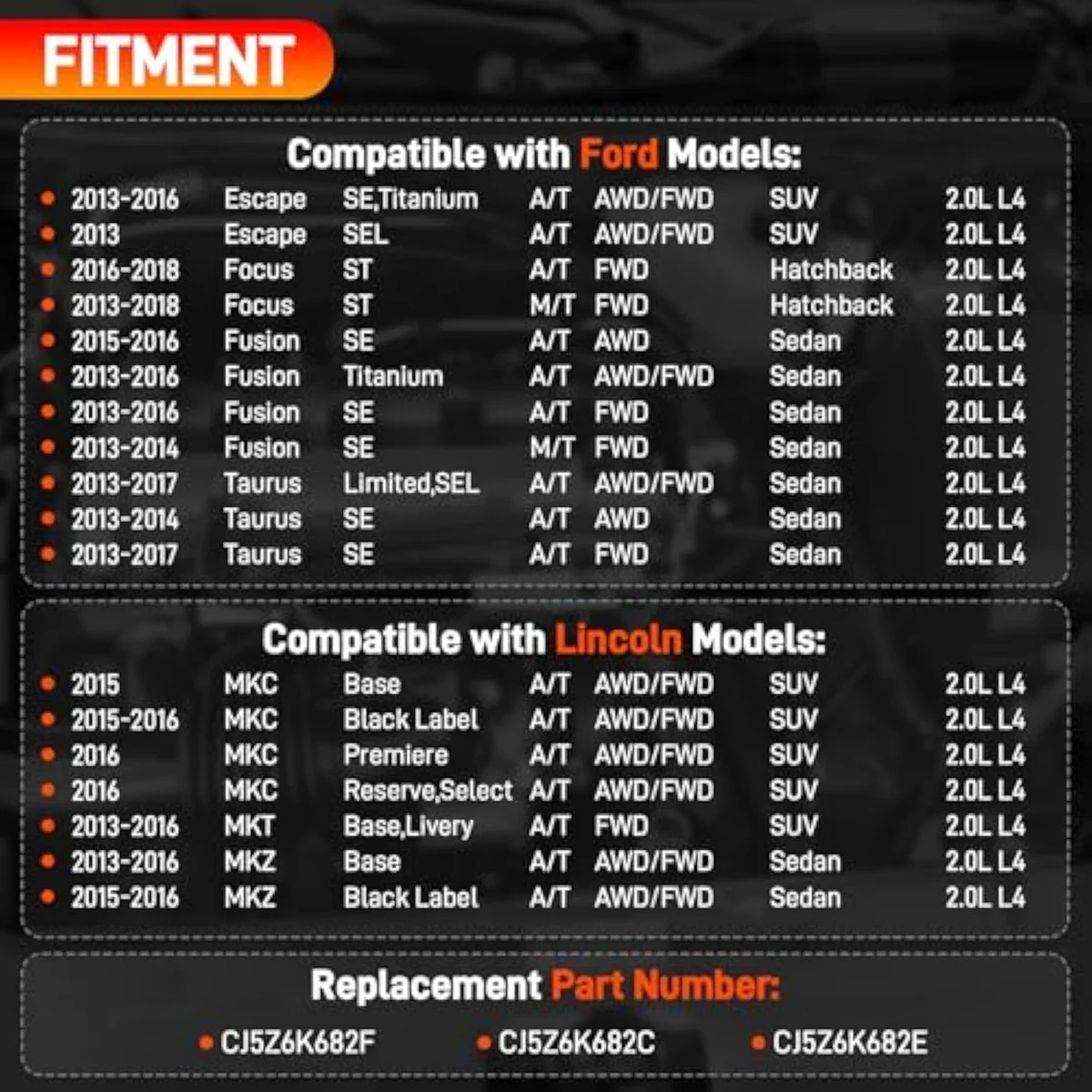
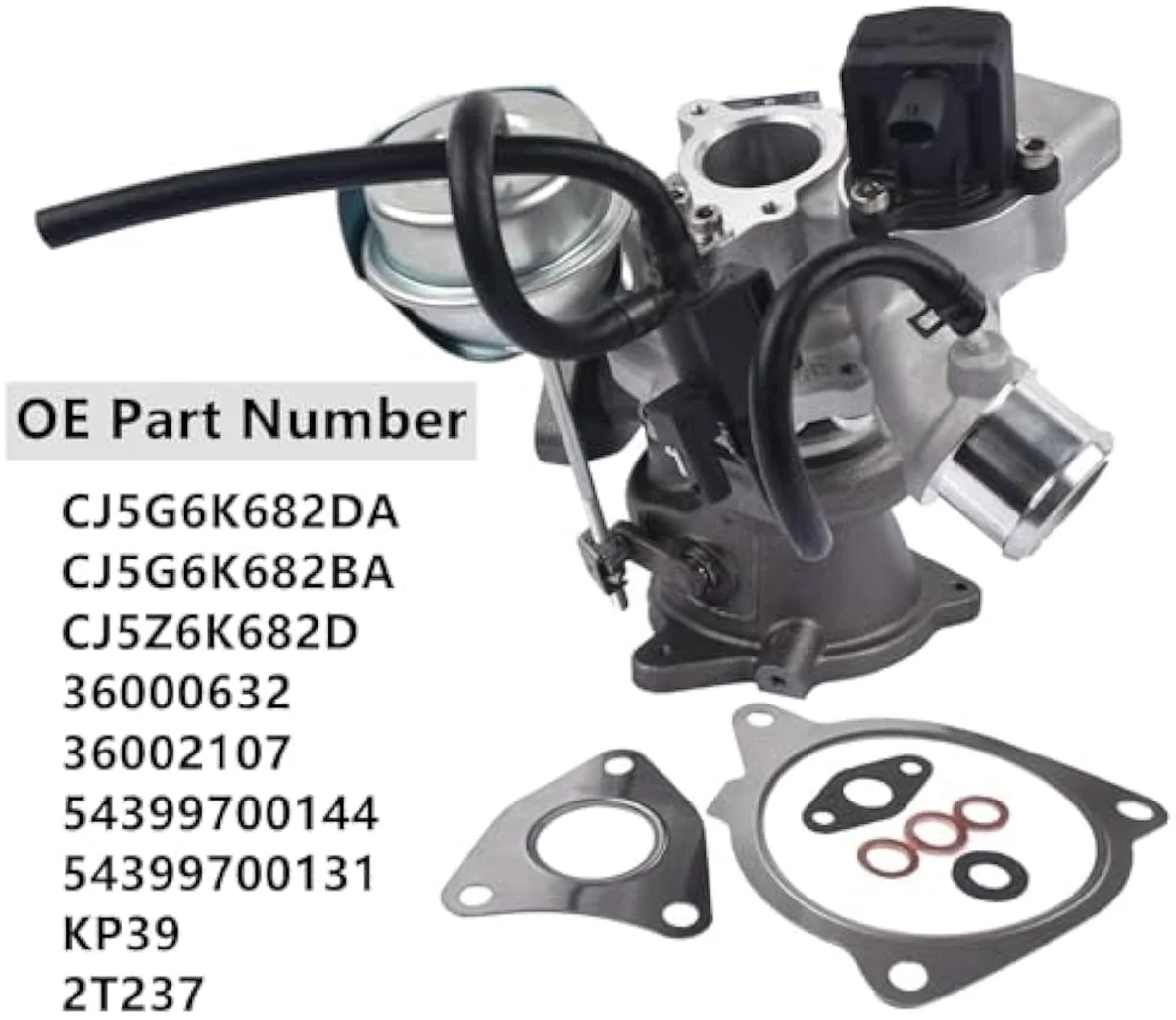
For application-side picks on the BorgWarner-supplied EcoBoost 2.0L OE-replacement lane, the Read the GDUKOP CJ5Z6K682C review covers the budget-tier OE-replacement on the high-volume Ford EcoBoost 2.0L install base. For the broader cross-engine cross-shop, the Read the cross-engine roundup covers documented OE-replacement and performance picks across multiple chassis lanes.
BorgWarner Decision Questions
- Who owns BorgWarner Turbo Systems?
- BorgWarner Inc. owns Turbo Systems as one of its primary product divisions. BorgWarner is a publicly traded Tier 1 automotive supplier (NYSE: BWA) headquartered in Auburn Hills, Michigan, with the Turbo Systems business unit operating manufacturing facilities in the US, Germany, China, Korea, and Hungary. The turbocharger business traces its lineage to the 1999 acquisition of 3K Warner Turbosystems (the company behind the K03 / K04 OEM frames common on early Volkswagen Audi Group turbo applications) plus the 2008 acquisition of Schwitzer (heavy-duty industrial turbos).
- What is the difference between K03 and K04 turbos?
- K03 is the smaller-frame BorgWarner OEM turbocharger used on entry-tier turbocharged applications (Audi A3 / A4 1.8T early generations, VW Golf 1.4T, Ford EcoBoost 1.6L Escape). K04 is the larger-frame BorgWarner OEM turbocharger used on performance-tier turbocharged applications (Audi S3 / S4 1.8T Quattro, VW Golf R 2.0T, Audi RS3 2.5T). Both share the same K-series bearing housing architecture; the K04 has a larger turbine wheel, larger compressor wheel, and higher peak airflow rating. Cross-shop on the same chassis: a K03→K04 upgrade is the most common BorgWarner performance upgrade path on VW/Audi 1.8T platforms.
- What is a BorgWarner EFR turbocharger?
- BorgWarner EFR (Engineered for Racing) is the brand's ball-bearing performance turbocharger line introduced in 2010. EFR ships ball-bearing center cartridges standard, twin-scroll inlet options on every frame, billet compressor wheels, and the deepest compressor-map documentation of any major aftermarket turbo brand. Frame sizes: EFR-6258 (350-450 hp), EFR-6758 (400-550 hp), EFR-7163 (500-700 hp), EFR-7670 (650-850 hp), EFR-8374 (800-1,000 hp), EFR-9180 (1,000+ hp drag-race). Performance build community defaults: EFR-7670 or EFR-8374 on 4-cylinder import builds targeting 700-1,000 horsepower.
- Are BorgWarner turbos better than Garrett?
- For specific applications, yes; for others, no. BorgWarner wins on twin-scroll standard configurations (EFR ships twin-scroll across the catalog while Garrett offers it as an option on specific G-series frames). Garrett wins on catalog breadth (GT, GTX, and G-series across 200-2,000+ hp ratings versus EFR's focus on 350-1,000+ hp band). BorgWarner OEM applications dominate the Volkswagen Audi Group (K03 / K04 on most 1.8T / 2.0T platforms); Garrett OEM applications dominate the Chevy Cruze 1.4L and Ford 6.7L Power Stroke. The right cross-shop is application-specific rather than blanket.
- Which cars use BorgWarner turbochargers?
- Ford EcoBoost: most EcoBoost displacement variants since 2010 (1.6L Escape / Fiesta ST, 2.0L Mustang / Focus ST, 2.3L Focus RS / Mustang / Bronco, 3.5L F-150 / Expedition). Volkswagen Audi Group: K03 on 1.4T / 1.8T early platforms; K04 on 1.8T / 2.0T performance platforms; EA888 2.0T on Golf R / Audi S3; EA839 3.0L V6 on Audi S4 / S5. GM Duramax 6.6L (S400-series heavy-duty diesel). Cummins ISX12 / ISX15 (industrial S-series). Caterpillar C9 / C13 industrial. The OEM install base is broadest on the Ford EcoBoost and Volkswagen Audi Group platforms.
- What is the BorgWarner S400 turbocharger?
- BorgWarner S400-series is the heavy-duty diesel turbocharger family covering Class-8 truck, marine, agricultural, and stationary engine applications. The series includes S475, S480, S483, and S488 frame sizes, all journal-bearing, sized for 8.0-15.0-liter heavy-duty diesel engines making 350-1,000 horsepower. Performance-aftermarket use: S400-series frames are popular on big-cubic-inch diesel builds (12-valve Cummins 5.9L, Powerstroke 7.3L compound builds, Duramax 6.6L) targeting 800-1,400 horsepower at the wheels. The frame size dwarfs typical passenger-car turbos; an S488 inducer measures 88mm while a Garrett GTX3076R inducer measures 76mm.
- How long do BorgWarner turbos last?
- OEM BorgWarner K03 and K04 applications routinely reach 120,000-180,000 miles when oil-change discipline holds. Heavy-duty BorgWarner S400-series on Class-8 truck duty cycles reach 500,000-1,000,000 miles between rebuilds (rebuilder shops servicing the same core multiple times across decades). Aftermarket EFR ball-bearing turbos reach 60,000-150,000 miles depending on duty cycle and install discipline. EFR cartridge wear is dominated by oil-supply quality and return-drain plumbing — the same install discipline that governs Garrett GTX longevity applies identically to EFR.
Get Product Updates
Updates only when something changes.
Only when something changes. Unsubscribe anytime.