Updated
For an overview of which production cars ship with factory turbochargers across Ford, GM, BMW, and the major manufacturers, see the Read the turbocharged-car install-base guide — covers reliability patterns by platform.
Precision Turbo and Engine — Brand Overview
Precision Turbo and Engine is the Hebron, Indiana performance-tier turbocharger builder that occupies the 400-1,000 horsepower middle band. The company sources Garrett OEM compressor and turbine wheels, machines them to PT-series specifications in-house, and assembles the center bearing cartridges with documented balance discipline.
The PT-series frame catalog covers four primary sizes that span the performance-build power band. PT5862: entry tier, 350-500 hp on 2.0-2.4L displacement, journal-bearing standard with optional ball-bearing upgrade. PT6266: highest-volume Precision frame, 500-700 hp band, the de-facto choice on B-series Honda, K-series Honda, Mitsubishi 4G63, Subaru EJ257, and Nissan SR20DET builds. PT6766: 700-900 hp band, larger displacement targets including LS, Coyote, and 2JZ. PT7666: 900-1,400 hp band, dedicated drag-race and high-load track applications. Every frame ships with optional billet compressor wheels and ball-bearing center cartridges.
"Precision PT6266 is the default answer on every B-series Honda build that wants to make legitimate dyno-proven 600 horsepower on pump gas." — r/Honda, on the cross-platform PT6266 dominance in import-build forums going back a decade.
Frame-Size Matching to Build Target
Picking the wrong Precision frame size leaves horsepower on the table or destroys driveability. The compressor-map matching exercise is the buying decision; Precision publishes the compressor maps for every PT-series frame on their website.
A build target of 450 horsepower on a 2.0-liter engine fits the PT5862 frame at 22 psi of boost. The same 450-horsepower target on a 2.4-liter engine drops to the PT5858 frame at 18 psi (smaller frame size, lower boost, more drive ability). The same target on a 1.8-liter engine pushes UP to the PT6062 frame at 28 psi (larger frame size, higher boost, slower spool, racing application only). The frame-size-to-displacement curve is non-linear; consult the Precision compressor map AND the specific engine's airflow data (volumetric efficiency × displacement × RPM × pressure ratio) before ordering.
For the engineering background on compressor-map reading and frame-size selection, the Turbocharger reference covers the surge-line geometry that the Precision compressor maps overlay. The Turbo University Turbocharger reference publishes industrial-tier balance-and-test discipline data comparable to Precision's in-house standards. The Understanding Turbochargers Guide covers the rebuilder-tier protocol that Precision's competitor brands (Garrett aftermarket, BorgWarner) align to. The Turbocharger Rebuilding Distribution catalog covers the OE manifest network the industrial-supply tier cross-references for fleet-procurement decisions.
Journal-Bearing vs Ball-Bearing Cartridges
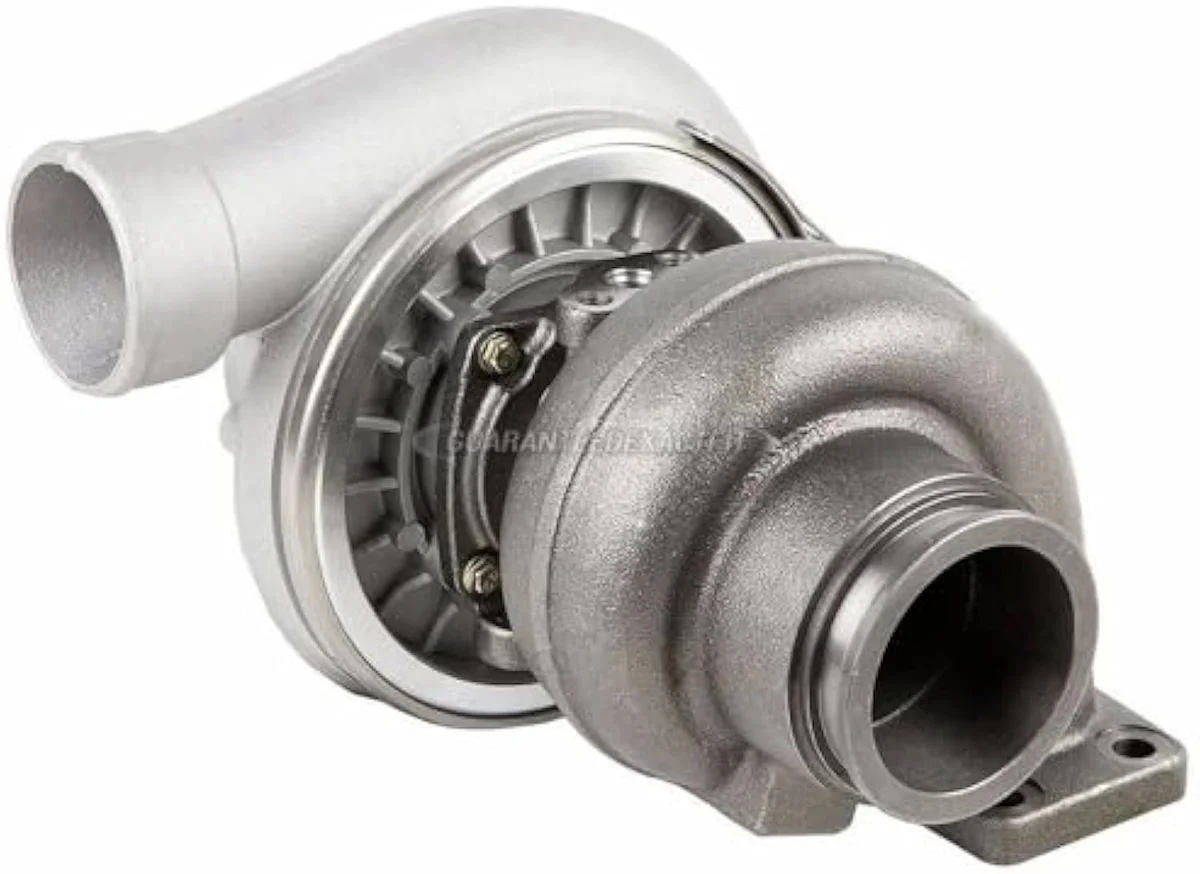
Every Precision frame ships in two cartridge options. The choice affects spool, transient response, and price by $300-$600 per unit.
Journal-bearing cartridges use fluid-dynamic bearings — engine oil under pressure forms a hydrodynamic film between the shaft and the bearing housing. Spool times: 2,800-3,500 RPM on a 2.0-liter PT6266 build. Durability under cruise-and-tow conditions: 80,000-150,000 miles. Cost: baseline. Right for road builds and heavy-duty applications where peak instantaneous boost is less important than sustained-load durability.
Ball-bearing cartridges use angular-contact ceramic balls with grease pre-pack PLUS oil-mist lubrication. Spool times: 2,200-2,800 RPM on the same PT6266 build (roughly 600 RPM earlier spool). Transient response: 15-25% faster on the same boost target. Durability under aggressive cycling: 100,000-180,000 miles on documented builds. Cost: +$300-$600. Right for road-race, drag-race, and any application where transient throttle response matters more than per-dollar performance.
Install Discipline — What Kills Precision Life
The most common cause of premature Precision PT-series failure is owner-side install mistakes that the warranty does not cover.
Undersized oil supply or restricted return drain. PT-series center cartridges need a -3 or -4 AN supply line with a 1.0-1.4 mm internal restrictor (NOT smaller) and a -10 AN return drain to the oil pan with NO sharp bends, no inline filters, and no extension hose runs. Skip the restrictor and the cartridge floods with oil under high boost; restrict the return drain and the oil cooks the bearing seals from the back side. Both failure modes void the warranty.
Off-map operation. Running the compressor past the surge line or choke line damages the impeller wheel at supersonic tip speeds. The Precision compressor map shows the surge boundary and the choke boundary; staying inside the efficiency island maximizes life. Boost controllers, manual or electronic, should target the published map, not the maximum reading the gauge will produce.
Precision vs the Aftermarket-OEM Tier
Picking Precision over OEM-aftermarket comes down to four documented decision criteria. Build target horsepower: above 400 hp, Precision pulls ahead on dyno-proven performance per dollar; below 400 hp, OEM-aftermarket (Garrett aftermarket, BorgWarner OEM) is the structurally better cross-shop because the warranty depth is comparable at lower per-unit cost. Compressor-map fit: Precision publishes detailed maps for every PT frame, which makes the frame-size match defensible against a build target; OEM-aftermarket cross-references the OE part number, which is application-specific but less flexible across non-OE build targets.
Cartridge bearing choice: Precision is the easier path to ball-bearing performance because every PT frame offers both options off the shelf; OEM-aftermarket usually ships journal-bearing only at the entry tier and ball-bearing at the rebuilder-tier premium. Distributor support and warranty: Precision's network is concentrated through performance-shop distributors with deep tuning support; OEM-aftermarket runs through parts-house catalogs (BuyAutoParts, RockAuto) which trade tuning expertise for breadth. The right cross-shop depends on whether the build needs hand-holding tuning support or just OE-equivalent reliability at a lower per-unit spend.
For build targets in the 600-1,000 horsepower band on Honda B-series, Mitsubishi 4G63, Subaru EJ257, Nissan SR20DET, or GM LS engines, Precision PT-series is the documented community default in dyno-proven application data going back fifteen years. The brand carries its weight in the performance lane because the engineering depth (Garrett castings, in-house balance, documented compressor maps) clears the bar that budget-aftermarket Chinese turbos cannot reach. Drop Precision below 400 hp and the engineering depth is wasted; cross-shop the OEM-aftermarket tier instead.
For diagnosing turbo failures across passenger-car and heavy-duty diesel chassis, the Read the four-stage repair decision guide covers the four-stage decision tree (Clean → Actuator → Cartridge → Complete) and the cost bands per chassis lane. For the broader architectural background, the turbocharger overview covers the six structural components and three variant families. For OE-replacement-tier alternatives below Precision's performance lane on a passenger-car Cummins 6.7L build, the Read Full Review of WOLLAHS 5494878RX covers the Stage-2 variable-geometry actuator-only path that addresses the most common 6.7L failure mode without requiring a complete turbo replacement.
Precision Turbo Decision Questions
- Are Precision Turbos worth the price?
- For builds chasing 600+ horsepower targets at the upper end of journal-bearing performance turbos, Precision is worth the premium over budget brands. The PT5862, PT6266, and PT6766 frames carry documented dyno data on import and domestic engines, Garrett-trained metallurgy on the compressor wheel, and a balance certificate that budget-tier Chinese turbos cannot produce. For sub-400-horsepower passenger-car replacements (Cruze 1.4L, Ford EcoBoost 2.0L), Precision is overspec — the OE-replacement tier from Garrett or BorgWarner aftermarket is the right cross-shop.
- What is the most popular Precision Turbo?
- The PT6266 (Precision 6266) is the highest-volume single application across import builds — B-series Honda, K-series Honda, Mitsubishi 4G63, Nissan SR20, Subaru EJ — covering the 500-700 horsepower band on 2.0-2.4L displacement. The PT6766 covers the 700-900 horsepower band on larger displacement. The PT5862 covers the entry tier (350-500 hp). All three carry billet compressor wheel options and ball-bearing center cartridge options that extend life under aggressive boost cycling.
- Are Precision Turbos made in the USA?
- Precision Turbo and Engine is based in Hebron, Indiana, where the company designs and assembles the PT-series turbos. Compressor wheels and turbine wheels come from Garrett castings (Precision sources Garrett OEM wheels and machines them in-house for the PT specifications). Center cartridges are assembled in-house with documented balance to 0.1 gram across both ends of the shaft. The full provenance trail is what separates Precision from drop-ship Chinese aftermarket turbos at a similar visual spec.
- How long do Precision Turbos last?
- A properly installed Precision PT-series turbo on a build with adequate oil supply (-3 or -4 AN line, return drain unobstructed) reaches 60,000-120,000 miles on the journal-bearing options and 100,000-180,000 miles on the ball-bearing options. Owner-side mistakes that cut Precision life dramatically: undersized oil return line, low-quality oil under sustained boost, or running the turbo past the published compressor map (surging the wheel into off-map territory). With clean install discipline, Precision life matches OE durability at much higher peak boost.
- Precision vs Garrett — which is better?
- For performance-tier builds above OE replacement spec, both Precision and Garrett carry comparable engineering depth. Garrett (now Garrett Motion) is the broader product line — GTX, GTW, G-series frames across 200-2,000+ hp ratings, with a denser OEM-aftermarket cross-reference catalog. Precision is more focused on the 400-1,000 hp performance lane and ships with closer documentation per specific build. Both use Garrett castings on the compressor side. Decision usually comes down to local distributor support, specific frame size targeting, and the warranty experience the buyer wants on day 200 if a bearing seizes.
- What about ball-bearing vs journal-bearing?
- Ball-bearing center cartridges spool faster (15-25% quicker transient response) and tolerate more aggressive boost cycling than journal-bearing cartridges. Cost: ball-bearing options run $300-$600 more per turbo. Application fit: ball-bearing is the right call for road-race or drag-race builds where transient response matters; journal-bearing is the right call for cruise-and-tow heavy-duty applications where peak instantaneous boost is less important than sustained-load durability. Both options ship across the PT5862 / PT6266 / PT6766 frames.
- Are Precision Turbos street legal?
- Precision Turbo and Engine sells PT-series turbos as off-road / track-use parts under the SEMA standardized labeling system. Street-legal compliance depends on the application chassis and the destination state emissions regime. California CARB-exempt installations require an EO number on the specific turbo + tune combination; most aftermarket performance turbos do not carry CARB EO certification. For 49-state street use the regulatory path is the buyer.
Get Product Updates
Updates only when something changes.
Only when something changes. Unsubscribe anytime.