Updated
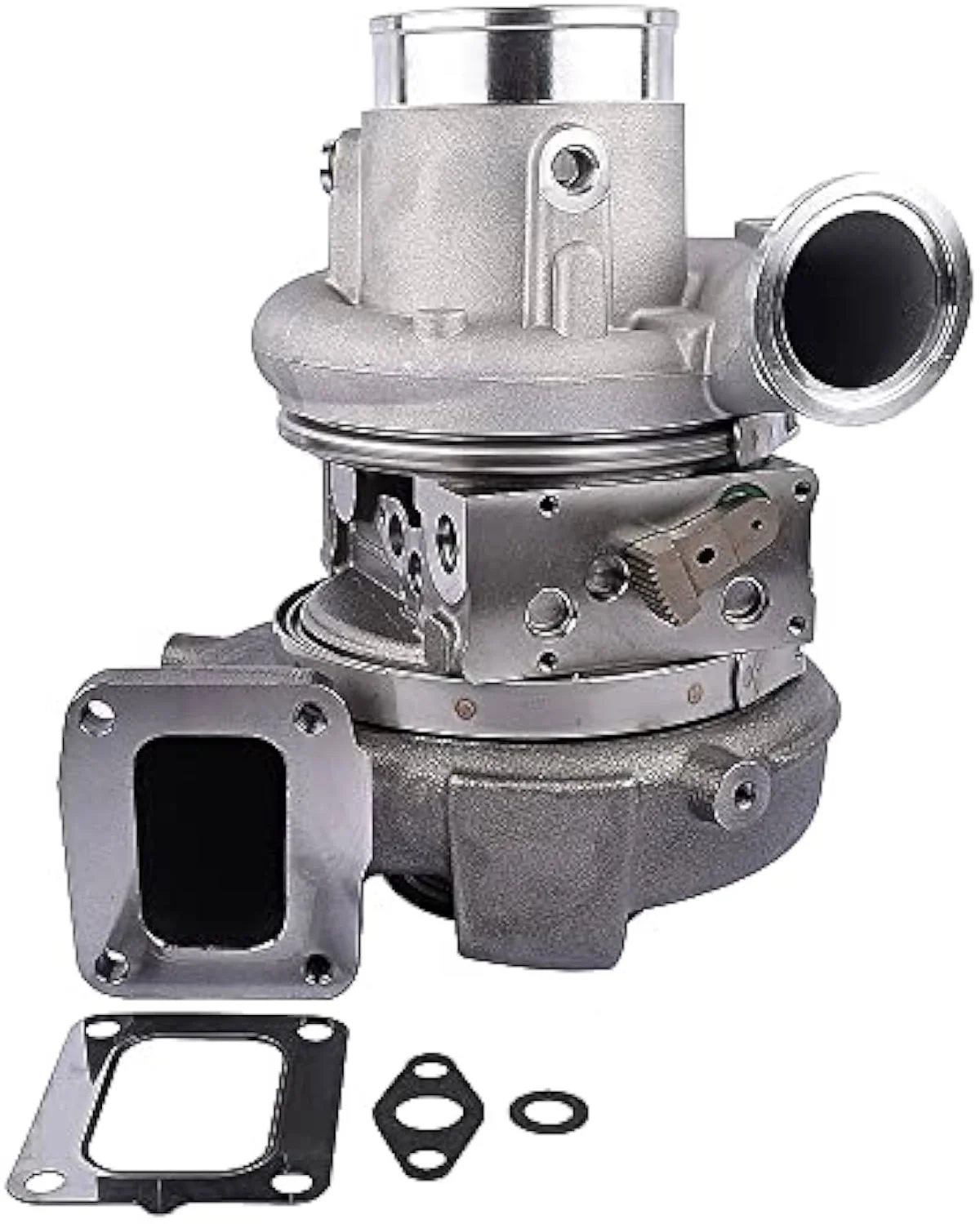
How a Turbocharger Works — Energy Flow
A turbocharger converts exhaust waste heat into intake-air pressure through a shared-shaft compressor. Exhaust gas spins a turbine wheel at 80,000-180,000 RPM; the connected compressor wheel pumps fresh air into the intake at 8-35 psi above atmospheric. More air per cycle, more fuel burned, more horsepower from the same engine size.
The thermodynamic angle: exhaust gas leaves the cylinder at 1,400-1,800°F under load. Without a turbo, that energy vents to atmosphere through the tailpipe. A turbocharger captures 25-40% of that energy as shaft work driving the compressor. The compressed intake charge enters the cylinder at higher density, so the engine breathes more air per intake stroke — and the fuel-injection system compensates with proportionally more fuel — and the resulting combustion produces more cylinder pressure per power stroke. End result: more torque, more horsepower, often with better fuel economy at part-throttle because the engine can be smaller (turbo-downsizing).
"The compressor side of the turbo is just a pump that runs off the exhaust. If you understand a vacuum cleaner, you understand 80% of how a turbo works." — r/MechanicAdvice, on the simplest way to explain forced induction to a first-time owner.
The Six Structural Components
Every turbocharger — Garrett T3 to Cummins ISX15 — uses the same six structural components arranged in the same architectural pattern. Understanding the parts is the entry to understanding the failure modes.
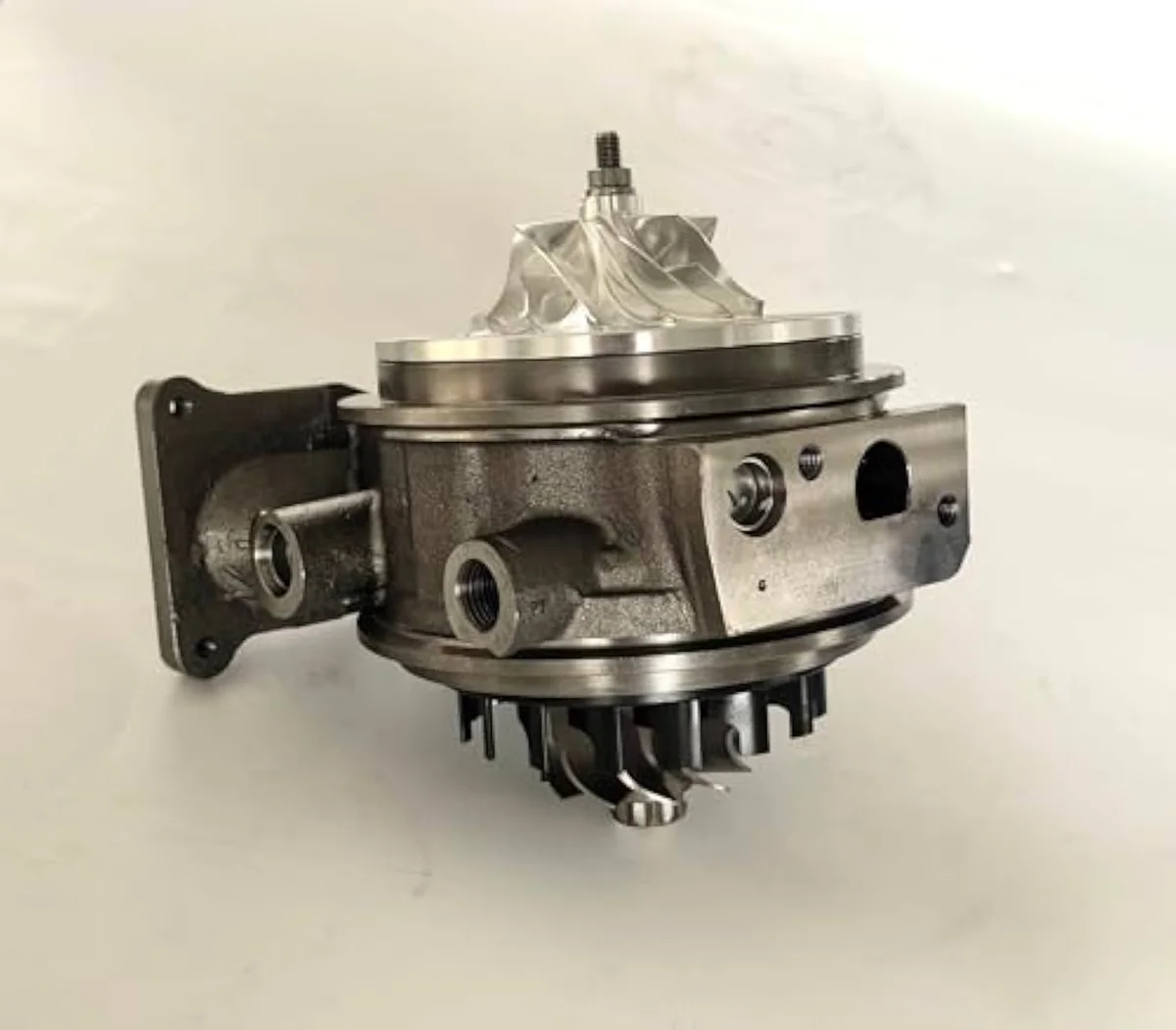
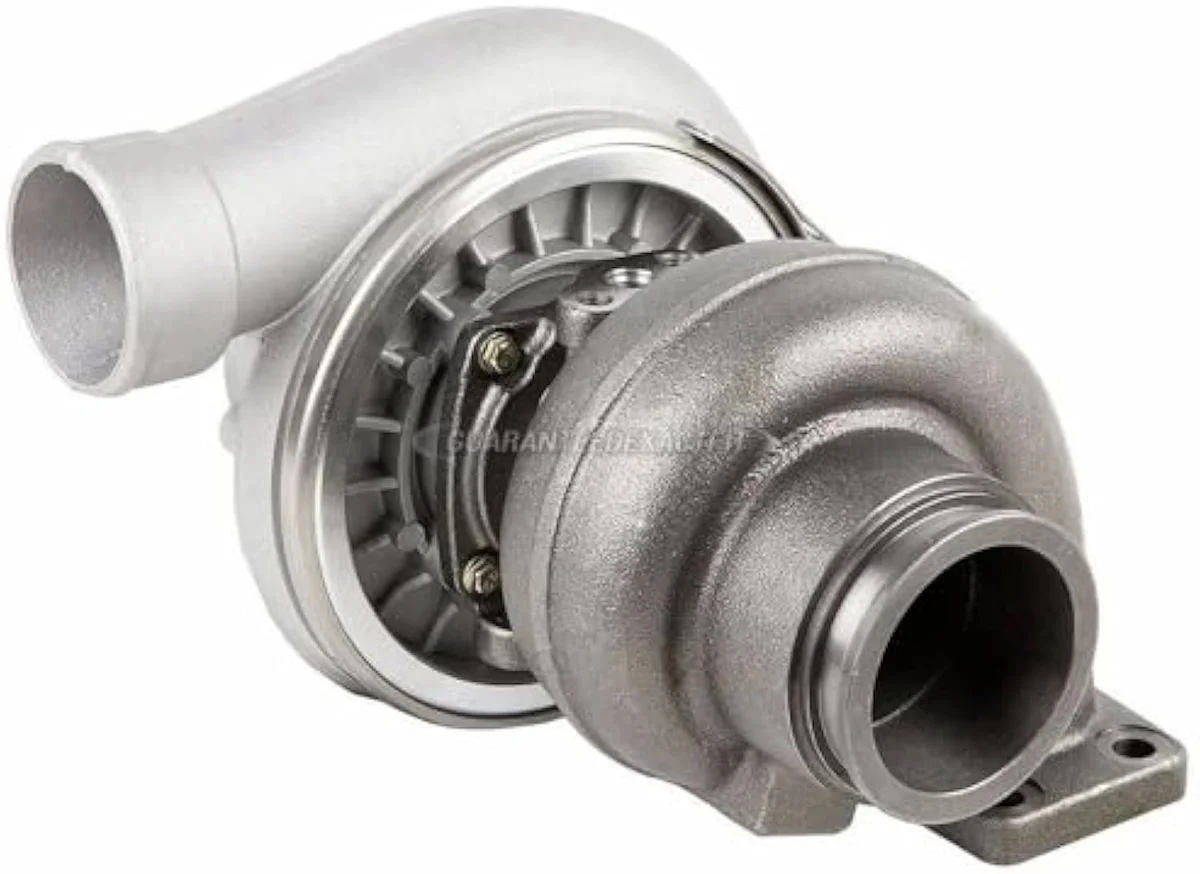
1. Turbine wheel (exhaust side). Cast Inconel or steel alloy, 6-15 vanes radiating from the hub. Spins from exhaust gas pressure. Common failure: erosion from particulate-loaded exhaust on diesel applications. 2. Compressor wheel (cold side). Machined aluminum or billet aluminum, 6-11 vanes. Spins with the turbine via the shared shaft. Most common failure: erosion from torn intercooler boots letting in unfiltered air. 3. Center bearing cartridge (CHRA). Holds the shaft on journal bearings (most production turbos) or ball bearings (premium-tier). Oil-fed from the engine oil supply. Most common failure: bearing wear at 150,000-200,000 miles or oil-starvation seizure from hot-shutdown abuse.
4. Turbine housing (hot housing). Cast iron exhaust shroud defining the A/R ratio (Area/Radius — the geometric ratio that controls how aggressively exhaust gas accelerates against the turbine). Common failure: cracking from thermal cycling on heavily-loaded applications. 5. Compressor housing (cold housing). Cast aluminum or magnesium intake shroud. Connects to the intercooler via the cold-side outlet. Most common failure: galling or scoring from impeller strikes when bearings fail. 6. Wastegate or variable-geometry vane assembly. Wastegate is a spring-loaded valve that bleeds excess exhaust around the turbine to cap boost pressure. Variable-geometry (VGT) is a ring of moving vanes that adjusts effective A/R electronically. Both fail through stuck or carbon-bound mechanism; the VGT is the more failure-prone of the two on diesel applications.
Boost Pressure and Why It Matters
The headline number on every turbo build is peak boost in psi. The math: atmospheric pressure at sea level is 14.7 psi. A turbocharger adds boost ABOVE atmospheric — at 15 psi of boost, the intake manifold sees 29.7 psi total absolute pressure, roughly double the air density a naturally-aspirated engine inducts. Double the air means roughly double the fuel can burn, which yields roughly double the cylinder pressure on the power stroke, which yields the horsepower lift.
Production calibration sets stock boost based on engine internals: aluminum pistons, factory rod bolts, factory head gasket. Cruze 1.4L LUJ runs 12-15 psi peak; Ford EcoBoost 2.0L runs 16-18 psi peak; Cummins 6.7L Ram runs 30-35 psi peak under heavy load. Aftermarket performance tunes raise boost to 20-25 psi (passenger-car) or 40-50 psi (heavy-duty diesel) but require engine-internals work to handle the higher cylinder pressures — forged pistons, ARP rod bolts, multi-layer-steel head gaskets, often a stud-girdle on the block.
For the engineering background on how boost-pressure scaling interacts with engine design, the Turbocharger reference covers compressor-side flow maps and surge-margin geometry. The Turbo University Turbocharger reference publishes balancing-and-test discipline data that defines the boost ceiling for the journal-bearing and ball-bearing center cartridges. The Understanding Turbochargers Guide covers the rebuilder-tier diagnostic protocol shops apply to verify a turbo can hold target boost before quoting the cartridge swap or complete replacement. The Turbocharger Rebuilding Distribution catalog publishes the OE cross-reference manifest used by the industrial-supply tier.
Three Variant Families — Wastegate, VGT, Twin-Scroll
Three modern variant families cover 95% of OEM applications. Pick the wrong family on a replacement and the install fails fitment regardless of frame size.
Wastegate turbos use a spring-loaded poppet valve to cap boost. The wastegate opens around 8-15 psi (passenger-car) or 25-30 psi (heavy-duty diesel), bleeding excess exhaust gas to atmosphere. Cheap, mechanically simple, no electronics required. Cruze 1.4L LUJ, Ford EcoBoost 2.0L, Holset HX35 on Cummins 5.9L all use wastegate designs. The 30-pound mechanical actuator on the side of the turbo is the wastegate operator.
Variable-geometry (VGT) turbos replace the wastegate with a ring of electronically-actuated vanes inside the turbine housing. The vanes pivot to change effective A/R: closed (small A/R) at low RPM for fast spool-up, open (large A/R) at high RPM for max flow. The Cummins 6.7L HE351VE / HE300VG, Ford 6.4L Power Stroke (Garrett GT3782VAS), and most Mercedes / BMW diesels use VGT designs. The electronic actuator on the side is the position-controlled motor that drives the unison ring; this is the P003A / U010C failure point that the repair guide stage-2 actuator path addresses.
Twin-scroll turbos use two separate exhaust pulse-paths from the cylinder head into divided turbine-housing scrolls, eliminating exhaust pulse interference at low RPM. Faster spool, broader torque curve, slightly more complex exhaust manifolding. BMW N20 / N55, Mazda SkyActiv-D 2.2L, and several Honda VTEC-TC engines use twin-scroll designs. Twin-scroll wastegate hybrids combine both features on the same turbo. Cross-shop different variant families requires matching the OE manifold's exhaust-port count and the calibration target — twin-scroll on a single-scroll manifold loses the twin-scroll advantage entirely. The BuyAutoParts cross-engine comparison covers the supplier-audit framework for cross-shopping wastegate-variant turbochargers across Cummins industrial 6BT and Volvo D12 Class-8 chassis under one fleet account.
The Three Primary Failure Modes
Operator-side mistakes account for 80% of premature turbo deaths across every variant family. Knowing the three failure modes lets new owners avoid the most expensive lessons.
Mode 1: Oil starvation. Driving away the moment the engine starts, before the oil pump primes the turbo bearings. The center cartridge has tight bearing-to-shaft clearances (0.003-0.006 inches axial); without lubrication the bearings score in seconds. Wait 10-15 seconds at idle before pulling away, especially on cold starts and especially on diesel applications with thicker oil viscosities. Mode 2: Hot shutdown. Killing the engine immediately after high-load operation. The turbo can be spinning at 100,000+ RPM after a freeway pull or a heavy tow; cutting the engine instantly stops oil flow but the turbo coasts down on residual heat for 60-90 seconds. The bearings cook against the still-hot shaft. Idle the engine for 30-60 seconds after sustained boost before shutdown.
Mode 3: Foreign-object ingestion. A torn intercooler boot, missing air filter, or aftermarket intake without a filter lets abrasive grit hit the compressor wheel at supersonic tip speeds. The impeller can be replaced but the abrasive damage extends to the intake manifold, intercooler, and cylinder heads. Inspect intercooler boots monthly; replace torn boots immediately; never run an aftermarket intake without a properly sealed filter element.
For cross-engine replacement picks across Cummins 6.7L, Ford EcoBoost 2.0L, and Cruze 1.4L chassis lanes, see the cross-engine roundup. For the specific actuator-only diagnostic path on Cummins 6.7L (the most common failure-driven replacement on the variable-geometry lane), the WOLLAHS 5494878RX actuator review covers the OE part chain, calibration tooling, and warranty terms across 2013-2018 Ram 2500/3500/4500/5500 applications. For the four-stage repair decision tree mapping symptoms to repair paths, the turbocharger repair guide covers cost bands and diagnostic gates between each stage. For performance-tier brand selection above the OE-replacement spec, the Precision Turbo brand overview covers the PT-series frame catalog and the journal-vs-ball-bearing decision matrix.
Turbocharger Overview Questions
- What does a turbocharger do?
- A turbocharger uses exhaust gas energy to drive an air compressor that pumps more air into the engine cylinders. More air per intake stroke means more fuel can burn per cycle, which produces more horsepower from the same engine displacement. A naturally aspirated 2.0-liter engine that makes 150 horsepower at sea level will make 220-280 horsepower with a turbocharger pumping 15-18 psi of boost. The turbo replaces 30-40% of the natural-aspiration deficit at altitude — a turbocharged engine at 8,000 feet performs nearly as well as it does at sea level, while a naturally aspirated engine of the same displacement loses 25-30% of its rated power up high.
- What are the parts of a turbocharger?
- Six structural components. The exhaust-side turbine wheel (hot side) spins from engine exhaust gas, typically at 80,000-180,000 RPM. The compressor wheel (cold side) shares a common shaft with the turbine wheel and compresses intake air. The center bearing cartridge (CHRA) holds the shaft on journal or ball bearings lubricated by engine oil. The exhaust housing (turbine housing) directs exhaust flow against the turbine wheel and defines the A/R ratio. The compressor housing (cold housing) directs compressed air to the intake manifold via the intercooler. The wastegate or variable-geometry vane assembly regulates boost pressure by bleeding excess exhaust off-target.
- Is it better to turbo a V6 or V8?
- For the same target horsepower, a smaller turbocharged engine (V6 or even inline-4) typically returns better fuel economy at cruise and lower mass than a larger naturally aspirated engine. Ford has used turbocharged V6 EcoBoost engines in the F-150 since 2011 specifically because the 3.5L EcoBoost V6 produces V8-equivalent torque (470 lb-ft) with 15-20% better fuel economy. For all-out peak horsepower at sustained load, a turbocharged V8 (Cummins ISX15, Detroit DD15) still leads — the larger displacement supports higher heat-rejection capacity under continuous high-boost operation that smaller engines cannot match.
- How long do turbocharged engines last?
- Modern turbocharged engines reach 200,000-300,000 miles on the bottom end when maintenance discipline is maintained. The turbo itself is usually the first major component to need attention, typically at 120,000-200,000 miles depending on duty cycle. Three factors extend turbo life: synthetic oil with regular 5,000-7,500 mile changes (cheap synthetic resists thermal breakdown better than conventional); idle-down discipline (let the engine idle 30-60 seconds after high-load operation before shutting down, so the turbo oil pump keeps lubricating the bearings as RPMs decay); and clean intake air (replace air filters per the manufacturer schedule, fix torn intercooler boots immediately).
- What does a turbocharger boost?
- A turbocharger boosts the manifold absolute pressure (MAP) above atmospheric pressure (14.7 psi at sea level). At 15 psi of boost, the intake manifold sees 29.7 psi total pressure — roughly twice the air density a naturally aspirated engine sees. Stock production turbocharged engines typically run 8-18 psi of boost depending on application (Cruze 1.4L: 12-15 psi peak; Ford EcoBoost 2.0L: 16-18 psi peak; Cummins 6.7L Ram: 30-35 psi peak under heavy load). Aftermarket performance turbo builds reach 25-40 psi of sustained boost with engine internals rated for the higher cylinder pressures.
- Are turbocharged engines reliable?
- Modern turbocharged engines from Garrett, BorgWarner, Holset, IHI, and Mitsubishi are reliable when fitted to a properly designed engine and maintained correctly. The 2010-onward generation of OEM turbochargers — particularly the variable-geometry and twin-scroll designs on the Ford EcoBoost, Cummins 6.7L, Volkswagen TSI, and BMW B-series engines — match or exceed the longevity of naturally aspirated counterparts when oil-change discipline is observed. The Chevy Cruze 1.4L is the notable exception in the passenger-car space because of an unrelated PCV-failure root cause that lets oil into the intake stream and abrasively wears the compressor wheel.
- What is the difference between a turbo and a supercharger?
- Both produce boost. The turbocharger is driven by exhaust gas — it uses energy that would otherwise vent as waste heat, so the parasitic cost on the engine is roughly zero at cruise. The supercharger is driven by a belt off the crankshaft — it produces boost from idle without lag but consumes 15-25 horsepower of crank power even at cruise. Turbochargers win on efficiency and peak horsepower; superchargers win on linear-feel power delivery and zero lag. The detailed comparison covers the mechanical, efficiency, and application-fit axes across both architectures.
Get Product Updates
Updates only when something changes.
Only when something changes. Unsubscribe anytime.