Updated
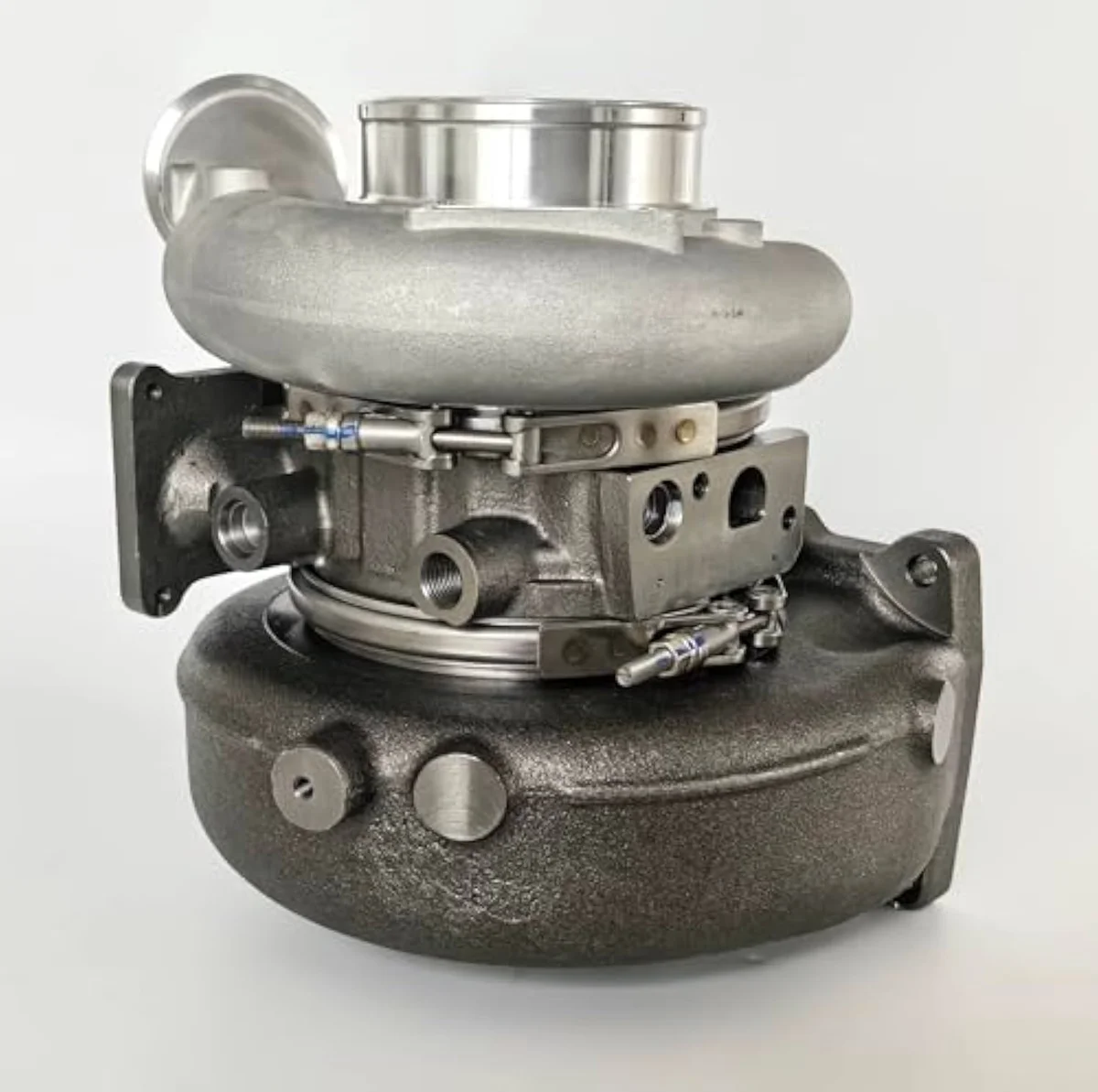
For a deeper architectural primer on how the six structural components actually work, see the Read the turbocharger overview — covers wastegate, variable-geometry, and twin-scroll variant families.
What a Turbocharger Actually Does
A turbocharger uses exhaust gas energy to drive a turbine wheel coupled to a compressor wheel by a shared shaft typically spinning 80,000-150,000 RPM under load. The compressor packs intake air into the cylinders at 15-22 psi over atmospheric, enabling 25-100% more fuel per combustion cycle and a proportional horsepower gain over the same naturally aspirated displacement.
The engineering elegance is that exhaust gas energy is otherwise waste — it would exit the tailpipe at 1,400-1,700°F as heat and pressure. The turbocharger captures a fraction of that waste energy to do useful compression work, producing horsepower with no net additional fuel burn at cruise loads. A 2.0-liter naturally aspirated engine at 60-mph cruise burns roughly the same fuel as a 1.4-liter turbocharged engine at the same cruise speed; the smaller displacement plus low-boost operation (1-3 psi at cruise) yields the 15-25% EPA fuel-economy advantage that drove the industry-wide adoption from 2008 onward.
Under heavy load, the turbocharger spins up to peak boost (typically 15-22 psi on OEM applications, 25-45 psi on performance aftermarket builds) and the engine produces the peak horsepower that the naturally aspirated equivalent could not match. A 2.0-liter Ford EcoBoost at 18 psi of boost produces 280 horsepower; the equivalent 2.0-liter naturally aspirated engine produces 165 horsepower. The 115-horsepower delta is the turbocharger's net contribution.
"Every modern OEM passenger-car platform that added forced induction since 2008 picked turbocharging. The exceptions stayed naturally aspirated. There are no new modern OEM superchargers outside the performance-purist exotics — Hellcat, ZR1 Corvette, Shelby GT500. Fuel-economy regulations made the decision for everyone else." — r/cars synthesis on the industry-wide turbo-downsizing pattern across 2008-2025.
The Four Buyer Paths Through the Niche
Four distinct buyer paths cross this niche, each with different priority orders and different acceptable price bands. OE replacement, brand-tier upgrade, performance build, and fleet replacement each map to a different sub-segment of the catalog.
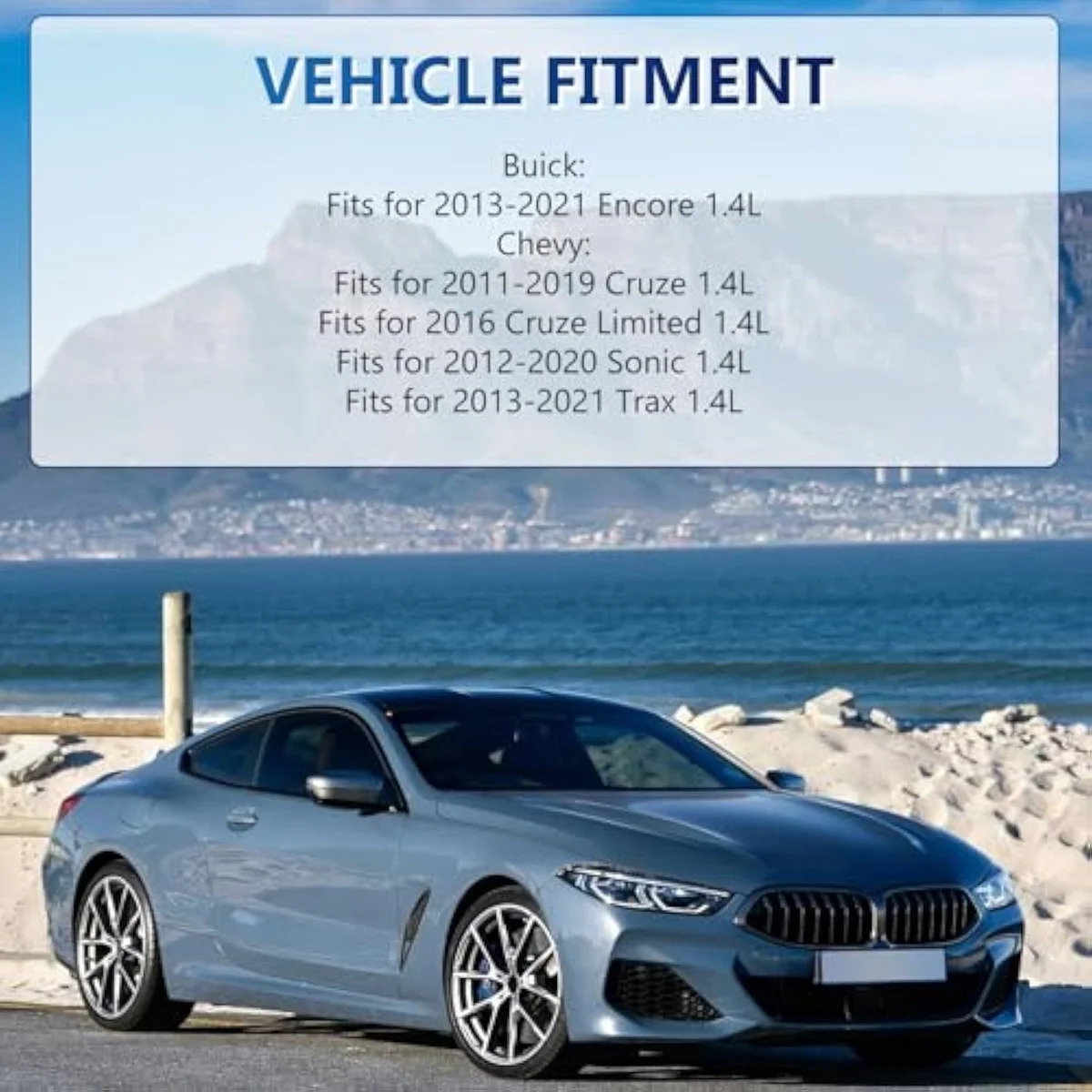
Path 1: OE replacement on passenger-car chassis. A 2014 Chevy Cruze with 110,000 miles throws a P0299 under-boost code. The dealer quotes $2,400 for a factory Garrett GT1446V replacement. Amazon shows the same OE 55565353 part number from A-Premium, Ingkan, Filterup, Autobaba, Donpida, and Tekkoauto at $150-$300 — six aftermarket cross-references for one OE part. The buying decision is: is the $200 budget-tier turbo good enough for a daily-driver Cruze, or does the path go to a $500 Garrett aftermarket OEM, or all the way to the $2,400 dealer? See the cross-engine roundup for the documented picks across this lane.
Path 2: brand-tier upgrade on a sound application. A buyer with a healthy Cruze 1.4L wants to upgrade to a better-than-OE Garrett GTX or Precision PT-series for performance and longevity reasons. The decision involves brand tier (Garrett vs Precision vs BorgWarner), bearing type (journal vs ball), and warranty depth. See the Garrett brand-tier guide and the Precision Turbo brand-tier guide for the brand-side cross-shop.
Performance Builds and Fleet Replacement
Path 3 is the aftermarket performance build. A buyer with a Honda B-series, Mitsubishi 4G63, Subaru EJ257, or GM LS engine targets 500-1,000 horsepower with a universal-flange turbocharger (T3 / T4 / GT45 mounting format), a custom exhaust manifold, an upgraded intercooler, and a standalone engine management system.
The performance build decision focuses on frame-size matching to engine displacement and target horsepower. A PT5862 / GTX2867R / G25-550 fits 350-475 horsepower on 2.0-liter displacement. A PT6266 / GTX3076R / G30-660 fits 500-700 horsepower on the same displacement at higher boost. A PT6766 / GTX3582R / G35-900 fits 700-1,000 horsepower on 2.4-3.0L displacement. The compressor maps published by each brand make the matching defensible; the aftermarket performance Amazon catalog (Maxpeedingrods T3/T4 T04E, Autodevil GT45) covers the entry-tier price band.
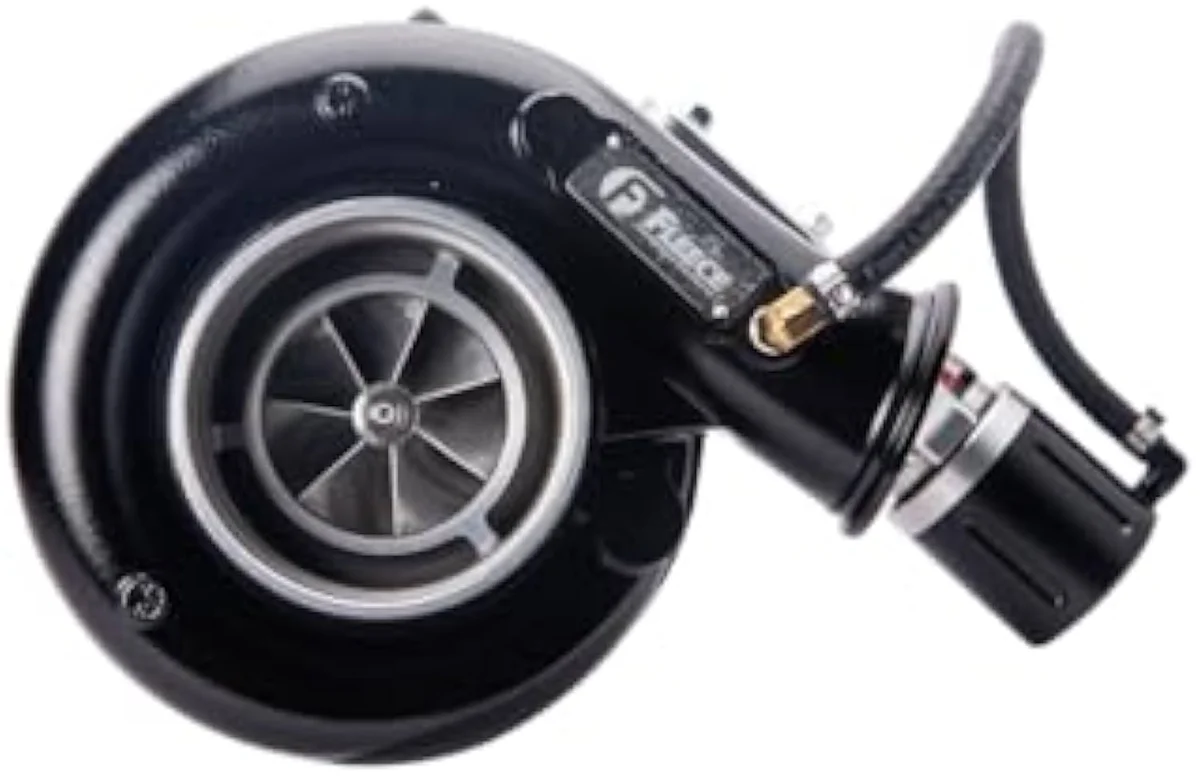
Path 4 is fleet replacement on heavy-duty diesel applications. A commercial Ram 3500 work truck fleet operator with mixed 6.7L Cummins HE351VE / HE300VG units needs a replacement with documented warranty depth, fast delivery, and rebuilder-tier reliability. The decision lands at $1,500-$3,500 per unit at Industrial Injection, BD Diesel, or Fleece Performance Cheetah HX35 — premium aftermarket with rebuilder-tier balance certificates and warranty terms that match or exceed OE Holset. See the Holset HE351VE review for the OE-reference benchmark.
Failure Modes and the Repair Decision Tree
Three primary failure modes account for most turbocharger replacement work across the four buyer paths. Bearing failure (oil starvation, contamination, or supersonic overspeed) is the most catastrophic — the rotating assembly fails and damages the housing on its way out. Actuator failure (variable-geometry diesel applications, especially Cummins 6.7L) is the most common — the mechanical side of the turbo stays sound, only the position-encoder actuator fails. Carbon buildup on variable-geometry vanes is the least costly — chemical cleaning often restores function without parts replacement.
The four-stage repair decision tree maps symptoms to repair paths. Stage 1 (clean): carbon buildup, restored chemically. Stage 2 (actuator only, $200-$700): mechanical side intact, only the actuator failed. Stage 3 (cartridge / CHRA rebuild, $400-$1,200): housings sound, only the rotating assembly worn. Stage 4 (complete replacement, $300-$3,500 depending on chassis): housings cracked, contaminated, or overspun. The decision tree saves $400-$2,500 per repair when applied correctly. See the Read the four-stage repair decision guide for the diagnostic flowchart.
Brand Tier vs Budget Aftermarket — The Underlying Decision
Premium brand tier ($400-$1,800 from Garrett aftermarket, Precision, BorgWarner EFR, Holset OE-rebuilt) vs budget aftermarket ($150-$400 from A-Premium, Ingkan, Filterup, maXpeedingrods) is the core cross-shop in the niche — and the decision flips by chassis, build target, and depreciation-adjusted budget envelope.
Premium brand tier (Garrett aftermarket, Precision Turbo, BorgWarner EFR, Holset OE-rebuilt) carries documented compressor maps, ISO-grade balance certificates, and warranty depth that the budget tier cannot match. Budget aftermarket tier (A-Premium, maXpeedingrods, Autodevil, Ingkan, Filterup) wins on per-unit price at the daily-driver replacement spend band. A $250 A-Premium GT1446V on a 100,000-mile Cruze daily driver is a structurally defensible call against a $2,400 dealer quote. A $250 maXpeedingrods GT45 on a 700-horsepower track-driven Honda B-series build is the wrong tier; the build deserves Garrett GTX or Precision PT-series. The decision flips by application context.
For the broader engineering background, the Turbocharger reference covers the architectural fundamentals across BorgWarner, Garrett, and Mitsubishi suppliers. The Turbo University reference publishes industrial-tier balance-and-test discipline data. The Understanding Turbochargers Guide covers the rebuilder-tier protocol. The Turbocharger Rebuilding Distribution catalog publishes the OE manifest network the industrial-supply tier cross-references for fleet kits.
Turbocharger Decision Questions
- What does a turbocharger do?
- A turbocharger compresses intake air using exhaust gas energy, allowing the engine to burn more fuel per combustion cycle and produce more horsepower from the same displacement. A 1.4-liter turbocharged engine produces roughly the peak horsepower of a 2.0-liter naturally aspirated engine while delivering 15-25% better fuel economy at cruise. The architecture has dominated OEM passenger-car design since 2008 because the same engine block can hit fuel-economy targets and power targets simultaneously.
- Are turbocharged cars more powerful than naturally aspirated cars?
- At equal displacement, yes — by 25-100% depending on boost target. A 2.0-liter naturally aspirated engine typically produces 150-180 horsepower. The same 2.0-liter engine with a turbocharger at 15-22 psi of boost produces 250-350 horsepower. Modern OEM turbo applications (Ford EcoBoost 2.0L, BMW B58, Mercedes M139) make 300-500 horsepower on 2.0-3.0L displacement that would have required 4.0-6.0L of naturally aspirated displacement a generation ago.
- What is the difference between turbocharged and supercharged?
- Both compress intake air, but the energy source differs. A turbocharger uses exhaust gas energy (free at cruise, parasitic only under load) and delivers 15-25% better fuel economy. A supercharger uses crankshaft mechanical work (consistent parasitic load across the entire RPM band) and delivers zero throttle lag. Modern OEM passenger cars almost universally pick turbocharging for the fuel-economy advantage; performance-purist OEM applications (Hellcat, ZR1, GT500) stay supercharged for response character.
- How long does a turbocharger last?
- Modern OEM turbochargers from Garrett / BorgWarner / Holset / Mitsubishi / IHI suppliers routinely reach 120,000-200,000 miles when oil-change discipline holds. The exceptions: Chevy Cruze 1.4L (PCV-related failure pattern at 80,000-130,000 miles), Ford EcoBoost 1.6L (carbon-buildup intake-valve cleaning required at 60,000-80,000 miles), and BMW N20 (timing-chain guide failure, not directly a turbo failure). Heavy-duty diesel turbos on Cummins 6.7L and Ford 6.7L Power Stroke applications routinely reach 200,000-300,000 miles.
- How much does it cost to replace a turbocharger?
- Dealer pricing for OE-replacement: $1,800-$2,400 on Chevy Cruze 1.4L, $3,000-$3,300 on Ford EcoBoost 2.0L applications, $2,500-$4,500 on Cummins 6.7L variable-geometry applications. Aftermarket Amazon-tier replacement: $150-$700 on the Cruze and EcoBoost chassis (5-15× savings against dealer), $1,200-$2,500 on the Cummins 6.7L. The dealer-vs-aftermarket gap is the central buying decision; the documented OE cross-references (55565353 / 781504 / 667-203 for Cruze, 5494878RX / HE351VE for Cummins) prove the same parts are available at one-tenth the dealer cost.
- What are the signs of a failing turbocharger?
- Six symptoms most commonly indicate turbo failure: blue or grey exhaust smoke (oil burning past the bearing seals), loss of power especially at low boost, whistling or grinding noise from the turbo (bearing failure), check engine light with under-boost codes (P0299, P0234, P0245), oil leaks at the turbo mounting flange, and unusually high oil consumption between scheduled changes. The Cummins 6.7L variable-geometry application adds three more: P003A (actuator position sensor), P229F (turbo overspeed), and reduced power when cold-soaked.
- Can a turbocharger be repaired or do you have to replace it?
- Both paths exist, depending on the failure mode. Stage 1 (clean): carbon buildup on variable-geometry vanes; restored with chemical cleaning. Stage 2 (actuator only): mechanical side intact, only the actuator failed; $200-$700 to replace just the actuator. Stage 3 (cartridge/CHRA): housings sound, only the rotating assembly worn; specialty shop rebuilds with new cartridge. Stage 4 (complete): housings cracked or contaminated; full replacement unit. The four-stage decision tree determines which path fits the buyer.
Get Product Updates
Updates only when something changes.
Only when something changes. Unsubscribe anytime.