Updated
There is no single best turbocharger across the market — the right pick is application-specific. Garrett Motion, BorgWarner, and Holset (Cummins Turbo Technologies) anchor the OEM and premium-aftermarket tier. Precision Turbo and Engine plus BorgWarner EFR cover the 400-1,000 horsepower performance lane. Budget aftermarket brands like A-Premium and INGKAN handle daily-driver replacement at one-tenth dealer pricing.
For the broader brand-tier context, see the Read the Garrett brand-tier guide — covers Garrett's three performance lines (GT / GTX / G-series) plus OEM supply role across Cruze 1.4L, Ford 6.7L Power Stroke, and European diesel platforms.
What is the best brand of turbo for a diesel engine?
Holset (Cummins Turbo Technologies) anchors the OEM and aftermarket premium tier on Cummins 5.9L and 6.7L applications. Garrett Motion supplies the OEM Ford 6.7L Power Stroke GT3782VAS / GT3788LVA. BorgWarner S-series and EFR cover heavy-duty industrial Cummins ISX / Detroit DD15 / Volvo D12 applications. Brand selection follows the OEM supplier rather than picking a single best-brand across all diesel applications.
What's the most powerful turbocharger?
In production aftermarket, Garrett G45-1500 carries the highest single-frame horsepower rating at 1,500 horsepower target on dedicated drag-race applications. Garrett G42-1200, BorgWarner S400 / S500 industrial, and Precision GEN2 PT8891 cover the 1,000-1,500 horsepower band. Industrial Holset HX82 / HX83 frames push beyond 2,000 horsepower for marine and stationary generator-set applications across heavy-duty industrial markets.
Can you put a bigger turbo on a stock engine?
Yes — but the bigger turbo only makes sense if supporting fuel system, intake plumbing, exhaust manifold, and ECM tuning are also upgraded simultaneously. A bigger frame on a stock engine without supporting modifications produces slower spool, weaker low-end torque, and the same peak horsepower as the stock unit because the bottleneck moves to fuel delivery rather than air delivery on the intake side.
What are the parts of a turbocharger?
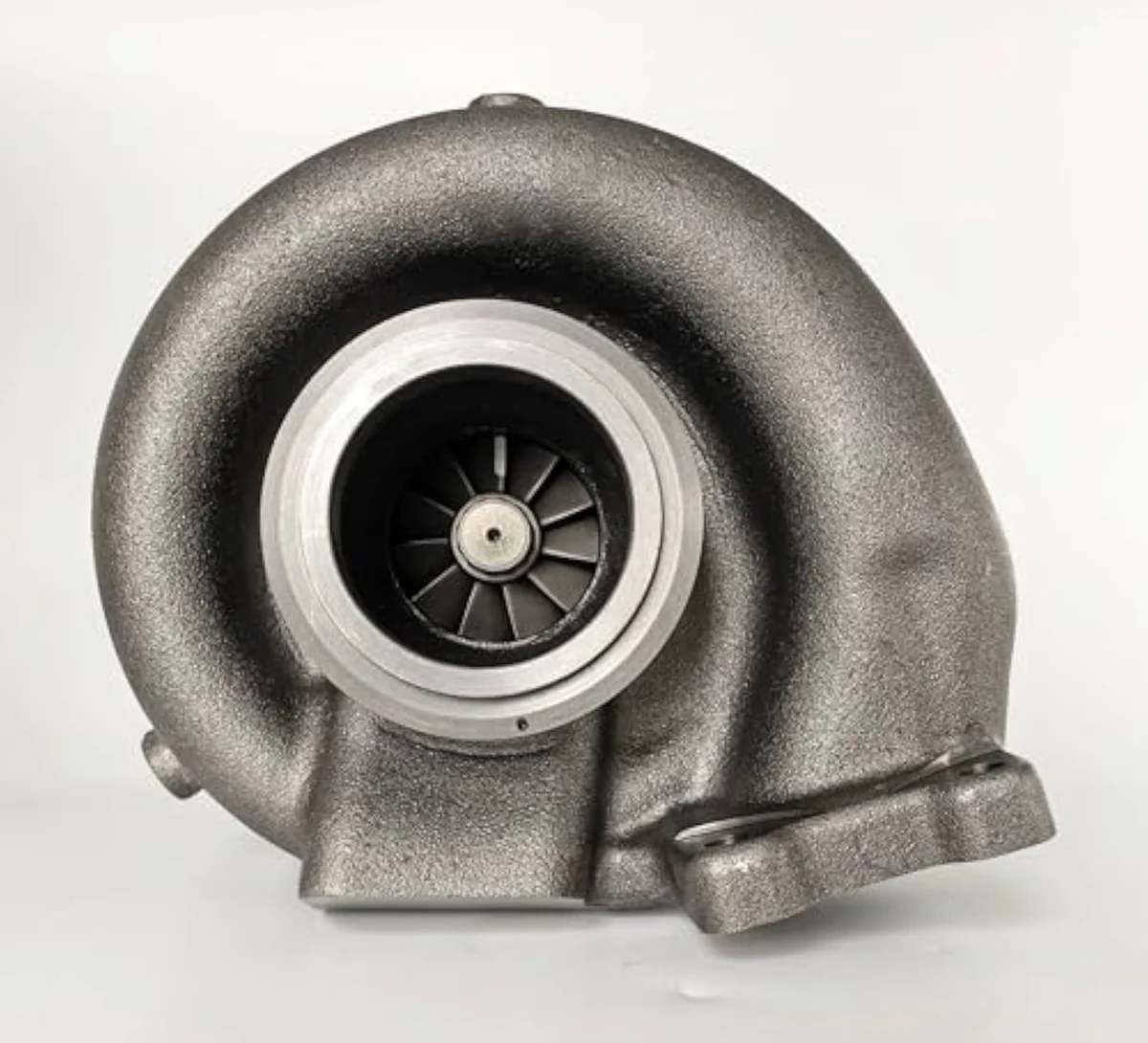
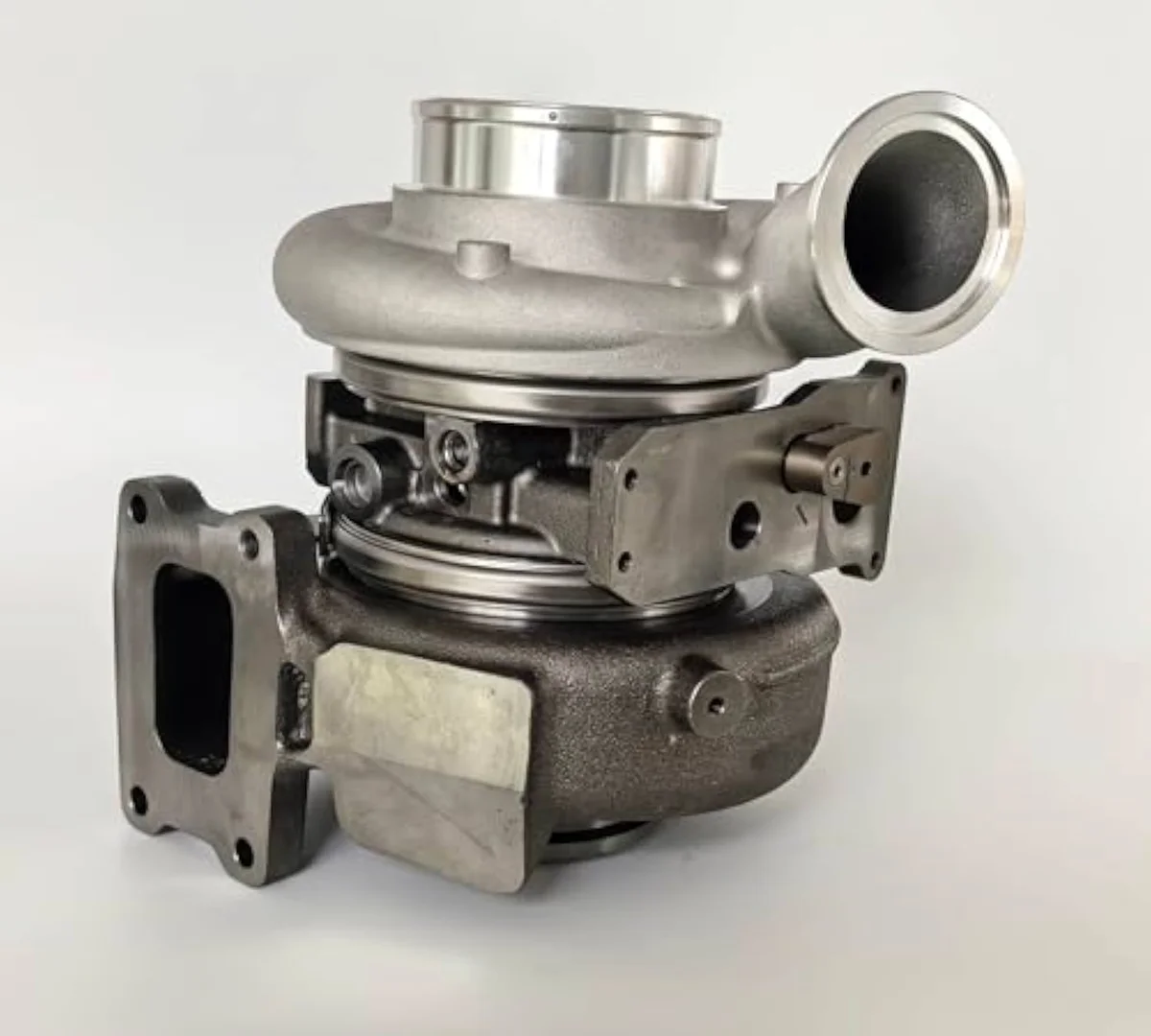
A turbocharger has six structural components: compressor wheel and housing (cold side), turbine wheel and housing (hot side), center cartridge (CHRA) holding the bearing assembly that joins both shafts, wastegate or variable-geometry actuator controlling boost pressure, oil supply and return lines for bearing lubrication, and electrical sensors monitoring shaft speed and vane position.
What does a turbocharger do?
A turbocharger compresses ambient air into the engine intake manifold using exhaust gas energy that would otherwise vent to atmosphere. The exhaust spins the turbine wheel; the turbine drives the compressor wheel through a shared shaft. Compressed intake air carries more oxygen per unit volume, allowing more fuel per combustion cycle and producing more horsepower per liter of displacement.
Best Brand By Application Tier
The best-brand answer fragments by application tier. OEM-replacement on a daily-driver passenger car: budget aftermarket cross-references at one-tenth dealer pricing on Cruze 1.4L, EcoBoost 2.0L, Sonic, Trax, Encore. Performance build 400-700 horsepower: Garrett GT or Precision PT-series journal-bearing tier. Performance build 700-1,500 horsepower: Garrett GTX or G-series ball-bearing tier, BorgWarner EFR, or Precision GEN2.
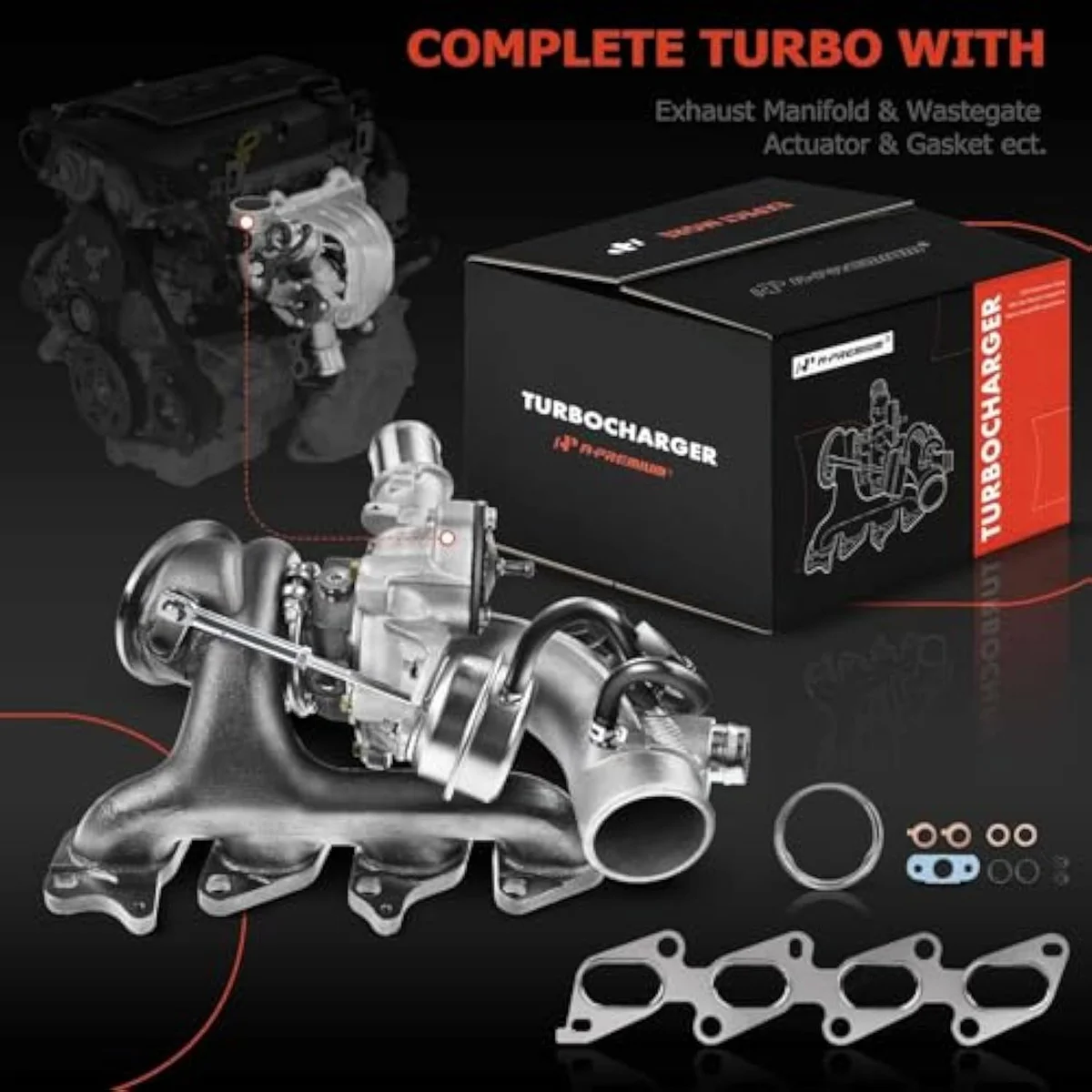
For Cruze 1.4L daily-driver replacement specifically, the documented community-default pick is the A-Premium Complete kit at $200-$300 with 12-month unlimited warranty, covering the OE 55565353 / 781504 / 667-203 / GT1446 cross-reference chain across 2011-2019 Cruze + Sonic + Trax + Encore variants.
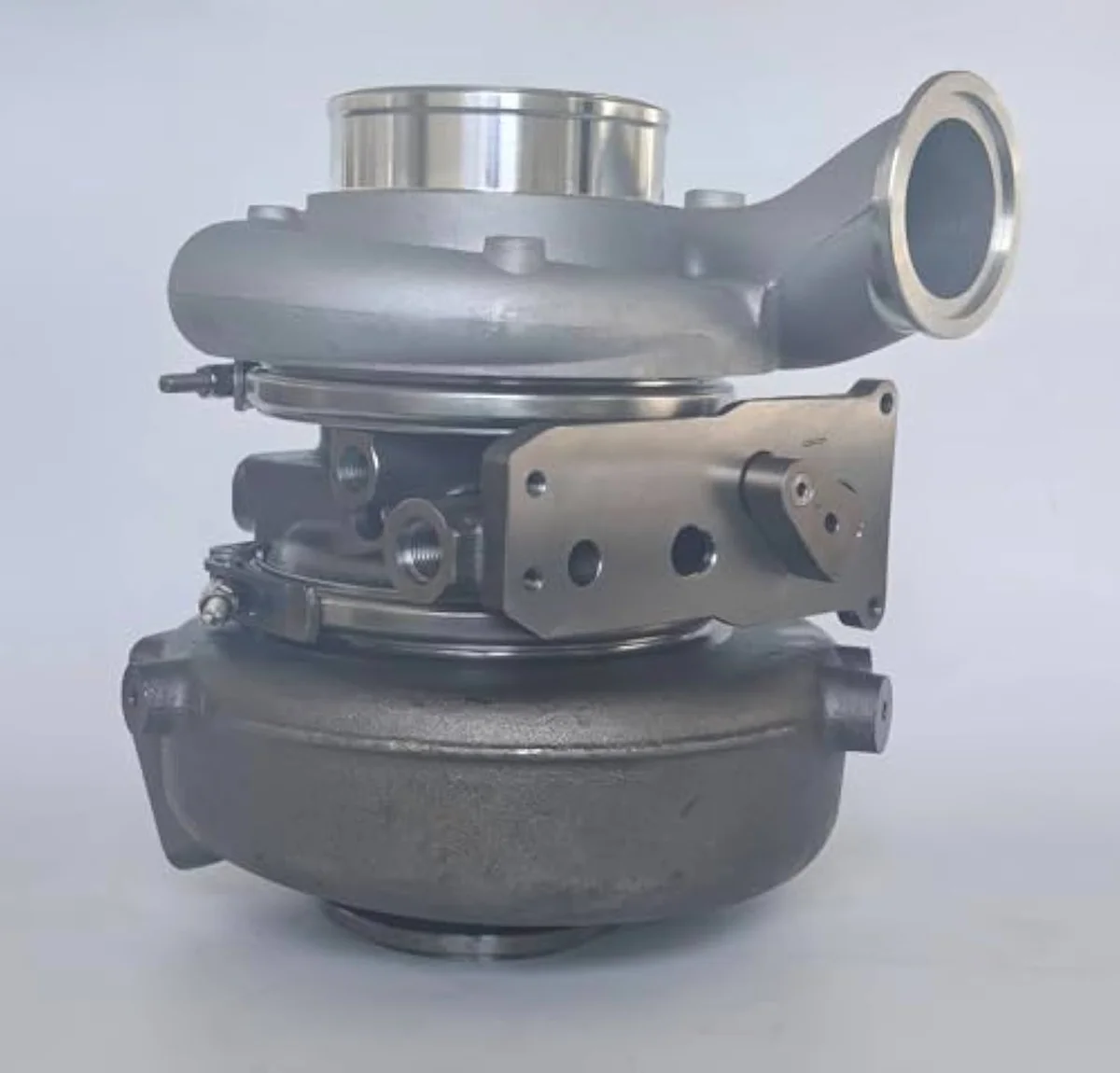
OEM-replacement on a heavy-duty diesel pickup (Cummins 6.7L Ram, Ford 6.7L Power Stroke, Duramax L5P): OEM-rebuilt direct from Holset (Cummins) or Garrett (Ford) for warranty depth, BD Diesel or Fleece Performance for premium aftermarket rebuilds, WOLLAHS or budget aftermarket for out-of-warranty owner-operator pickups. For 2013-2025 Cummins 6.7L Ram chassis specifically, the OEM-rebuilt Holset HE300VG review covers the post-2013 variable-geometry generation. Heavy-duty industrial (Cummins ISX, Volvo D12, Detroit DD15, Caterpillar C15): OEM-rebuilt direct anchored by uptime contracts that the budget aftermarket tier cannot match.
Premium Tier vs Budget Tier — When Each Wins
Premium-tier OEM-rebuilt direct (Garrett, Holset, BorgWarner) wins on warranty depth, balance certificate documentation, and per-frame compressor map publication — the engineering depth that fleet commercial buyers and high-horsepower performance builders need. Budget-tier aftermarket (A-Premium, INGKAN, Filterup, AUTOBABA, Donpida, NEWZQ, Tekkoauto, WOLLAHS) wins on per-unit cost where the alternative is a $2,000-$3,300 dealer quote on a daily-driver passenger car.
The decision flips on duty cycle and depreciation-adjusted spend math. For a 100,000-mile-remaining daily driver, a $250 budget aftermarket replacement that lasts 50,000-80,000 miles wins on depreciation-adjusted spend even if it lasts half as long as OEM Garrett. For a 800-horsepower track-driven build, a $250 budget aftermarket turbo loses on warranty, balance discipline, and compressor-map documentation — premium-tier Garrett GTX or Precision PT-series is the structurally right call.
What is the most reliable turbocharged engine?
Cummins 5.9L 12-valve (1989-1998) and 24-valve (1998.5-2007) carry the documented reliability standard with Holset HX35 frames routinely reaching 300,000-500,000 miles in fleet duty. Toyota 2JZ-GTE and Nissan RB26DETT carry import-build reliability standards. Volvo D12 / D13 industrial applications reach 800,000-1,200,000 miles before major rebuild on documented fleet operator data — the heavy-duty diesel install base sets the multi-decade reliability bar.
For owner-operators rebuilding the Cummins 5.9L Holset HX35 specifically, the premium-tier billet upgrade path is documented in the billet impeller upgrade review — covers the HX35 forged-machined-wheel (FMW) compressor upgrade that bumps the stock 60mm cast aluminum to 63mm billet aluminum with documented dyno data reaching 500-650 horsepower at the rear wheel.
How are turbocharger impellers made?
Modern compressor wheels are CNC-machined from billet aluminum (premium tier) or investment-cast aluminum alloy (OEM and entry-tier). Turbine wheels are investment-cast from Inconel 713C or MAR-M247 nickel-superalloy because the hot-side temperature exceeds the melting point of conventional aluminum or steel alloys. Both wheels then balance to ISO-grade tolerances on documented spin-balance machines before cartridge assembly.
Brand Selection in Context
The brand-selection question collapses to four documented decision tiers: OEM-replacement (follow the OEM supplier — Garrett, Holset, BorgWarner, IHI by application), premium aftermarket performance (Garrett GTX / G-series, Precision GEN2, BorgWarner EFR), budget aftermarket replacement (A-Premium, INGKAN, Filterup, WOLLAHS, AUTOBABA, Donpida, NEWZQ, Tekkoauto), and heavy-duty industrial (OEM-rebuilt direct under uptime contract).
For the broader Garrett-vs-BorgWarner-vs-Holset cross-shop on specific applications, the Garrett brand-tier guide covers GT / GTX / G-series across Cruze 1.4L OEM, Ford 6.7L Power Stroke, BMW N47, Mercedes OM651, and Volkswagen TDI. The BorgWarner brand-tier guide covers K03 / K04 OEM (Ford EcoBoost, Audi 1.8T / 2.0T) plus S-series industrial and EFR aftermarket performance.
For the engineering background on what separates premium-tier from budget-tier, the Wikipedia turbocharger reference covers the underlying surge-line / choke-line geometry that compressor maps describe. The Turbo University rebuilder reference publishes industrial-tier balance-and-test discipline applicable across all three premium brands. The Garrett Motion technical library publishes GT / GTX / G-series compressor map atlas used as the reference standard across the aftermarket performance tier.
For the cross-engine aftermarket replacement context with documented community-tested picks across Cummins 6.7L, Ford EcoBoost 2.0L, Cruze 1.4L, and Volvo D12 applications, the cross-engine roundup covers each application under one supplier-audit framework with per-pick rationale tied to documented Reddit / forum / community signal data plus AI-search consensus from Perplexity / ChatGPT / Google AI Mode.
Get Product Updates
Updates only when something changes.
Only when something changes. Unsubscribe anytime.