Updated
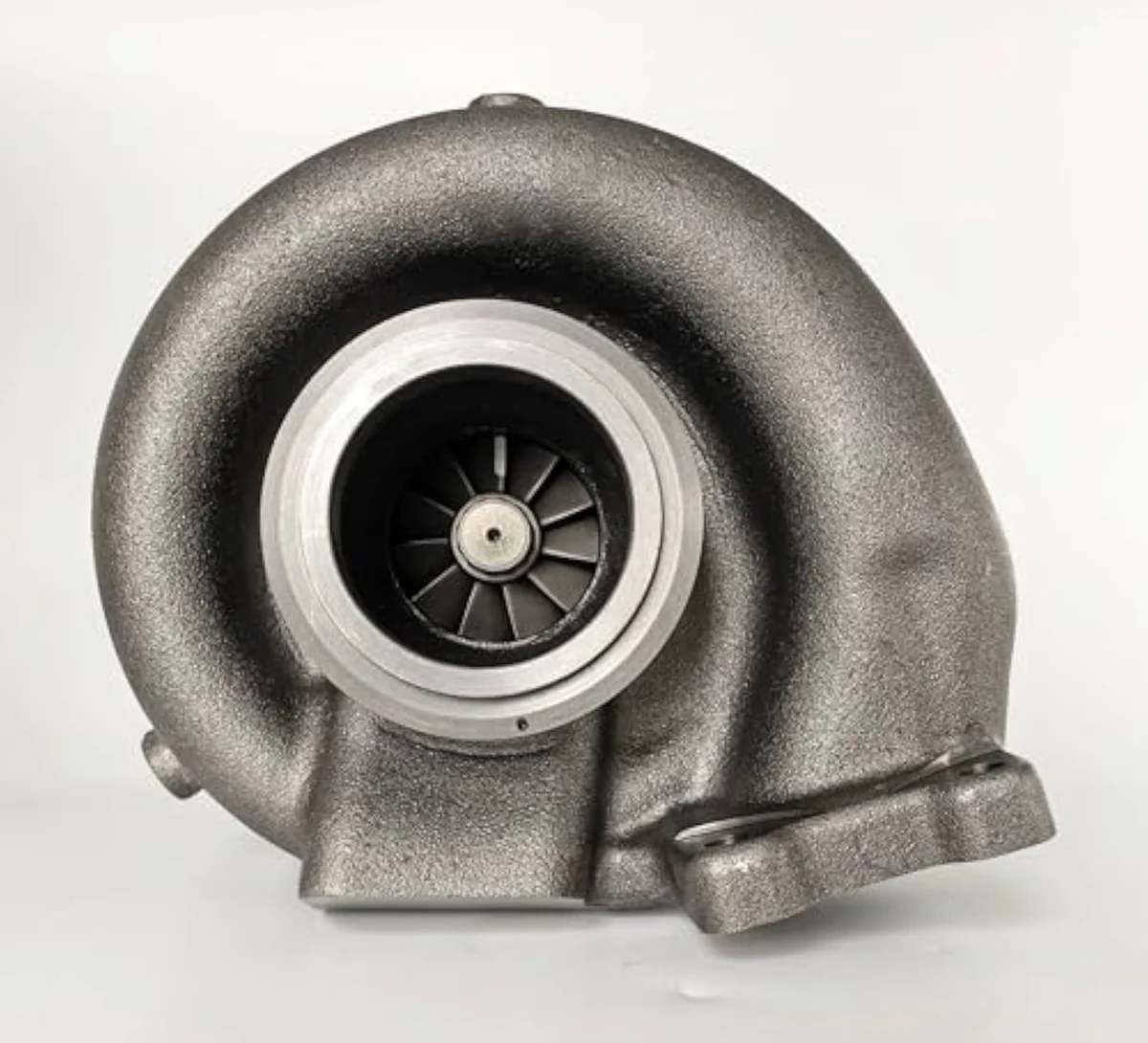
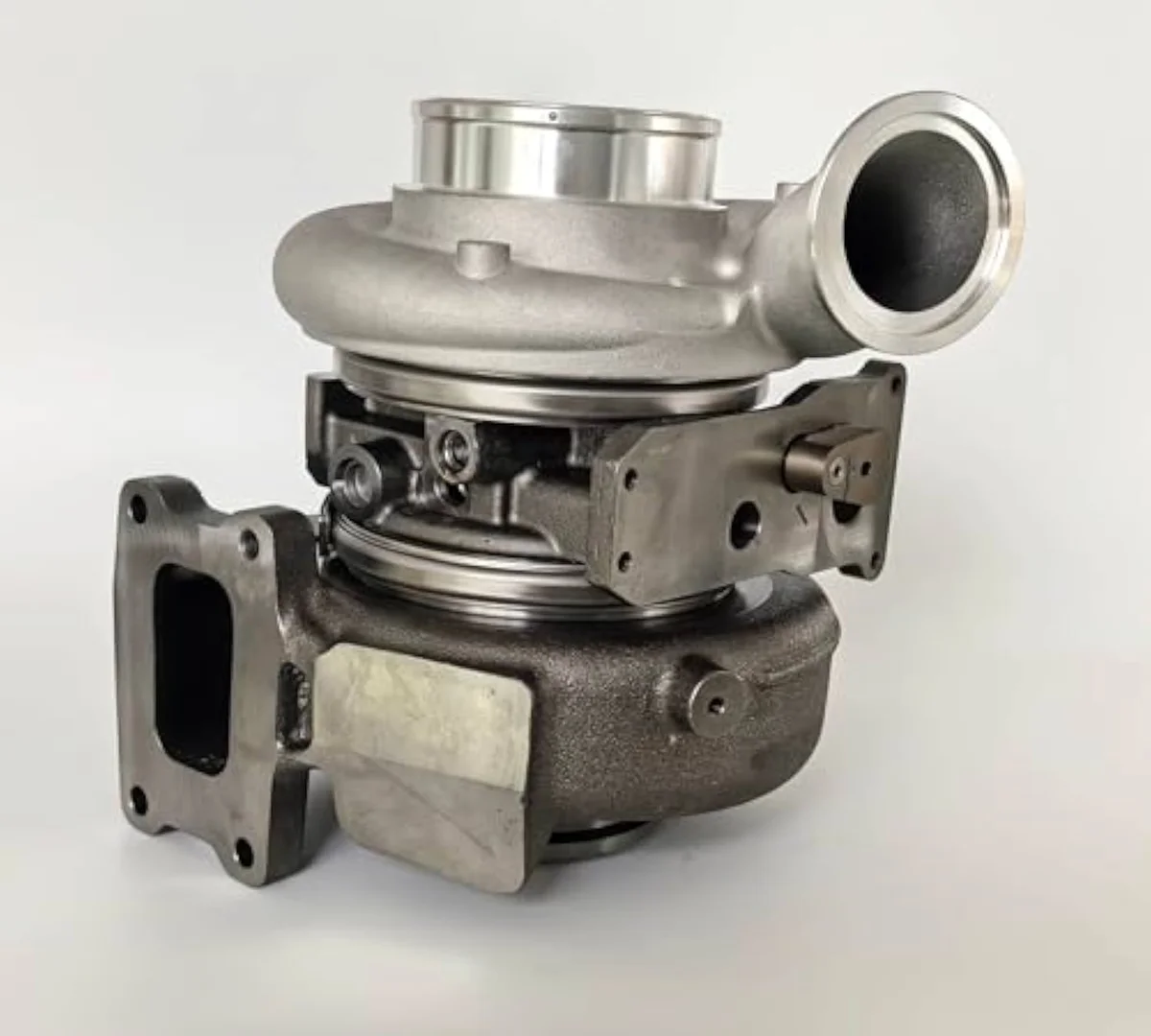
Turbo compatibility is verified by matching the OE part number cross-reference chain (factory + Dorman + aftermarket equivalent), the vehicle make/model/engine/year fitment list published by the manufacturer, and the bolt-pattern + flange + actuator-connector compatibility for direct-replacement units. For custom-fab universal turbos, frame size matters: T3/T4/GT35/GT45 indicate flange type and compressor map class.
For frame-size matching context on universal turbo builds, see the Read the high-performance frame-matching guide — covers T3 / T4 / GT35 / GT45 frame selection by displacement + target HP + RPM band.
How to tell what turbo will fit your car?
Cross-reference the factory OE part number against the aftermarket listing fitment data. Verify make/model/engine/year + transmission + sub-model match the listing's documented fitment envelope. Confirm bolt-pattern + flange type + actuator-connector style match the OE unit. For 2018+ chassis with security-bypass programming requirements, verify the listing accommodates that workflow rather than requiring a separate OBD2 bypass cable.
How much power can a GT45 turbo make?
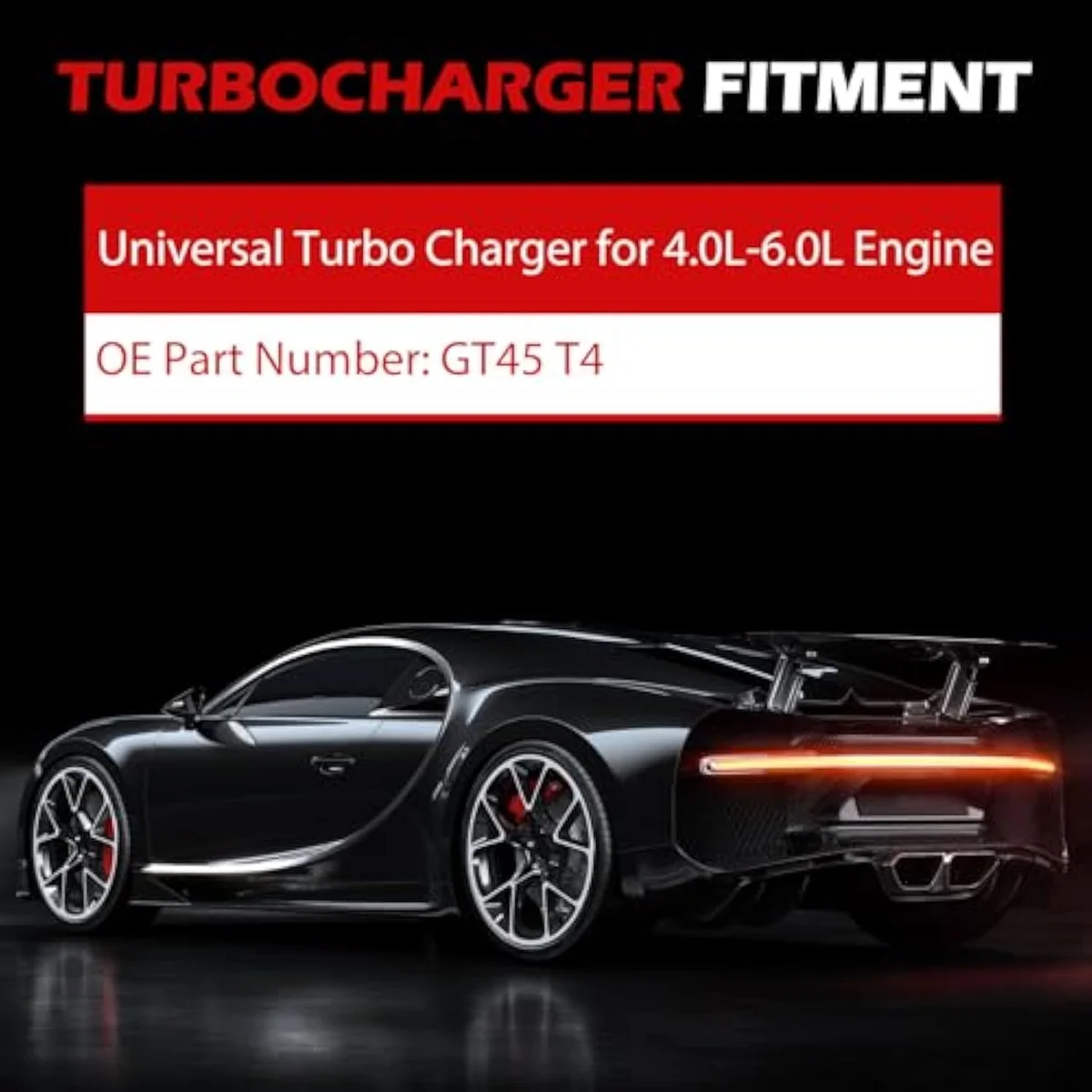
A T4-flange GT45 universal turbocharger supports 600-800 horsepower targets on documented dyno data when paired with appropriate engine displacement (3.0L-6.0L), supporting fuel system, intake plumbing, exhaust manifold, intercooler, and ECM tuning. Smaller displacement under 3.0L typically falls below the GT45 compressor map efficiency band, producing slow spool and weak transient response below 4,000 RPM.
How many mm is a GT45 turbo?
GT45 frame compressor wheel measures roughly 76mm exducer diameter (3.0 inches) with a 67mm inducer (2.6 inches). Turbine wheel measures 67mm exducer and 72mm inducer on the standard variant. T4 flange bolt-pattern fits the GT45 frame with documented OE manifold cross-references across Garrett, BorgWarner, and aftermarket Chinese-import equivalent frames across documented universal turbo cross-shop references.
Can you legally turbo your car?
US federal regulations require CARB EO compliance on California-registered vehicles for any aftermarket forced-induction kit. Other states default to federal EPA emissions compliance with documented exemption paths for off-road, race-only, or pre-1996 OBD-1 vehicles. The structural legal path: verify CARB EO number for the specific kit, or restrict installation to off-road / track-only use cases with documented chassis registration plus appropriate paperwork.
How many hours does it take to replace a turbo?
Direct OE-replacement install times: Cruze 1.4L 3-5 hours, EcoBoost 2.0L 4-6 hours, Cummins 6.7L 4-8 hours, Volvo D12 industrial 6-12 hours. Custom-fab universal turbo install on a non-turbo engine: 20-60 hours including intercooler routing, fuel system upgrade, exhaust manifold fabrication, and ECM tuning. Documented bolt-on aftermarket performance kits typically run 8-16 hours of shop labor.
OE-Replacement Fitment Verification Workflow
OE-replacement turbo compatibility check runs through four documented gates: gate 1 (OE part number cross-reference — verify the listed part numbers include the buyer's factory unit stamp), gate 2 (chassis fitment list — verify the listed make/model/engine/year combination matches the buyer's VIN-decoded data), gate 3 (mechanical compatibility — bolt-pattern, flange, oil supply / return line position), gate 4 (electronic compatibility — actuator connector style + ECM programming requirements).
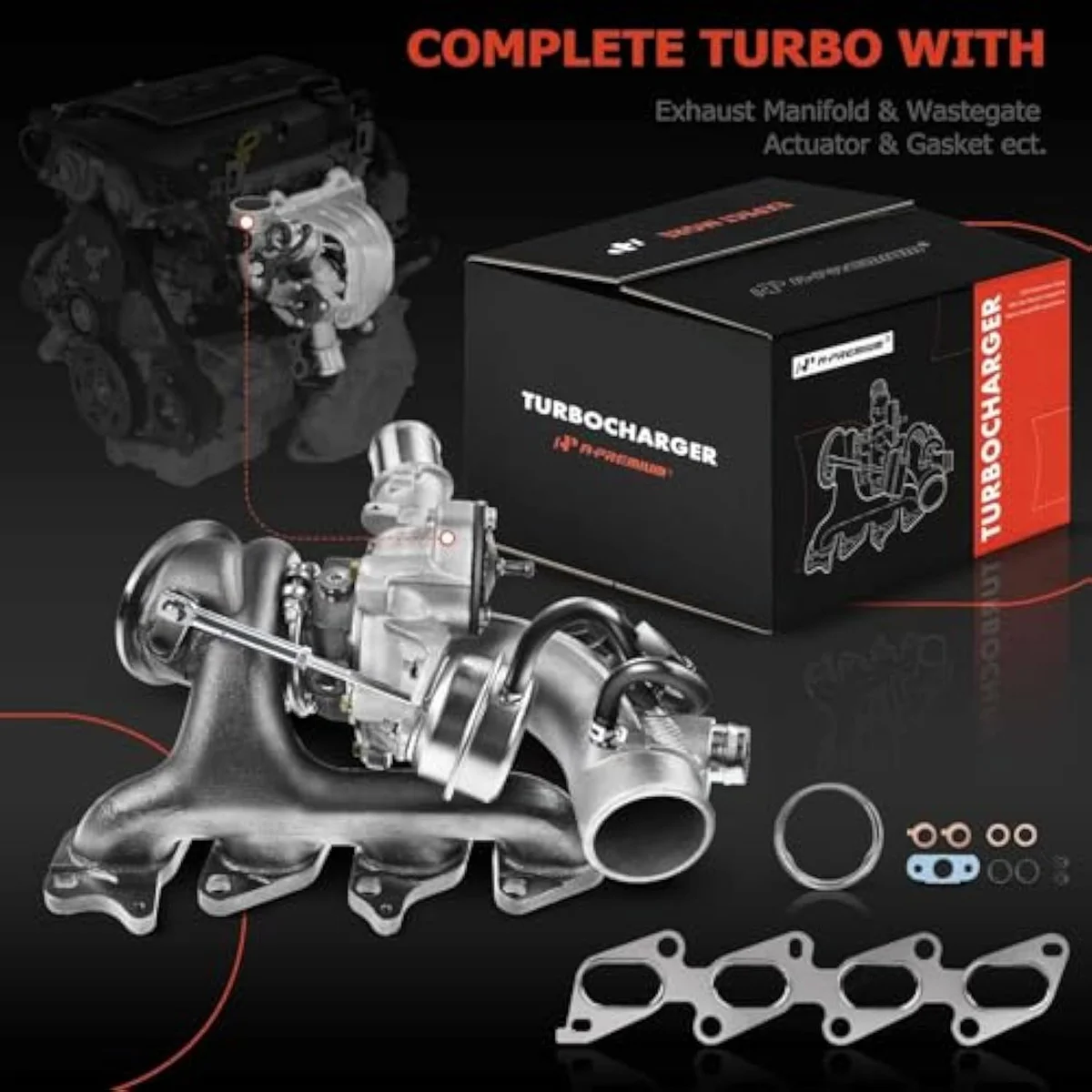
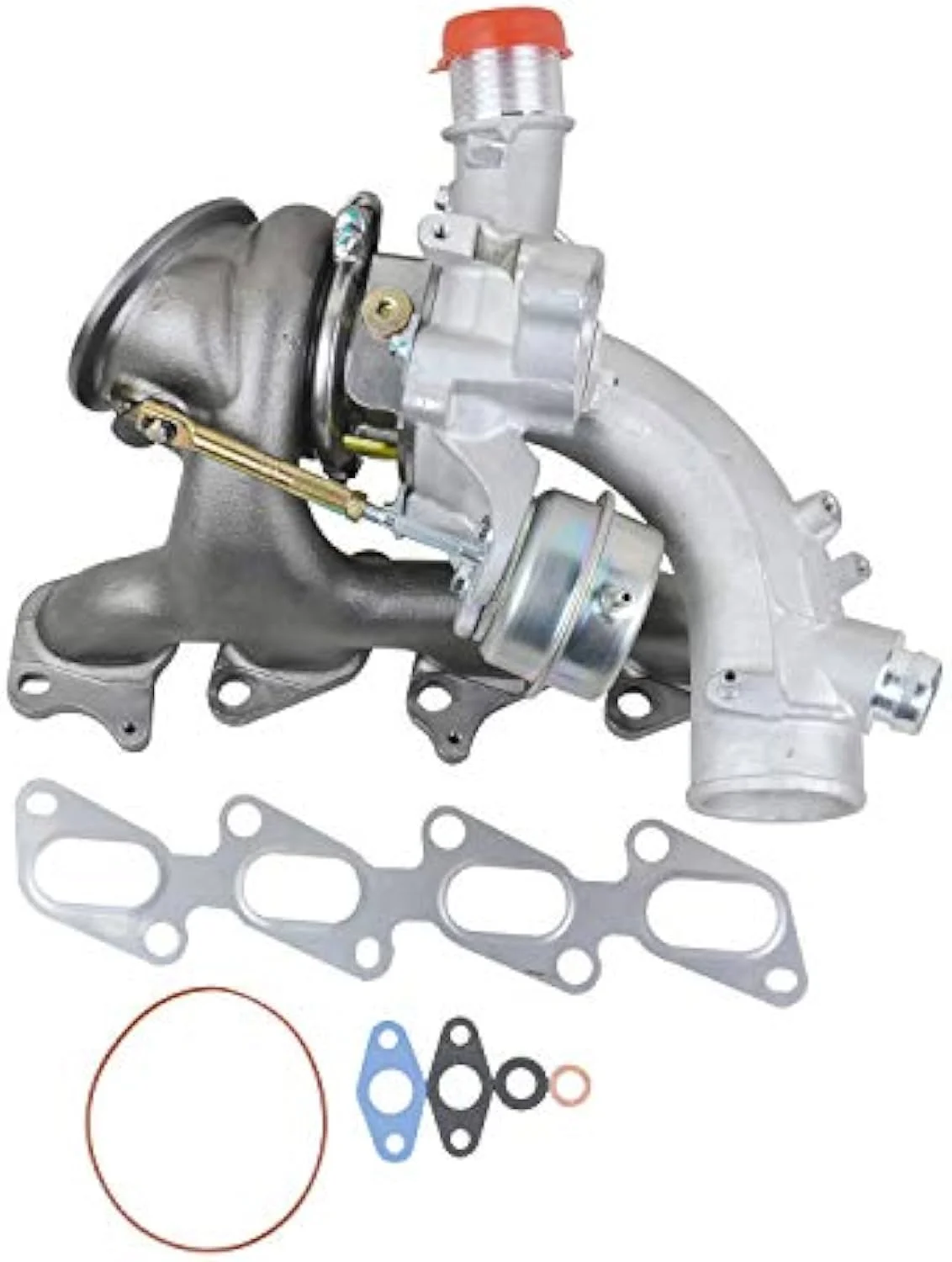
For Cruze 1.4L, EcoBoost 2.0L, and Cummins 6.7L applications specifically, the OE part number chains documented across the aftermarket include the factory Garrett or Holset part stamp plus Dorman cross-reference numbers (667-203 for Cruze 1.4L, 667-207 for EcoBoost, multiple HE-series for Cummins). The A-Premium Complete review covers the Cruze 1.4L fitment envelope (2011-2015 LUJ Cruze + Sonic + Trax + Encore) with documented OE 55565353 / 781504 / 667-203 / GT1446 cross-references.
Universal Frame Compatibility — T3 / T4 / GT35 / GT45 Sizing
Universal turbo frame sizing for custom-fab applications fragments by target horsepower band: T3 (200-450 hp on 1.6L-2.4L), T3/T4 hybrid (300-550 hp on 1.8L-3.0L), T4 (400-700 hp on 2.0L-4.0L), GT35 (450-650 hp on 2.0L-3.0L), GT45 (600-800 hp on 3.0L-6.0L). Frame selection follows engine airflow targets at the intended boost pressure and shaft RPM operating window.
The compressor map atlas published by Garrett, BorgWarner, and Holset documents the exact airflow envelope per frame. Aftermarket budget frames typically share the OE flange standard (T3 / T4 / V-band) and the rotating-assembly architecture, with documented variation on balance discipline and bearing-side build quality. For the documented Cluster D performance roundup picks, the universal performance turbo roundup covers Maxpeedingrods T3/T4, Autodevil T3/T4, and Autodevil GT45 frames across the budget aftermarket performance lane.
OE Part Number Cross-Reference Discipline
OE part number cross-reference is the single most reliable compatibility verification path. Manufacturer service-parts catalogs (GM SPO, Ford Motorcraft, Chrysler MoPar, Cummins Service Information) publish the canonical OE stamp for each chassis-year combination. Aftermarket listings reference this OE chain plus Dorman cross-reference numbers and equivalent industrial / commercial cross-references where applicable.
For Cruze 1.4L specifically, the OE chain includes 55565353 (early LUJ), 781504 (mid-range LUJ), 667-203 (late LUJ / early LUV), plus GM-internal alternate stamps 25201066, 25198474, and 25199832 not always named on consumer-facing listings. For Cummins 6.7L specifically, the OE chain includes HE351VE part numbers 5354495 and 6411490 (2007.5-2012) plus HE300VG part numbers 5604175 and 6411519RX (2013-2025). The NEWZQ GT1446V cross-reference review covers the model-named Garrett designation on the Cruze 1.4L install base with nickel-alloy casting specifications not published by most other Cluster A listings.
Actuator and Electronic Compatibility
Electronic compatibility on variable-geometry turbos requires three documented checks: actuator connector style match (rectangular vs round, pin count, terminal type), ECM calibration compatibility (post-2018 Cummins 6.7L requires security-bypass programming), and live-data feedback signal range (commanded vs actual vane position must read within ECM expected envelope).
For older fixed-geometry turbos (Cummins 5.9L HX35, Ford 6.0L Power Stroke GTP38, Cruze 1.4L early Garrett), electronic compatibility is limited to wastegate solenoid control (12V on/off) plus optional shaft-speed sensor where fitted. Variable-geometry units carry markedly more electronic complexity, especially on post-2018 chassis. Per the Wikipedia variable-geometry turbocharger reference, the actuator-to-vane mechanical linkage is the dominant failure point across modern diesel applications regardless of OEM supplier.
Pre-Purchase Compatibility Checklist
Before committing to an aftermarket turbo purchase, run a documented eight-point compatibility check: verify OE part number stamp, decode VIN for engine code + year, confirm transmission code, match actuator connector style, confirm flange bolt-pattern, verify oil supply / return line position, check coolant interfaces, and confirm wastegate or VGT actuator control signal compatibility with the factory ECM.
Skipping any single checklist gate routinely produces a wrong-part return scenario or a misfit installation that physically bolts up but produces P003A / P0299 codes from electronic mismatch. Documented Cluster A install reports show roughly 8-12% of buyers receive the right physical part but the wrong actuator-connector configuration because mid-generation LUV chassis swapped from round-pin to rectangular-pin connector mid-2017. Per the NEWZQ GT1446V review, the documented community-tested install on the late LUV Cruze 1.4L install base confirms actuator-connector compatibility with the rectangular-pin chassis variant.
Compatibility Authority Source Context
Authority sources on turbo compatibility cross-reference back to OEM manufacturer service-parts catalogs plus aftermarket OE manifest distribution catalogs. The structural verification path: confirm the OE stamp against the manufacturer catalog, verify the aftermarket listing references that exact stamp, then confirm chassis-year + engine code + transmission match the listing's documented fitment envelope before purchase.
Per the Wikipedia turbocharger reference, compressor map geometry determines real-world performance compatibility for universal frames. The Garrett Motion technical library publishes the GT / GTX / G-series compressor map atlas used as the reference standard across the aftermarket performance tier for frame-fit verification. The Turbo University compatibility reference publishes industrial-tier OE cross-reference discipline applicable to all heavy-duty diesel pickup and commercial truck applications. The Turbocharger Rebuilding Distribution catalog publishes the canonical OE manifest cross-references that anchor application-by-application compatibility verification across Cummins, Ford, Volvo, Cruze, and EcoBoost install bases.
Get Product Updates
Updates only when something changes.
Only when something changes. Unsubscribe anytime.