Updated
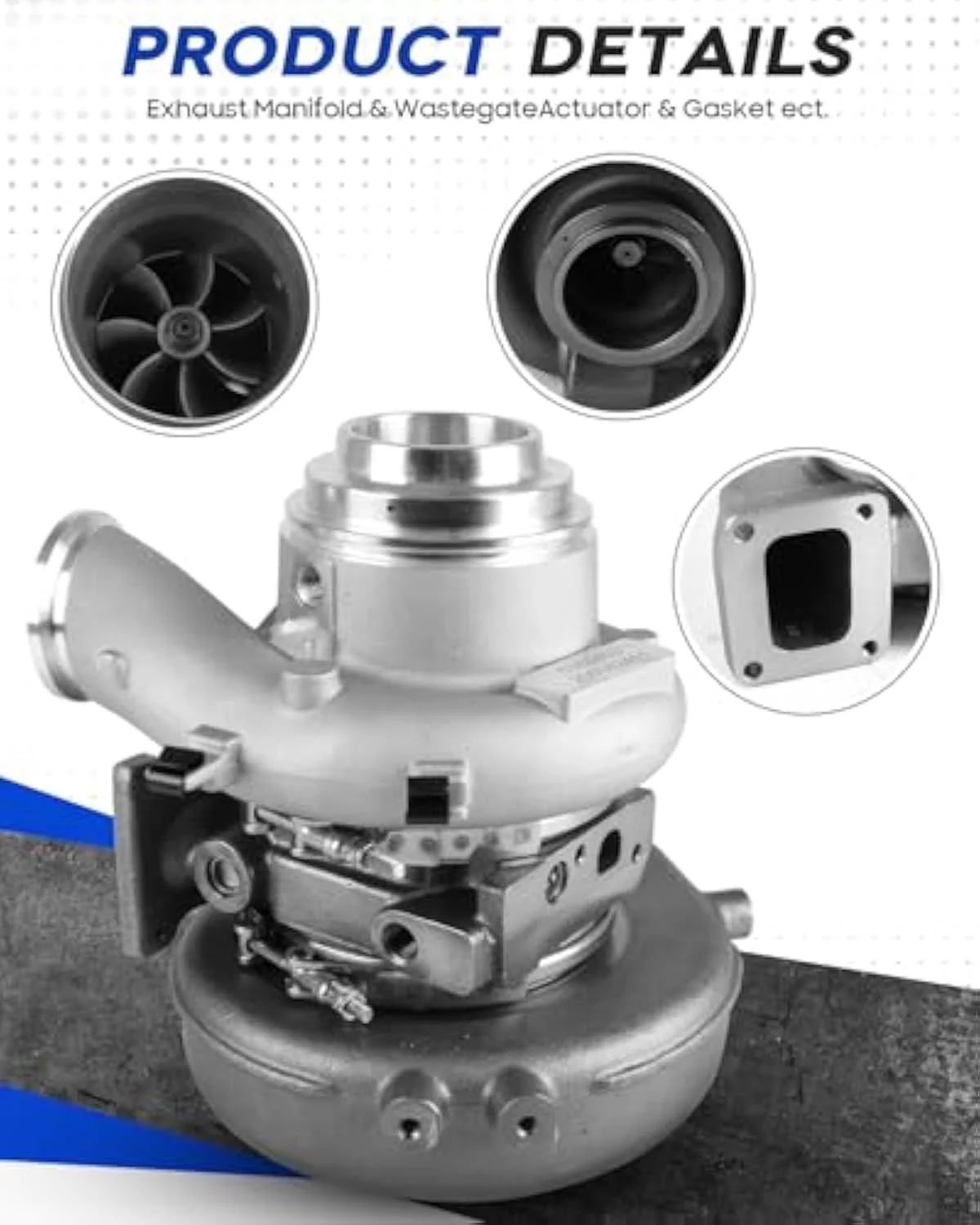
For the Holset brand-tier context that supplies the HE400VG turbo on Cummins X15 applications, see the Read the Holset brand-tier guide — covers Cummins Turbo Technologies and the full Holset catalog including heavy-truck HE-series.
Cummins X15 Platform Overview
Cummins X15 is the post-2017 re-platform of the legacy ISX15 15-liter heavy-duty diesel engine, updated for EPA 2017 + GHG Phase 2 emissions compliance. The X15 covers 405-605 horsepower across two factory variant series — Efficiency Series and Performance Series — fitted across multiple Class-8 truck chassis platforms.
Series breakdown. Efficiency Series (405-500 hp, optimized for cruise fuel economy on Class-8 long-haul applications). Performance Series (450-605 hp, optimized for peak power on heavy-haul and vocational applications).
The platform serves the largest US Class-8 heavy-truck install base by volume, fitted as the standard or optional engine across Freightliner Cascadia, Peterbilt 579 / 389, Kenworth T680 / T880, and various International HX-series applications. The cross-chassis flexibility distinguishes X15 from competitors like Paccar MX-13 (Kenworth / Peterbilt exclusive) and International A26 (International chassis exclusive); X15 fits multiple truck-OEM chassis through documented engine-mount and transmission-interface integration.
The X15 OEM turbocharger application is the Holset HE400VG variable-geometry frame on all current model-year ratings since 2017. The HE400VG covers the full 405-605 horsepower X15 power band with electronic actuator vane control optimized for the diesel torque curve and EPA emissions compliance. Aftermarket replacement availability concentrates around OEM Holset rebuilt direct ($2,500-$3,500) under documented fleet warranty contracts.
"Cummins X15 has the largest fleet maintenance network coverage in the US Class-8 heavy-truck market by a wide margin. Every diesel mechanic in every region knows the X15 platform; service availability is structurally the strongest factor in fleet engine selection. Spec-for-spec the DD15 and MX-13 compete cleanly, but the maintenance-network advantage gives X15 a structural edge for general-purpose fleet operations across mixed regional routes." — r/Trucking / Class-8 fleet management community synthesis on the X15 fleet maintenance network advantage.
Cummins X15 vs Detroit DD15 / DD16
Detroit DD15 / DD16 are Daimler-owned Freightliner-integrated Class-8 engines competing directly against Cummins X15. DD15 covers 400-505 horsepower from 14.8 liters; DD16 covers 475-600 horsepower from 15.6 liters. The DD15 is the higher-volume variant; DD16 covers heavier-haul applications similar to Cummins X15 Performance Series.
Direct cross-shop. Both platforms ship with variable-geometry turbocharger architecture (Detroit Diesel uses Garrett VGT on DD15 / DD16; Cummins X15 uses Holset HE400VG). Both run SCR aftertreatment for EPA emissions compliance. Both have comparable service life expectations at 1,000,000-1,500,000 miles between major rebuilds. The decision flips on chassis preference: Freightliner Cascadia operators typically run DD15 / DD16 due to factory integration; other chassis operators (Kenworth, Peterbilt, International) typically run X15 due to cross-chassis availability and broader maintenance network coverage.
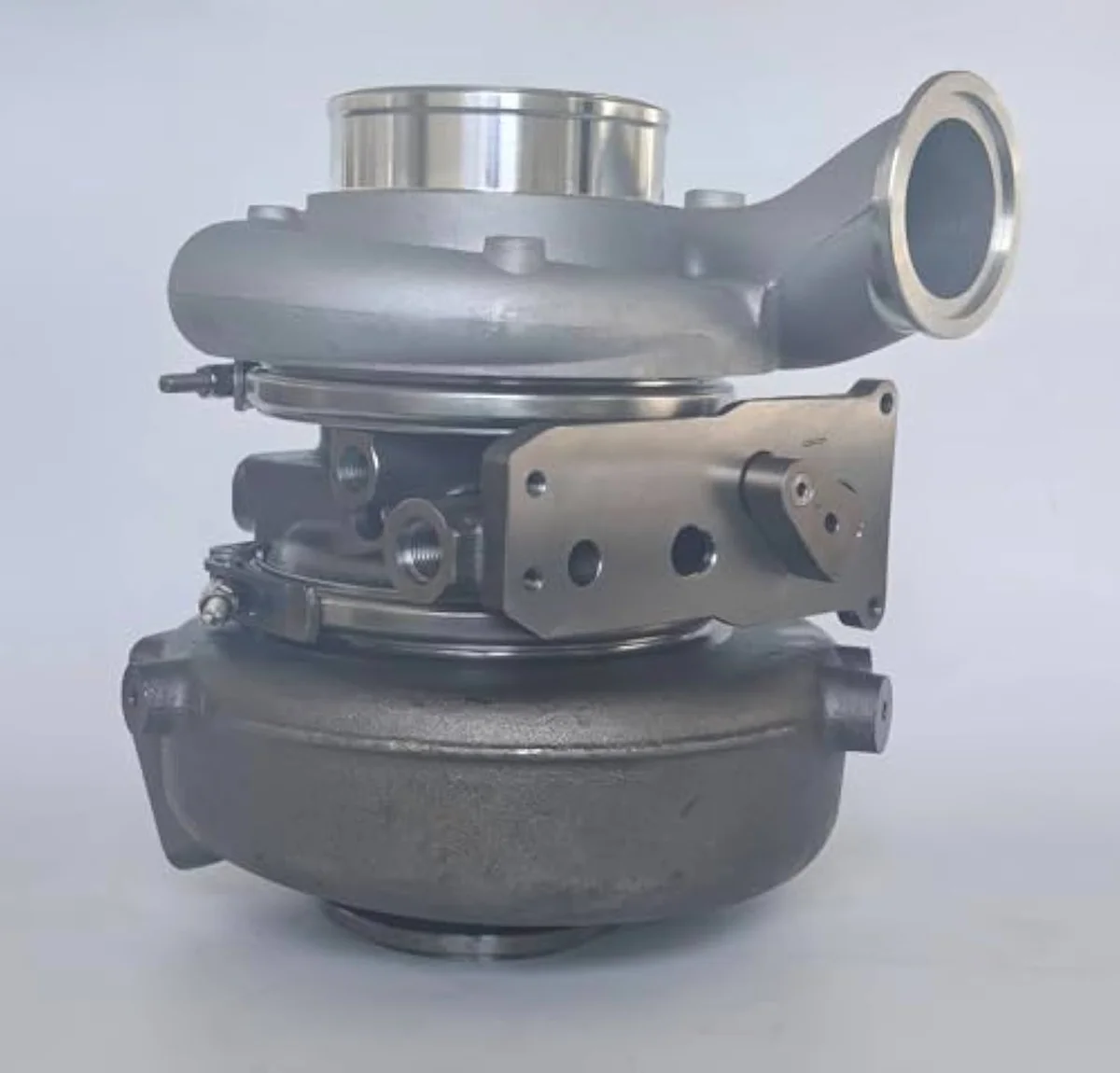
The HE300VG architecture above scales upward into the HE400VG and HE451VE on Cummins X15; the 78mm vs 88mm vs 96mm compressor wheels are the primary size delta, while the moveable-vane unison-ring mechanism and actuator failure mode at 200,000-400,000 miles remain identical across the family. Cross-shopping the X15 against the Volvo D12 / D13 install base brings a fundamentally different turbo lineage into the comparison: Volvo Group truck engines use Holset HX52 (fixed-geometry) and HX55 fixed-geometry frames on the heavier-haul D12 and D13 applications.
Cummins X15 vs Paccar MX-13
Paccar MX-13 is the Kenworth / Peterbilt OEM-integrated Class-8 engine, designed and manufactured by Paccar (parent company of Kenworth and Peterbilt). MX-13 covers 405-510 horsepower from 12.9 liters of displacement. The smaller displacement than X15 reflects Paccar\'s emphasis on fuel economy through engine downsizing combined with advanced turbocharging.
Direct cross-shop. MX-13 has narrower power-band coverage than X15 (405-510 hp vs 405-605 hp) but tighter Kenworth / Peterbilt chassis integration (fuel routing, mounting, transmission, ECM). For Kenworth / Peterbilt fleet operators, MX-13 is the documented community default due to factory integration; X15 remains an option on Kenworth / Peterbilt builds for fleet operators who want broader cross-chassis maintenance flexibility. The decision typically lands on fleet-wide engine standardization preference: single-platform fleets reduce maintenance complexity by picking the integrated OEM engine.
Cummins X15 vs International A26, CAT C15, Volvo D13
The remaining Class-8 heavy-truck engine cross-shop covers International A26 (Navistar, 2017+, International chassis), CAT C15 (Caterpillar, discontinued on-highway 2010 but still on the road), and Volvo D13 (Volvo / Mack chassis-integrated).
International A26 (12.4L displacement, 370-505 hp): competitive fuel economy due to advanced combustion. CAT C15 (15.2L displacement, 435-625 hp): legacy installations still on the road but no longer available on new trucks. Volvo D13 (12.8L displacement, 405-505 hp): integrated with Volvo / Mack chassis.
The CAT C15 carries the strongest reliability reputation in the legacy Class-8 community — built reputation over decades of on-highway service before the 2010 EPA Tier 4 emissions deadline pushed Caterpillar out of the on-highway market. Aftermarket parts availability remains strong; many independent owner-operators still run pre-2010 C15-equipped trucks with documented multi-million-mile service life. The X15 in modern context competes against the C15\'s historical reputation more than the current available product line.
For deep coverage of the Holset HE400VG turbo that ships on Cummins X15, the Read the Holset brand-tier guide covers HE-series variable-geometry architecture. For the VGT mechanism that the X15 turbocharger uses, the Read the VGT architecture explainer covers the vane mechanism. For the broader heavy-duty diesel application context, the Read the diesel turbocharger buyer guide covers Cummins, Power Stroke, and Duramax install bases. For the broader cross-engine roundup, the Read the cross-engine roundup covers documented OE-replacement picks. For the Cummins X15 turbocharger product anchor, the Read the Cummins X15 HE400VG review covers the OE-replacement product directly.
For deeper engineering background, the Turbocharger reference covers compressor-and-turbine fundamentals. The Cummins Turbo Technologies technical library publishes Holset HE400VG specifications and X15 OE specifications. The Turbo University reference publishes industrial-tier balance-and-test discipline applicable to heavy-truck Holset rebuilds. The Turbocharger Rebuilding Distribution catalog publishes OE manifest cross-references for the X15 install base.
Class-8 Engine Decision Questions
- Is Cummins X15 better than Detroit DD15?
- Cummins X15 and Detroit DD15 are direct Class-8 truck competitors with comparable performance characteristics. X15 offers 405-605 horsepower across Efficiency Series and Performance Series ratings; DD15 offers 400-505 horsepower across its variant range. Fuel economy is comparable on cruise duty cycles; service life is comparable at 1,000,000-1,500,000 miles between major rebuilds. The decision typically lands on fleet uptime support, regional distributor presence, and existing fleet maintenance network rather than head-to-head specifications.
- How is Cummins X15 different from ISX15?
- ISX15 is the legacy designation for Cummins' 15-liter heavy-truck engine through 2016 model year. X15 is the post-2017 EPA-emissions re-platform of the same fundamental engine with updated SCR aftertreatment, refined fuel injection calibration, and revised turbocharger sourcing. The mechanical block, displacement, and basic architecture stayed the same; the X15 generation reflects EPA 2017 + GHG Phase 2 emissions compliance updates rather than a clean-sheet redesign. Cummins customers often refer to the platform as "X15" generically across both generations.
- What turbocharger does Cummins X15 use?
- Cummins X15 uses Holset HE400VG variable-geometry turbocharger as the primary OEM application across most model-year ratings since 2017. The HE400VG covers the full 405-605 horsepower X15 power band with variable-geometry vane control for diesel torque-curve optimization. Aftermarket replacement options on the X15 turbo: OEM Holset rebuilt direct ($2,500-$3,500), specialty-tier rebuilt Holset on heavy-truck industrial applications (rare; most fleet operators run OEM-rebuilt direct under warranty contracts).
- Cummins X15 vs Paccar MX-13 — which is better?
- Paccar MX-13 (Kenworth / Peterbilt OEM-integrated) competes directly against Cummins X15 in the Class-8 truck market. MX-13 covers 405-510 horsepower; X15 covers 405-605 horsepower. MX-13 has narrower power-band coverage but tighter integration with Kenworth and Peterbilt chassis (fuel routing, mounting, transmission compatibility). X15 has broader power-band coverage and broader chassis compatibility across multiple truck OEMs. The decision lands on truck-OEM preference and fleet maintenance network alignment more than raw engine specifications.
- Cummins X15 vs International A26?
- International A26 (Navistar) is the newest entrant in the Class-8 heavy-duty engine market, launched in 2017 specifically for the International truck chassis line. A26 covers 370-505 horsepower from 12.4 liters of displacement; X15 covers 405-605 horsepower from 15 liters. A26 has smaller displacement but competitive fuel economy due to advanced combustion technology. X15 has higher peak power capability and longer documented service life. The decision typically lands on whether the fleet operator wants International chassis (A26 integrated) or other chassis (X15 cross-chassis).
- Can you swap a Cummins X15 for a Detroit DD16?
- Engine swaps between Class-8 truck platforms are theoretically possible but practically rare and expensive. The swap requires replacing engine mounts, transmission interface (different bell housing patterns), wiring harnesses (ECM programming), aftertreatment integration, fuel system, and chassis bracketry. Cost typically lands $50,000-$100,000+ for a complete swap on a single chassis. Fleet operators almost never swap engine platforms; the chassis-OEM relationship determines the engine platform from new purchase forward.
- Is Cummins X15 the best Class-8 engine?
- No single engine is "best" across all Class-8 applications. X15 carries the largest US Class-8 install base by volume and strong fleet maintenance network coverage — the documented community default for general-purpose fleet operations. Detroit DD15 / DD16 wins on Freightliner chassis integration. Paccar MX-13 wins on Kenworth / Peterbilt chassis integration. International A26 wins on International chassis integration. CAT C15 (legacy, discontinued 2010 for on-highway) has the strongest reliability reputation but no longer covers new-truck purchase. The right pick depends on chassis preference and fleet maintenance network.
Get Product Updates
Updates only when something changes.
Only when something changes. Unsubscribe anytime.