Updated
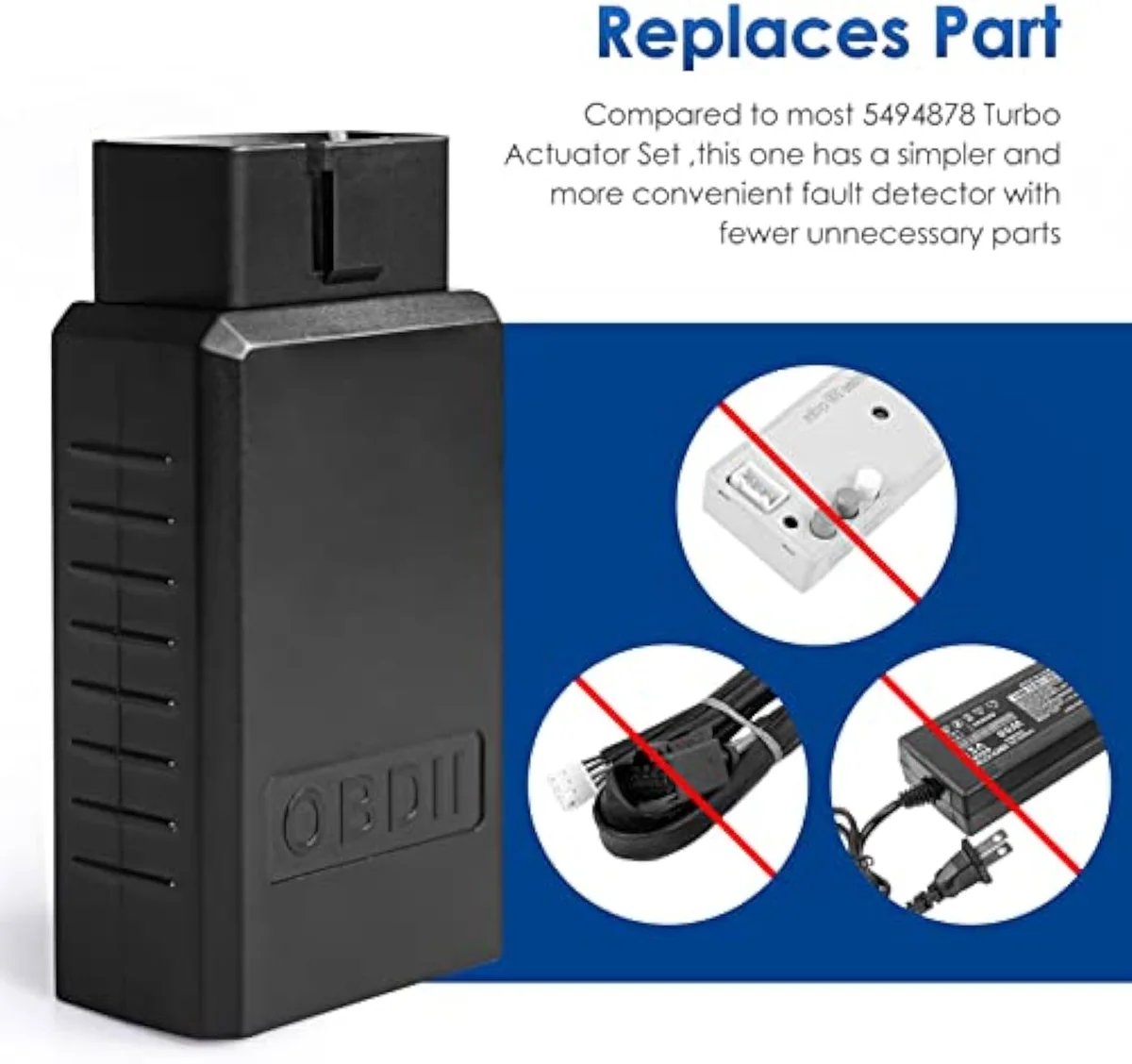
For the broader four-stage repair decision context that maps symptoms to specific part replacements, see the Read the four-stage repair decision guide — covers Clean / Actuator / Cartridge / Complete cost bands per chassis lane.
The Six Structural Components
Every turbocharger contains six structural components. Turbine housing on the exhaust side — a heavy iron casting sized by A/R ratio (typically 0.48-1.05 on passenger-car frames, 0.81-1.20 on heavy-duty diesel). Turbine wheel — Inconel 713C or 713LC alloy to survive 1,800°F sustained temperatures, 8-12 blades, dynamically balanced.
Compressor housing on the intake side — an aluminum casting sized by trim and inducer dimensions. Compressor wheel — aluminum or billet aluminum, 6-8 blades, balanced to match the turbine wheel mass on the shared shaft. Center bearing cartridge (CHRA) — contains the journal or ball bearings, oil and coolant passages, and shaft seals. Wastegate (fixed-geometry frames) or variable-geometry actuator (VGT diesel frames) — the boost-control mechanism that determines peak boost pressure.
"The Cummins 6.7L community treats actuator replacement as the structural first move on any P003A code. The mechanical side stays intact 80%+ of the time; the diagnostic question is whether the actuator linkage moves freely, not whether the turbo needs full replacement. A $300 actuator saves $1,500-$2,000 in complete-turbo replacement cost on roughly 80% of P003A presentations." — r/Cummins synthesis on the diagnostic discipline that maps P003A symptoms to actuator-only repair on the 6.7L install base.
Individually-Replaceable Turbo Parts
Several turbocharger parts ship as individual replacement items rather than requiring complete-turbo purchase. Wastegate actuator on Cummins 6.7L variable-geometry applications: $200-$700 (Stage 2 repair path). CHRA center bearing cartridge: $300-$900 for journal-bearing, $500-$1,200 for ball-bearing (Stage 3 rebuild path). Turbine housing and compressor housing: $200-$600 each (typically OEM service only).
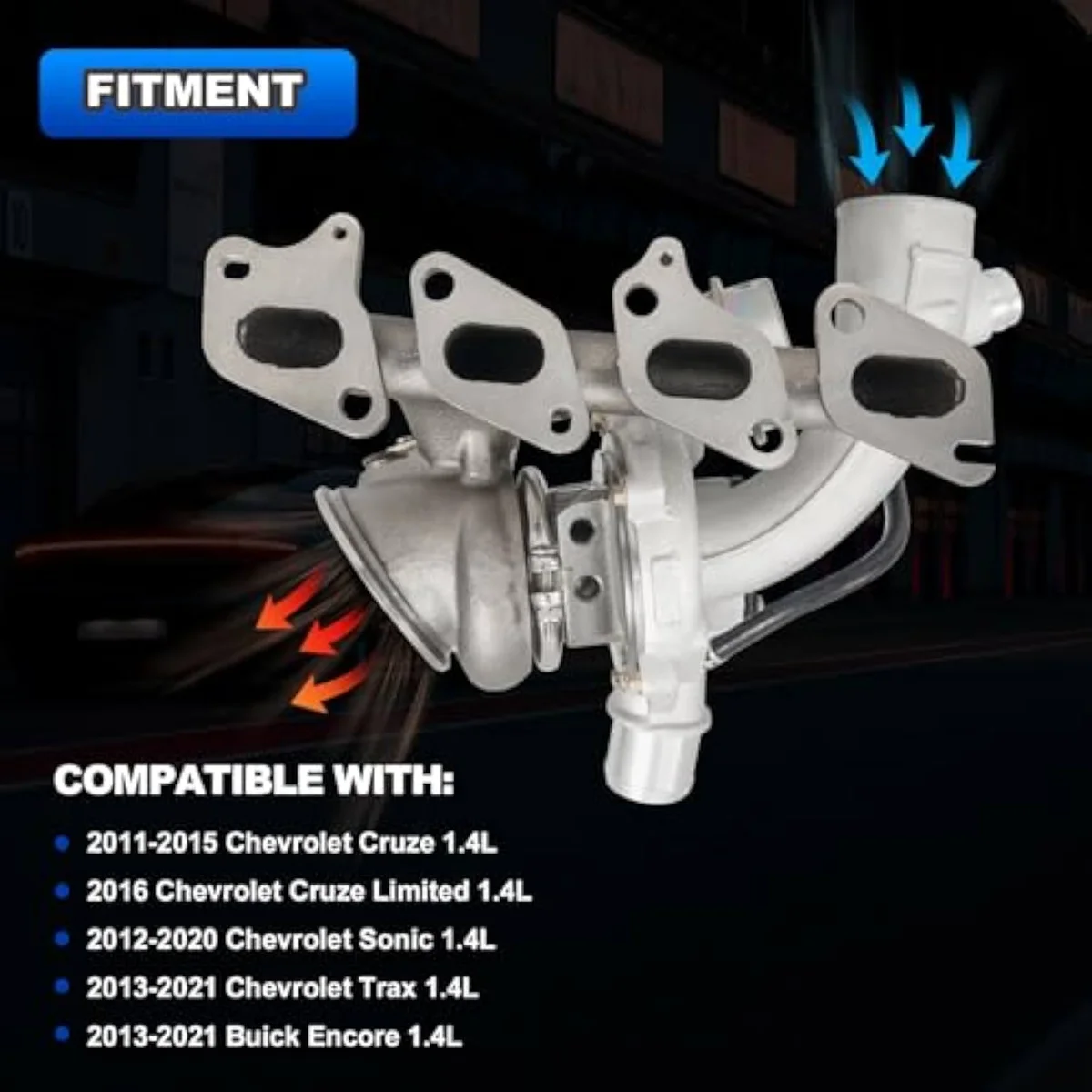
Consumable parts: gaskets, manifold studs, V-band clamps, oil supply / return lines, coolant fittings. Gasket kits run $20-$60 for the complete six-gasket set most installs require. Manifold studs run $5-$15 per stud — Cruze 1.4L specifically benefits from new studs because OEM studs typically snap off during disassembly. V-band clamps run $10-$40 each depending on size and material. Copper crush washers run $1-$5 each but are critical to oil-fitting seal integrity.
Cost Savings From Part-by-Part Replacement
The economic case for individual-parts repair runs through the diagnostic decision tree. Stage 1 cleaning ($30-$80 for cleaner and supplies) addresses 30-40% of mild VGT vane carbon buildup before failure progresses. Stage 2 actuator replacement ($200-$700) addresses the dominant Cummins 6.7L failure mode at one-third the complete-turbo cost. Stage 3 CHRA rebuild ($300-$900) addresses bearing wear on a sound housing without requiring complete-turbo purchase. Stage 4 complete replacement ($1,500-$2,500 on Cummins 6.7L) is the right move only when the housings themselves are cracked or contaminated.
Cumulative savings example: a buyer with a Cummins 6.7L Ram pickup at 130,000 miles throwing a P003A code. Path A (complete-turbo replacement): $2,000 plus 6-8 hours install labor. Path B (Stage 2 actuator-only diagnostic-driven repair): $300 plus 1-2 hours install labor. Net savings: $1,700 plus 5-6 hours labor on roughly 80% of P003A presentations where the mechanical side is intact. The structural discipline of running the diagnostic before opening the wallet saves the buyer between $1,000 and $2,000 per failure event on the highest-volume diesel turbo chassis in the US market.
OEM Parts vs Aftermarket Parts
Individual turbo parts follow the same OEM-vs-aftermarket cross-shop pattern as complete turbos. OEM parts (Cummins service Holset actuators, Garrett service CHRAs, BorgWarner service housings) ship at full OEM list pricing with documented warranty terms. Specialty-tier rebuilder parts (Fleece, BD Diesel, Industrial Injection, HPT) ship at slightly higher pricing with documented Stage upgrade options. Budget aftermarket parts (WOLLAHS, ASDPI, Dofoch, generic Chinese cross-references) ship at notably lower pricing with shorter warranty terms.
The cross-shop math on a Cummins 6.7L HE351VE actuator example. OEM Cummins service actuator: $550-$700 with 12-month factory warranty. BD Diesel HE351VE actuator: $400-$550 with 12-month rebuilder warranty. WOLLAHS HE351VE actuator: $200-$300 with 1-year limited warranty and forum-documented installation experience. The 2-3× price gap maps to roughly a 2× service-life gap (OEM 5-8 years, budget aftermarket 2-4 years typical) — similar to the cross-shop pattern on complete-turbo replacement work. For most daily-driver Ram pickup applications, the budget tier makes structural sense at the 130,000-mile failure threshold.
The same OEM-vs-aftermarket cross-shop pattern applies to CHRA cartridge replacement, housing replacement, and individual gasket sourcing across every turbo brand and chassis platform. The structural rule: OEM parts win on documented warranty depth and matching cohort service life; budget aftermarket parts win on depreciation-adjusted spend at the buyer\'s specific mileage and budget envelope. Specialty-tier rebuilder parts sit between the two with the slight pricing premium paying for Stage upgrade documentation and rebuilder-shop install consult.
For the broader four-stage repair decision tree, the Read the four-stage repair decision guide maps symptoms to repair paths across Clean / Actuator / Cartridge / Complete. For the foundational mechanism background, the Read the mechanism explainer covers the six structural components in detail. For the complete-kit cross-shop that bundles parts plus install hardware, the Read the turbocharger kits guide covers the install-completeness checklist. For the broader cross-engine roundup, the Read the cross-engine roundup covers documented OE-replacement picks. For the Stage 2 actuator-only repair product on the highest-volume Cummins 6.7L chassis, the Read the WOLLAHS 5494878RX review covers the documented entry-tier actuator-only replacement.
For deeper engineering background, the Turbocharger reference covers the six structural components in detail. The Turbo University reference publishes industrial-tier balance-and-test discipline applicable to CHRA rebuilds. The Understanding Turbochargers Guide covers the rebuilder-tier protocol for part-by-part work. The Turbocharger Rebuilding Distribution catalog publishes OE manifest cross-references for individual parts across Cummins, Garrett, BorgWarner, and IHI applications.
Parts Decision Questions
- What are the main parts of a turbocharger?
- Six structural components: turbine housing (exhaust side, heavy iron casting sized by A/R ratio), turbine wheel (Inconel alloy, 8-12 blades), compressor housing (aluminum casting), compressor wheel (aluminum or billet aluminum, 6-8 blades), center bearing cartridge (CHRA — contains journal or ball bearings, oil and coolant passages, shaft seals), and wastegate or variable-geometry actuator. Plus consumables: oil supply / return gaskets, exhaust manifold gaskets, manifold studs, V-band clamps where applicable.
- What is a CHRA in a turbocharger?
- CHRA stands for Center Housing Rotating Assembly — the bearing housing that contains the shaft, bearings, oil seals, and rotating mass between the turbine and compressor housings. CHRA replacement is the Stage 3 rebuild path in the four-stage repair decision tree: when the turbine and compressor housings are sound but the rotating assembly is worn (bearing seizure, oil seal failure, shaft play). CHRA replacement runs $300-$900 versus $1,200-$2,500 for complete-turbo replacement.
- What parts of a turbocharger can be replaced individually?
- Wastegate actuator (Stage 2 repair path, $200-$700 for variable-geometry diesel applications). Center bearing cartridge / CHRA (Stage 3 rebuild path, $300-$900 for journal-bearing, $500-$1,200 for ball-bearing). Compressor wheel and turbine wheel can be replaced individually but typically only at specialty rebuilder shops with balance equipment. Gaskets, manifold studs, V-band clamps, oil supply / return lines, and coolant fittings are individually replaceable as wear items.
- How much does a turbo actuator cost?
- Cummins 6.7L variable-geometry actuator (HE351VE / HE300VG): $200-$700 depending on brand (WOLLAHS, BD Diesel, OEM Cummins service). Ford 6.7L Power Stroke variable-geometry actuator (GT3782VAS / GT3788LVA): $300-$800. GM Duramax variable-geometry actuator: $250-$700. Wastegate-style actuators on fixed-geometry gasoline applications: $80-$300 typical. The actuator-only repair path is the most common single-part replacement on the variable-geometry diesel install base.
- Can you buy turbo housings separately?
- Yes — turbine housings, compressor housings, and bearing housings ship as separate replacement parts through OEM Cummins / Garrett / BorgWarner service networks and specialty rebuilder suppliers. Pricing typically lands $200-$600 per housing depending on size and material. Compressor housings are cheaper (aluminum) than turbine housings (iron). The buyer needs documented OE part-number cross-reference to ensure the housing fits the specific turbocharger frame; mismatched housings cause exhaust gas leaks or rotating-assembly clearance issues.
- What gaskets are needed for a turbocharger install?
- Six gasket types required for most turbo installs: exhaust manifold to head, exhaust manifold to turbo flange, oil supply line gasket, oil return line gasket, coolant supply gasket (water-cooled cartridges only), and turbo to downpipe gasket. Most complete-turbo replacement kits include all six. Standalone gasket kits run $20-$60 covering all six. Skip any gasket and the install develops exhaust leaks, oil leaks, or coolant leaks within 1,000-5,000 miles.
- How do you know if a turbo part is bad?
- Specific symptoms map to specific parts. Actuator failure: P003A or P003C diagnostic code, mechanical side intact. Bearing wear: whistling or grinding noise from turbo, excessive shaft play (>0.05mm radial), oil consumption between changes. Compressor wheel damage: physical inspection shows bent or chipped blades, often from foreign object ingestion. Turbine wheel damage: physical inspection shows cracked or chipped blades, often from over-temperature operation. Oil seal failure: blue or grey exhaust smoke, oil pooling at bearing housing.
Get Product Updates
Updates only when something changes.
Only when something changes. Unsubscribe anytime.