Updated
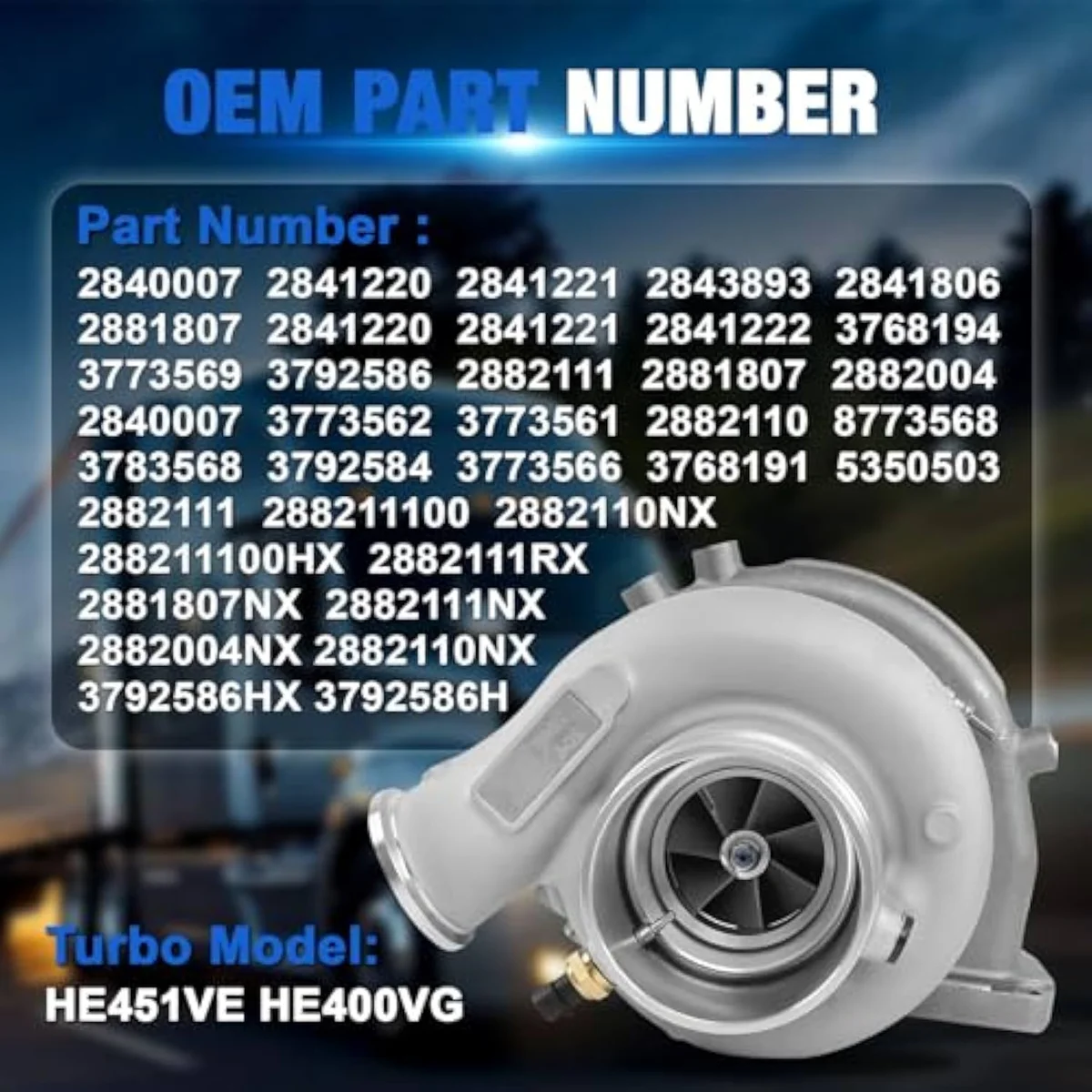
For the conventional architecture that e-turbo augments, see the Read the mechanism explainer — the six structural components and the boost pressure cycle remain identical; the e-turbo adds an electric motor to the existing turbo shaft.
What an Electric Turbocharger Actually Is
An electric turbocharger augments or replaces the conventional exhaust-driven turbine wheel with an electric motor drawing 5-15 kilowatts from a 48-volt automotive electrical system. The compressor wheel spools to operating RPM in 0.25-0.5 seconds — about 4-6× faster than a conventional turbo waiting for exhaust mass flow to build.
Two architectural variants ship in production. Variant 1: integrated e-turbo, where an electric motor sits on the existing turbocharger shaft between the turbine and compressor wheels. The Garrett e-Turbo on Mercedes-AMG M139 (2.0L 4-cylinder, 416 horsepower) and M177 (4.0L V8, 577-630 horsepower) uses this layout. Variant 2: electric supercharger, where a separate electric-driven compressor unit sits upstream of or in parallel with a conventional turbo. The Audi SQ7 and SQ8 TDI 4.0L V8 use this layout — a 48V e-charger feeds twin variable-geometry turbos. Both architectures achieve zero-lag low-RPM boost through different mechanical packaging.
The 48-volt electrical system is structurally required. A conventional 12V automotive electrical system cannot supply the 5-15 kilowatts of continuous current the e-motor needs without melting the wiring. The 48V step-up (mild-hybrid or full-hybrid drivetrains) is what made e-turbo feasible for production cars in the first place. Mainstream 12V-only vehicles cannot run an e-turbo without a full electrical-system rebuild.
Which OEM Applications Use E-Turbo Architecture
Production e-turbo deployments are concentrated in the European luxury / performance / hybrid tier. Mainstream Ford / GM / Toyota platforms have not adopted the architecture yet as of model year 2025.
Mercedes-AMG GT 63 and C63 (M177 4.0L V8 twin-turbo with Garrett e-Turbo on each turbo, 2023+, 577-630 hp; M139 2.0L 4-cylinder with single Garrett e-Turbo, 2023+, 416 hp). Audi SQ7 and SQ8 TDI (4.0L V8 twin-VGT diesel with 48V e-charger feeding the intake, 2017+, 429 hp). Mercedes M256 EQ Boost (3.0L inline-6 across S-Class, E-Class, GLE, GLS — integrated 48V starter-alternator with mild-hybrid assist for low-RPM boost compensation, 2018+, 362-435 hp). Porsche Taycan Cross Turismo (e-turbo prototype, racing-only, not production). BMW M Hybrid V8 race program (Le Mans LMDh entry, racing-only). The pattern: 48V hybrid drivetrains plus premium pricing make e-turbo cost-defensible at the OEM build level.
"The Mercedes-AMG C63 went from a 4.0L V8 to a 2.0L 4-cylinder e-turbo and the AMG community lost its mind. Same peak horsepower (469 hp vs 503 hp), better fuel economy, more low-RPM torque — but the V8 soundtrack is gone. The e-turbo did exactly what it was supposed to do; whether buyers want it is a different question." — r/cars synthesis on the Mercedes M139 deployment in the 2023 AMG C63.
The Aftermarket Retrofit Reality — Mostly Marketing
The vast majority of products marketed as "electric turbochargers" on Amazon, eBay, and AliExpress at $50-$500 are not functional e-boost systems. They are 12V cooling fans wired to draw power from the cigarette-lighter circuit. Physics prevents them from producing meaningful boost.
The math: producing 5 psi of boost at 4,000 RPM intake demand on a 2.0-liter engine requires roughly 5-7 kilowatts of compression work at the compressor wheel. A 12V automotive electrical system at the cigarette-lighter outlet supplies 100-180 watts continuous. The gap is 50-100×. The "electric turbocharger" fan sold for $200 on Amazon is drawing 50-100 watts; it cannot produce 1 psi of boost, let alone the 15-22 psi modern OEM applications run. Independent dyno testing of these products consistently shows zero horsepower improvement.
Real aftermarket e-boost systems exist but live in the racing market. Hahn-Racing, TVS, and specialty motorsport vendors offer 48V e-boost kits for $8,000-$25,000 installed. The kits require fabricating a 48V supply system (often involving a second battery pack and charging infrastructure), water-cooled motor cooling, custom intake plumbing, and standalone engine management to integrate the e-boost with the existing turbo's wastegate or VGT control. The cost-benefit math against a conventional aftermarket turbo at $400-$1,500 making comparable peak output is hard to justify outside dedicated racing applications.
Future Trajectory — Where E-Turbo Is Heading
E-turbo adoption follows the 48V electrical-system adoption curve. As more mainstream OEMs adopt 48V mild-hybrid drivetrains (driven by tightening CO₂ emission standards in Europe, particularly the EU 2025-2030 fleet targets), the marginal cost of adding an e-turbo to an existing 48V vehicle drops to the same range as adding any other 48V-driven component.
Expected timeline. 2025-2027: continued deployment across European premium and performance tiers (Mercedes-AMG, Audi RS / SQ, Porsche, BMW M). 2027-2030: expansion into mainstream European platforms (VW Golf GTI, Skoda RS, SEAT Cupra). 2028-2032: first mainstream US deployments on Ford / GM / Toyota platforms, likely starting with truck applications where the low-RPM torque demand creates the strongest e-turbo cost case. 2030+: e-turbo becomes standard architecture on most new turbocharged production cars, similar to how variable-geometry diesel turbos became standard on heavy-duty pickup trucks during 2007-2015. Internal combustion engine production itself continues declining over the same period, capping the total e-turbo market.
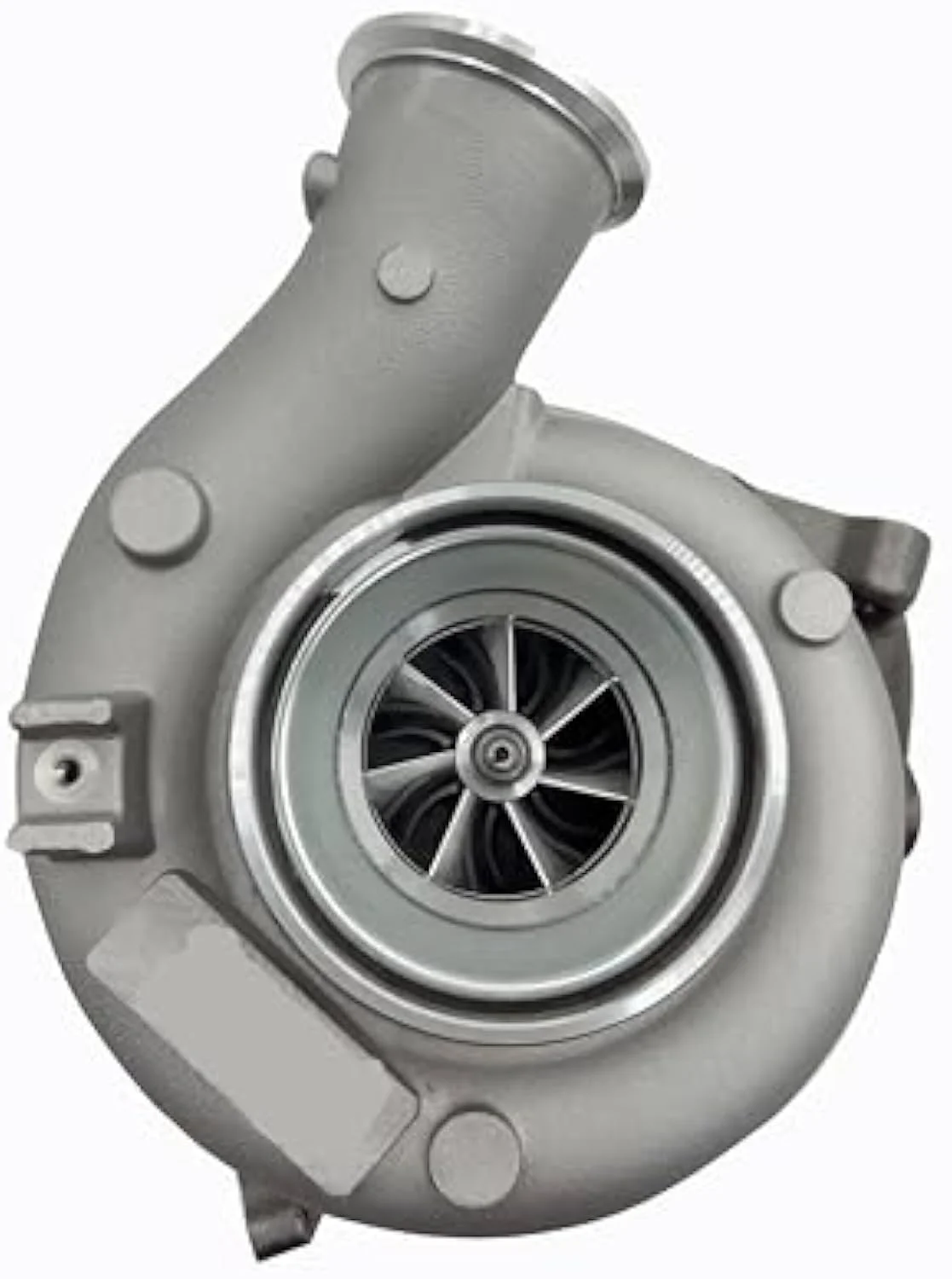
The aftermarket buying decision today still centers on conventional exhaust-driven turbos because the 48V electrical-system rebuild required to support a real e-boost retrofit puts the install cost past $20,000 on most chassis. The Cruze 1.4L, EcoBoost 2.0L, and Cummins 6.7L install-base lanes that dominate aftermarket spend all run conventional VGT or wastegate architectures; e-turbo is not yet a practical retrofit option on any of them.
For the conventional architecture background that e-turbo augments, the Turbocharger reference covers the thermodynamic loop and the six structural components common to both architectures. The Garrett Motion e-Turbo technical library publishes the engineering rationale and compressor-map data for the production e-Turbo deployments. The Turbo University reference covers industrial-tier discipline that applies to e-turbo balance and assembly. The Turbocharger Rebuilding Distribution catalog publishes the OE manifest network for conventional cross-references, which is still the dominant turbo product universe.
For application-side picks across conventional aftermarket turbos (the practical buying decision today), the Read the cross-engine roundup covers Cummins 6.7L, Ford EcoBoost 2.0L, and Chevy Cruze 1.4L lanes. For the closest conventional analog to the variable-geometry mechanism that production e-turbo applications enhance, the Read the Holset HE351VE review covers the production VGT architecture on the most-fitted heavy-duty diesel chassis.
Electric Turbocharger Decision Questions
- What is an electric turbocharger?
- An electric turbocharger uses an electric motor to spin the compressor wheel at low RPM, eliminating turbo lag before exhaust gas flow builds enough to drive a conventional turbine. Modern OEM applications use either an electric assist motor mounted on the turbo shaft (Garrett e-Turbo on Mercedes-AMG M139, Volvo XC90 T8 Polestar) or a standalone electric supercharger upstream of a conventional turbo (Audi SQ7 e-charger, Mercedes M256 EQ Boost). Both architectures need a 48-volt electrical system to provide enough current.
- Are electric turbochargers better than regular turbochargers?
- For lag elimination at low engine RPM, yes — an electric assist motor brings the compressor to spool RPM in 0.25-0.5 seconds versus 1.5-3 seconds for a conventional turbo waiting for exhaust mass flow. For fuel economy and emissions at part-throttle cruise, slightly better because the electric assist reduces the need for an oversized turbo frame. For aftermarket retrofit on existing engines, the cost-benefit math falls apart fast — the 48V electrical system rebuild plus the e-turbo kit runs $8,000-$20,000 versus $400-$1,500 for a conventional aftermarket turbo at comparable peak output.
- Which cars have electric turbochargers?
- Mercedes-AMG GT 63 (M177 4.0L V8, since 2023), Mercedes-AMG C63 (M139 2.0L 4-cylinder, since 2023), Audi SQ7 TDI (4.0L V8 with e-charger, since 2017), Audi SQ8 TDI (same setup), Mercedes M256 EQ Boost (3.0L inline-6, S-Class and E-Class, since 2018), Porsche Taycan Cross Turismo (race-only e-turbo prototype), and the BMW M Hybrid V8 race program. Production passenger applications are concentrated in the European luxury and AMG / S / RS performance tiers; mainstream Ford / GM / Toyota platforms have not adopted e-turbo architectures yet as of model year 2025.
- How much does an electric turbocharger cost?
- OEM-application replacement: $3,500-$8,000 just for the e-turbo unit, plus $1,500-$3,500 for the 48V supply system components if they need repair. Aftermarket retrofit kits: most advertised "electric turbocharger" kits on Amazon or eBay at $200-$1,500 are not real e-boost systems — they are 12V cooling fans marketed as power-add devices. Real aftermarket e-boost systems from Hahn-Racing, TVS, or specialty motorsport vendors run $8,000-$25,000 installed and require fabricating a 48V supply, custom intake plumbing, and an engine management retune.
- Are aftermarket electric turbo kits a scam?
- The $50-$500 "electric turbocharger" kits sold on Amazon and eBay are not functional power-add devices. They are 12V cooling fans wired to draw power from the cigarette-lighter circuit; physics prevents them from producing meaningful boost (they would need 5-15 kilowatts of continuous electrical power to generate even 5 psi at 4,000 RPM intake demand, versus the 50-100 watts an actual 12V automotive fan draws). Real e-boost systems exist but require 48V supply systems, water-cooled motors, and standalone engine management. The legitimate aftermarket e-boost market is essentially racing-only at this point.
- Will electric turbochargers replace regular turbochargers?
- For mainstream OEM passenger-car applications, no — conventional exhaust-driven turbos remain structurally cheaper, simpler, and more reliable. For luxury / performance / hybrid applications, increasingly yes — the 48V electrical systems that hybrid drivetrains already require make e-turbo architecture cost-defensible on premium cars. Expect e-turbo adoption to follow the 48V electrical-system adoption curve across European OEMs from 2025-2035; expect mainstream US OEMs to follow 5-7 years behind their European peers.
- What is the difference between an e-turbo and an electric supercharger?
- An e-turbo integrates an electric motor onto the existing turbocharger shaft, assisting the conventional turbine wheel at low RPM. An electric supercharger is a separate compressor unit driven entirely by an electric motor, sitting upstream of or in parallel with a conventional turbo. Audi SQ7 uses the electric-supercharger architecture (separate 48V e-charger feeding a twin-turbo VGT setup); Mercedes-AMG M139 uses the integrated e-turbo architecture (electric motor on the turbo shaft itself). Both achieve the same goal — zero-lag low-RPM boost — through different mechanical packaging.
Get Product Updates
Updates only when something changes.
Only when something changes. Unsubscribe anytime.