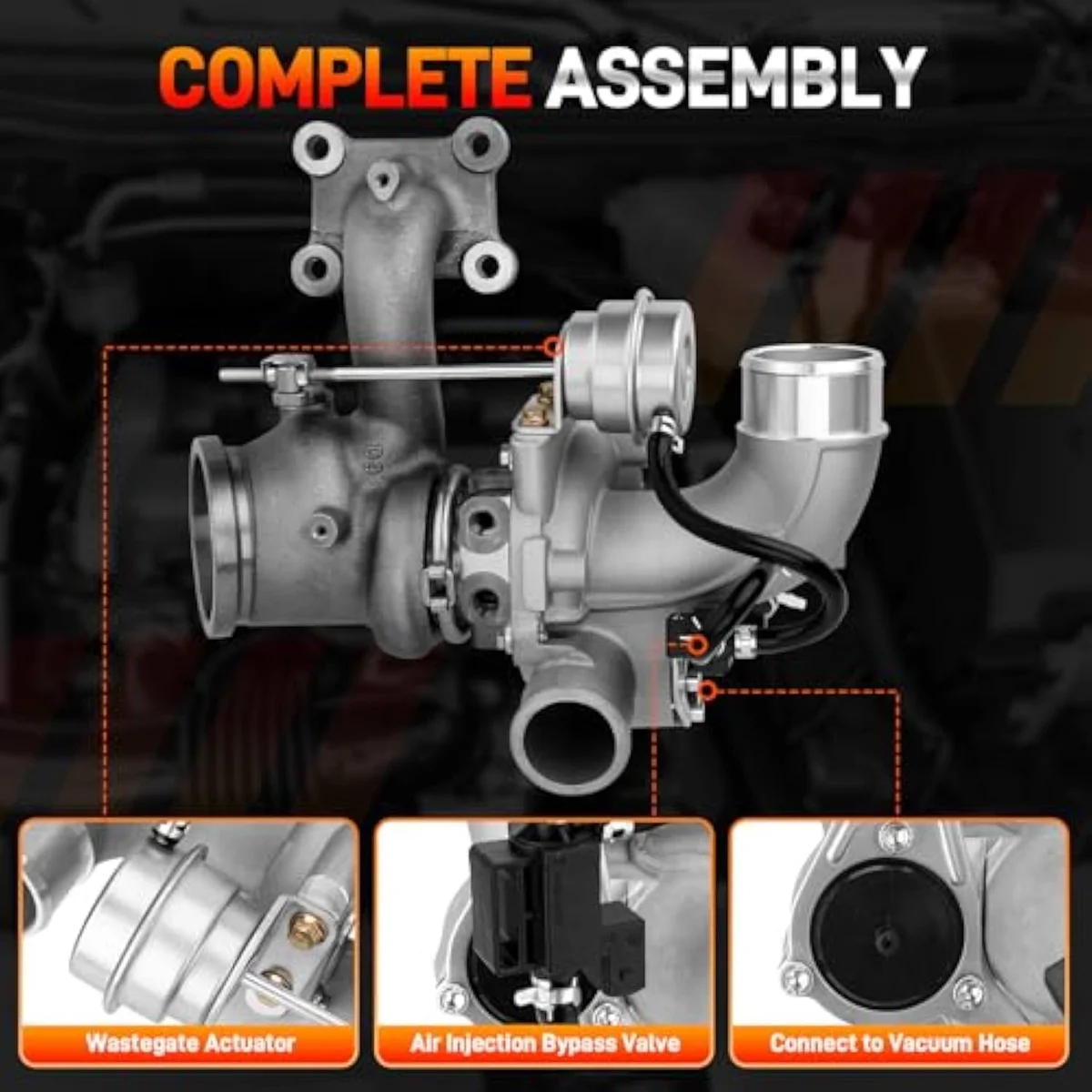
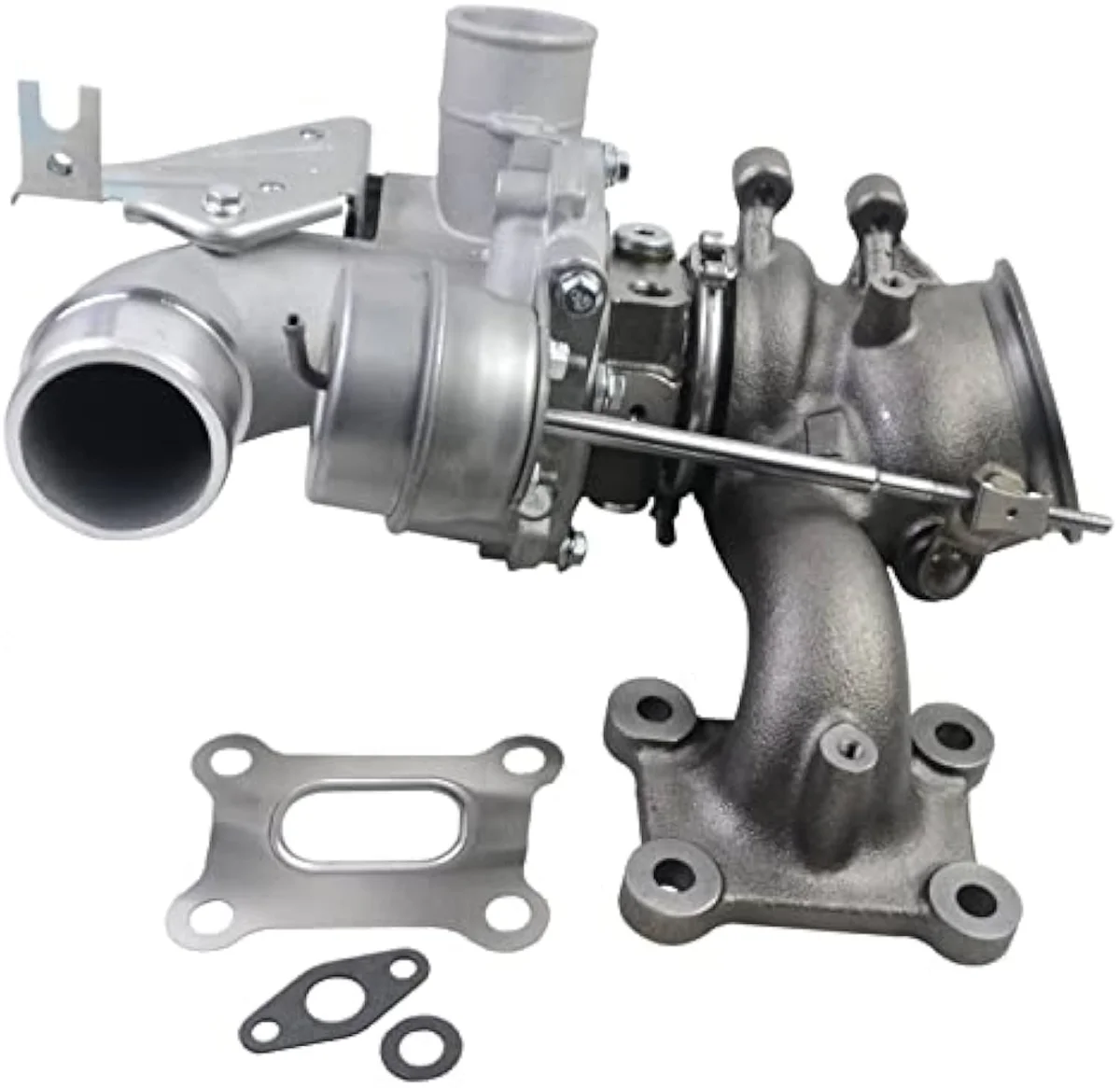
Updated
| Feature | GDUKOP CJ5Z6K682C 2.0L Turbocharger Assembly with Gaskets Compatible with For… | Turbo Turbocharger Replacement for Ford Edge Explorer Focus EcoBoost 2.0L 201… |
|---|---|---|
| See the Listing | See the Listing |
Different OEM Chains, Overlapping Install Base
Both listings target the Ford 2.0L EcoBoost engine family. The split is which Ford OEM part-number chain each one anchors on.
GDUKOP\'s cross-reference:
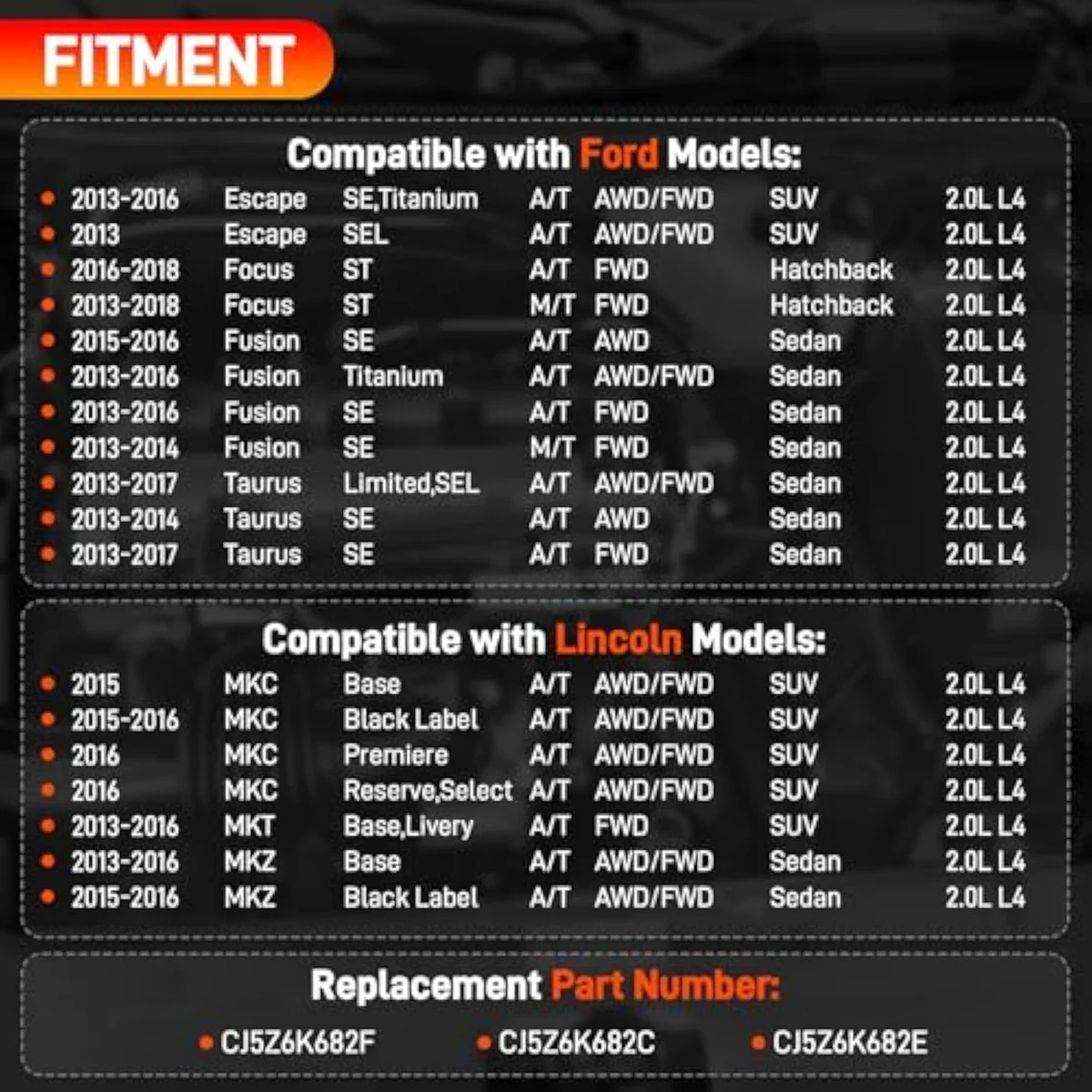
GDUKOP\'s Ford + Lincoln Multi-Marque Coverage
GDUKOP covers seven chassis families across two Ford badges. The fitment line is the broadest of any Ford EcoBoost 2.0L listing in our catalog.
The Ford-side fitment:
The GDUKOP material claim:
Weonefit\'s 2012-2015 Edge / Explorer SUV Fence
Weonefit fences the fitment envelope at the 2012-2015 Edge and Explorer 4-door SUV chassis. The earlier OEM chain anchors a narrower sub-segment.
The 7147885001S and 53039880271 prefixes appear on selected 2012-2014 Edge and Explorer castings as the pre-CJ5Z OEM chain. The CB5E6K6BA / CB5E6K682BA stamps are the BorgWarner OE manufacturer codes for the same EcoBoost 2.0L frame. The 53039700271 prefix names the BorgWarner K03 series core that the OEM turbo shipped with on the 2012-2015 chassis.
The Weonefit material claim:
Failure-Symptom Checklists: Overlap And Divergence
Both listings publish failure-symptom checklists keyed to OBD-II diagnostics. They overlap on the exhaust-smoke and acceleration tells but diverge on cartridge-bearing failure.
GDUKOP\'s checklist:
The Weonefit checklist adds two diagnostic tells GDUKOP\'s does not: loud siren noise (the cartridge-bearing terminal failure tell) and increased oil consumption (the seal-ring failure tell). For a buyer running pre-purchase symptom matching, Weonefit\'s checklist is the more diagnostically useful surface — but only when those symptoms match the failure mode on the chassis. The GDUKOP framing on reduced fuel economy and boost pressure loss covers the wastegate-calibration-drift failure mode that the Weonefit checklist treats indirectly via engine management light.
Integrated Wastegate Drives Complete-Replacement Path
The Ford EcoBoost 2.0L wastegate design forces the buyer onto a complete-turbo replacement path rather than an actuator-only swap. Both listings ship as complete assemblies for that reason.
The r/FocusST community-thread context — same Ford 2.0L EcoBoost engine family in a different chassis — explains the constraint:
Dealer Quote Context Routes Buyers Aftermarket
The community context on Ford EcoBoost 2.0L turbo replacement consistently routes buyers from the dealer path to the aftermarket path. The cost differential is structural, not anecdotal.
The dealer cost stack on a Focus ST owner\'s recent quote — same Ford 2.0L EcoBoost engine in the Focus ST chassis — ran roughly $3,300 all-in for a wastegate-triggered replacement. The mechanical breakdown is roughly $1,000 for the OEM turbo unit plus roughly $2,000 of dealer labor markup. The aftermarket savings path on either GDUKOP or Weonefit lands at a fraction of that all-in spend, assuming the OEM prefix on the failed casting matches the listing\'s cross-reference and assuming the buyer pairs the swap with the install-discipline items the community converges on — pre-priming the bearing, replacing the oil-and-coolant supply/return lines while the unit is out, and reseating any air-duct union that may have been the actual culprit.
If You\'re Coming From GDUKOP
If you landed on the GDUKOP listing first, the cross-shop question is whether Weonefit gives you anything GDUKOP\'s multi-marque CJ5Z chain does not.
For a 2013+ Ford Escape, Focus, Fusion, Taurus, or any Lincoln MKC / MKT / MKZ on the 2.0L EcoBoost, GDUKOP is already the listing that names the fitment. Weonefit is not the cross-shop on those chassis — its 7147885001S / 53039880271 chain does not cover the post-2013 CJ5Z prefix on those castings. For a 2012-2015 Edge or Explorer 4-door SUV specifically, the cross-shop tilts to Weonefit when the casting stamp matches the pre-CJ5Z OEM chain — the 2012-2014 chassis years carry the 7147885001S / 53039880271 prefix more often than the CJ5Z that GDUKOP names. Photograph the casting and match the prefix.
If You\'re Coming From Weonefit
If you landed on the Weonefit listing first, the cross-shop question is whether GDUKOP gives you broader confidence on a CJ5Z-stamped casting.
For a 2013-2015 Edge or Explorer on a confirmed 7147885001S / 53039880271 / CB5E6K6BA casting prefix, Weonefit is already the precise OEM-chain match. The cross-shop tilts to GDUKOP when the chassis is a 2013+ Escape / Focus / Fusion / Taurus or any Lincoln MKC / MKT / MKZ on the CJ5Z6K682F / CJ5Z6K682C / CJ5Z6K682E chain — Weonefit\'s OEM list does not cover the post-2013 CJ5Z prefix. The two listings are sub-segment-specific rather than head-to-head competitors on the same chassis; the casting-stamp match is the deciding check.
For underlying turbocharger engineering background on the Ford 2.0L EcoBoost platform both listings serve, the Wikipedia turbocharger reference documents the compressor-and-turbine architecture, the TSReman Turbo University service-part catalog publishes the BorgWarner K03 cross-reference manifest that anchors the OE EcoBoost 2.0L turbo, and the ADP Distributors reference covers the Ford / Lincoln OEM chain context buyers can verify against the casting stamp.
Verdict: Cast The Stamp, Pick The Chain
No head-to-head winner. The two listings cover different OEM part-number chains and overlapping but not identical chassis sub-segments. Pick by which prefix is stamped on the failed casting.
Pick GDUKOP when the failed turbo\'s casting carries a CJ5Z6K682F, CJ5Z6K682C, or CJ5Z6K682E prefix and the chassis is a 2013+ Escape / Focus / Fusion / Taurus or any Lincoln MKC / MKT / MKZ on the 2.0L EcoBoost. Pick Weonefit when the casting carries a 7147885001S, 53039880271, CB5E6K6BA, CB5E6K682BA, or 53039700271 prefix and the chassis is a 2012-2015 Edge or Explorer 4-door SUV. The cross-shop is sub-segment selection, not feature comparison; the prefix on the casting decides.
7147885001S chain — 2012-2015 Edge / Explorer SUVs:
Check Price on AmazonFord EcoBoost 2.0L Decision Questions
- Which Ford 2.0L EcoBoost turbo has the wider fitment envelope?
- GDUKOP. The GDUKOP listing names Ford Escape 2013-2016, Focus 2013-2018, Fusion 2013-2016, Taurus 2013-2017, plus Lincoln MKC 2015-2016, MKT 2013-2016, and MKZ 2013-2016 — seven separate chassis families on both the Ford and Lincoln Motor Company badges. The Weonefit listing fences the fitment to Ford Edge and Ford Explorer 2012-2015 4-door SUVs only. The two listings overlap on the 2013-2015 Edge but diverge from there — GDUKOP picks up the Focus / Fusion / Taurus side plus the Lincoln MKC / MKT / MKZ trim badges; Weonefit fences earlier and covers only the Edge / Explorer SUV chassis.
- Are the OEM part-number chains interchangeable?
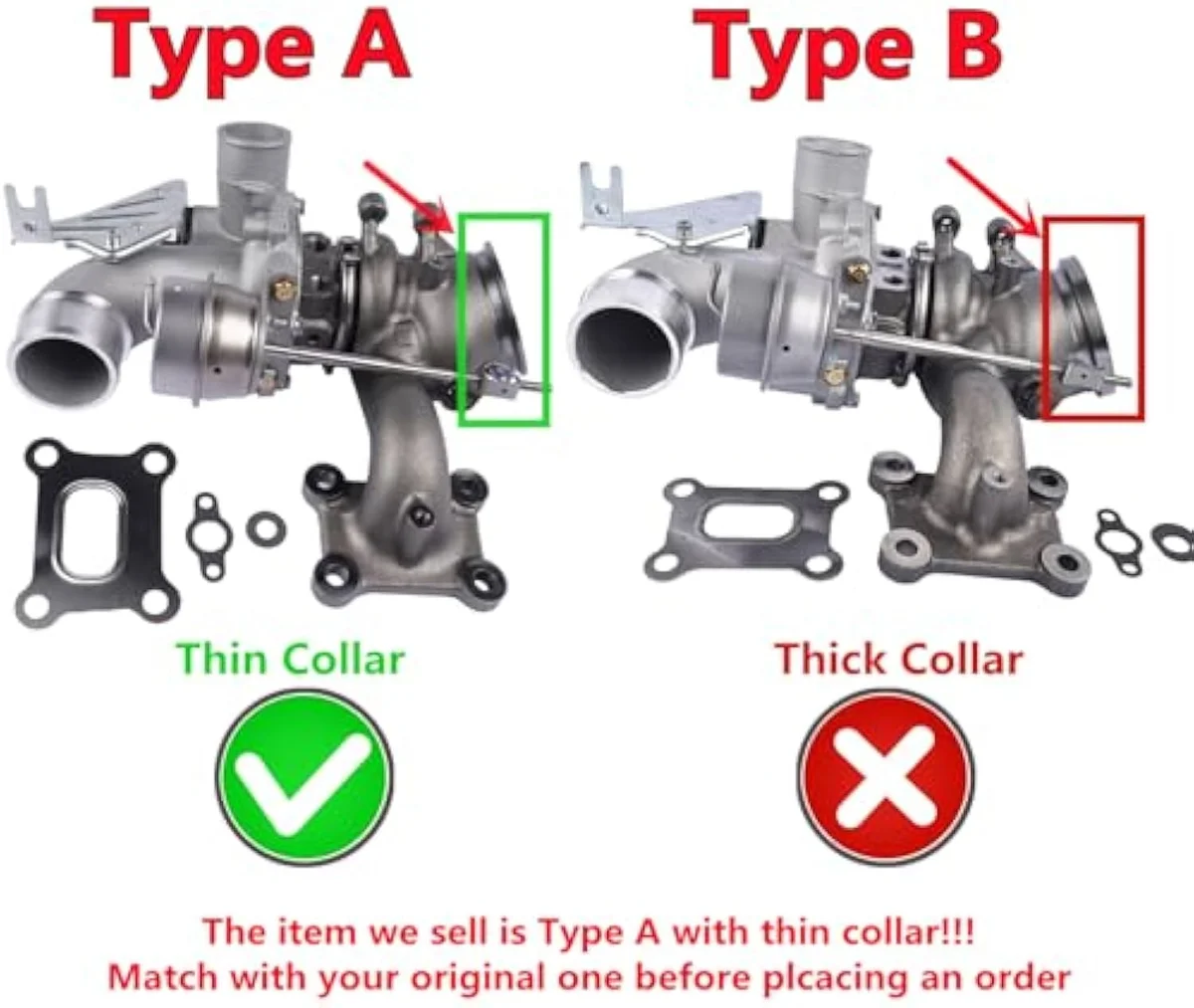
- No. GDUKOP cross-references CJ5Z6K682F, CJ5Z6K682C, and CJ5Z6K682E — the post-2013 Ford OEM chain that anchors the Escape / Focus / Fusion / Taurus / Lincoln MKC / MKT / MKZ sub-segment. Weonefit cross-references 7147885001S, 53039880271, CB5E6K6BA, CB5E6K682BA, and 53039700271 — a different OEM chain that anchors the 2012-2015 Edge / Explorer 4-door SUV sub-segment. The CJ5Z and CB5E prefixes are different Ford casting-stamp families with different exhaust manifold mating and different downpipe geometry. Photograph the casting stamp on the failed turbo and match the prefix to the listing — picking the wrong OEM chain is the most common returns trigger across the Ford EcoBoost 2.0L catalog.
- Why does the wastegate integration matter on these turbos?
- On Ford EcoBoost 2.0L turbos the wastegate is integrated into the turbo housing rather than mounted externally. A failing wastegate cannot be replaced as a standalone part — the entire turbo unit goes. That distinction matters for the diagnostic decision: an OBD-II under-boost code on an EcoBoost 2.0L chassis routes the buyer to a complete turbo replacement, not to an actuator-only swap path that exists on some other 2.0L turbocharged platforms. Both GDUKOP and Weonefit ship as complete turbo assemblies for that reason — they are the right SKU class for an integrated-wastegate failure.
- How does the $3,300 dealer-quote pattern affect the decision?
- Heavily — and in favor of either aftermarket pick over the dealer path. The r/FocusST community thread documents a Ford dealer quote of roughly $3,300 for a turbo replacement triggered by a faulty wastegate plus a six-month-running overboost condition. The dealer cost stack is roughly $1,000 for the OEM turbo unit plus roughly $2,000 of dealer labor markup, which is why aftermarket DIY swaps on the same chassis run an order of magnitude cheaper. Both GDUKOP and Weonefit sit at the budget tier (mid-three-figure or lower headline pricing) where the savings versus the dealer path are substantial — the cross-shop is which OEM chain and which fitment envelope matches the failed chassis, not whether to skip the dealer.
- Is the OBD-II code the same on both EcoBoost 2.0L applications?
- The diagnostic patterns rhyme but the codes themselves vary. There is no specific "replace turbocharger" OBD-II code published by the manufacturer — the diagnosis comes from boost-pressure trouble codes that require interpretation. GDUKOP names reduced acceleration, poor fuel economy, excessive exhaust smoke, and boost pressure loss as the trigger symptoms; Weonefit names loud siren noise, poor acceleration, excessive exhaust smoke, increased oil consumption, and check engine light. The two symptom checklists overlap on the exhaust-smoke and acceleration tells but diverge on the siren-noise (cartridge bearing failure tell) and the check-engine-light framing. A reputable shop diagnosis at roughly $100 is cheaper than blindly swapping the turbo on guesswork.
Use our Turbo Replacement Cost Estimator to size aftermarket spend on either kit against the $3,300 dealer-quote baseline for your Ford EcoBoost 2.0L chassis. For the broader cross-engine turbocharger context, route to the turbocharger roundup covering Ford EcoBoost 2.0L picks alongside Cluster A 1.4L LUV and heavy-duty industrial diesel anchors under one decision framework.